












































1. Who Is Elon Musk? Introduction and Overview
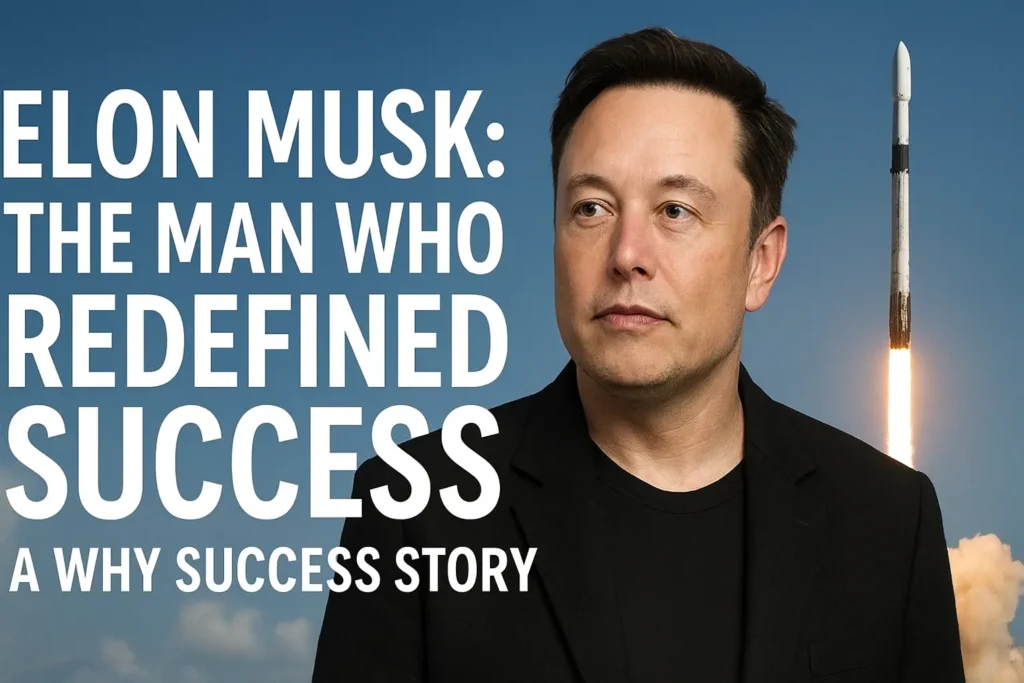
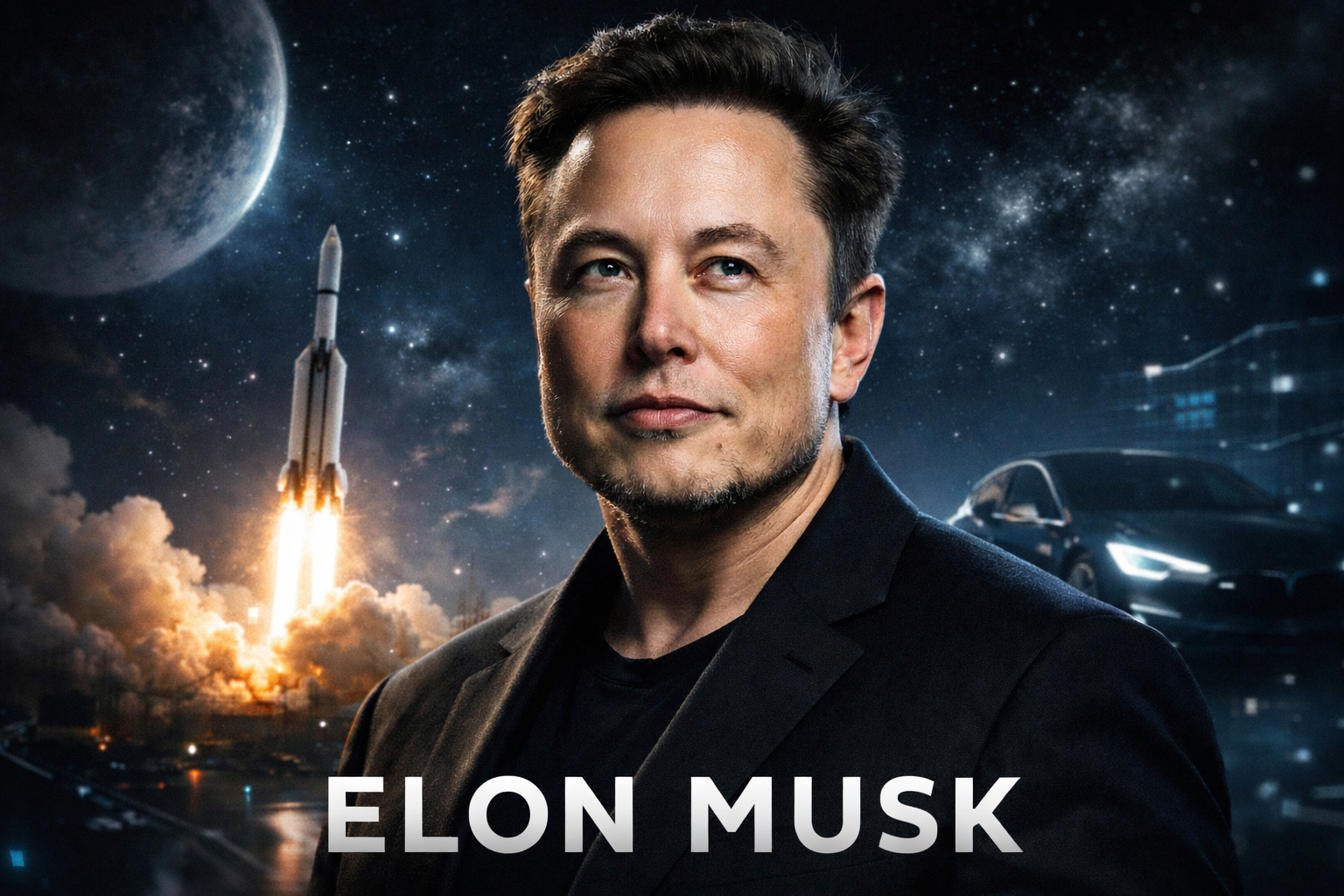
Elon Musk is one of the most influential and consequential entrepreneurs of the 21st century, widely recognized for his role in transforming industries that were long considered resistant to disruption. He is an engineer, business leader, and investor whose work spans aerospace, electric vehicles, renewable energy, artificial intelligence, neuroscience, and digital communication platforms. Born in South Africa and later becoming a citizen of Canada and the United States, Musk’s multinational background reflects the global scope of his ambitions and influence.
Musk is distinguished by his ability to combine deep technical understanding with large-scale business execution. Rather than operating solely as a strategic executive, he is known for engaging directly with engineering teams, product design, and problem-solving at a fundamental level. This hands-on approach has allowed him to challenge conventional assumptions in industries such as spaceflight and automotive manufacturing, where high costs, slow innovation, and reliance on legacy systems were once considered unavoidable.
He is best known for founding or leading companies that pursue transformative, long-term objectives rather than incremental improvements. In aerospace, he has worked to dramatically reduce the cost of launching payloads into orbit, with the broader goal of enabling human life beyond Earth. In transportation and energy, he has driven the mainstream adoption of electric vehicles and advanced energy storage as alternatives to fossil-fuel-based systems. His involvement in artificial intelligence, neural technology, and global communication platforms further reflects his interest in shaping how humans interact with technology and with one another.
Central to Musk’s identity is a future-oriented philosophy that prioritizes the long-term survival and advancement of human civilization. He has repeatedly articulated concerns about existential risks, including climate change, dependence on non-renewable energy, and the vulnerability of humanity as a single-planet species. As a result, his ventures are often framed not merely as commercial enterprises, but as strategic efforts to address what he views as fundamental challenges facing humanity.
2. Elon Musk’s Early Life, Childhood, and Education
Elon Musk was born on June 28, 1971, in Pretoria, South Africa, during a period marked by political division and social tension under the apartheid system. Growing up in this environment exposed him early to instability and limitation, factors that later influenced his strong desire to seek opportunities beyond his home country. His family background combined technical and creative influences: his mother, Maye Musk, built a professional career as a dietitian and fashion model, while his father, Errol Musk, worked as an electromechanical engineer and property developer. This blend of analytical and independent thinking would later be reflected in Musk’s own approach to problem-solving and career choices.
From an early age, Musk demonstrated exceptional intellectual curiosity and independence. He was known to spend long periods reading, often immersing himself in encyclopedias, science fiction, philosophy, and technical literature. These reading habits not only expanded his knowledge but also shaped his imagination, particularly his interest in space, future technologies, and the long-term trajectory of human civilization. Musk has frequently cited science fiction as an important influence on his thinking, especially in relation to space exploration and humanity’s future beyond Earth.
Computers played a central role in his formative years. Musk taught himself programming as a child, quickly developing a strong understanding of software logic and problem-solving. At the age of 12, he created a simple video game called Blastar and sold its source code to a magazine for a modest fee. Although small in scale, this achievement was significant: it demonstrated an early combination of technical skill, creativity, and entrepreneurial initiative that would later define his career.
In 1989, Musk left South Africa and moved to Canada, motivated both by opposition to mandatory military service and by a desire for greater educational and economic opportunity. He enrolled at Queen’s University in Ontario, where he began his formal higher education. After two years, he transferred to the University of Pennsylvania in the United States, one of the world’s leading research institutions. There, he completed two bachelor’s degrees—one in physics and one in economics—a combination that reflected his dual interest in understanding the fundamental laws of nature and applying that understanding within economic and business systems.
Following graduation, Musk briefly enrolled in a PhD program in applied physics at Stanford University. However, the rapid expansion of the internet and digital technologies in the mid-1990s presented what he perceived as a rare and time-sensitive opportunity. After only a short time at Stanford, he made the decisive choice to leave academia and pursue entrepreneurship full-time, marking the transition from formal education to the practical application of his technical knowledge in the business world.
3. Elon Musk’s Early Career and First Business Ventures
Elon Musk’s entrepreneurial career took shape in the mid-1990s, a period defined by the rapid commercialization of the internet and the emergence of entirely new digital business models. Recognizing the transformative potential of online platforms, Musk chose to enter the technology startup ecosystem at a time when internet-based companies were still experimental and highly uncertain.
In 1995, he co-founded Zip2 with his brother, Kimbal Musk. Zip2 developed software that enabled newspapers and media organizations to publish business directories, maps, and classified listings online. At a time when most traditional media companies lacked the technical infrastructure or expertise to transition to the internet, Zip2 offered a practical and scalable solution. The company’s products helped newspapers bridge the gap between print journalism and digital publishing, positioning Zip2 as an early enabler of local online commerce and information services.
Musk played an active role in both the technical development and strategic direction of Zip2, often working long hours under significant financial pressure. Despite early resistance from investors and media executives who were skeptical of the internet’s commercial value, Zip2 gradually gained traction. In 1999, the company was acquired by Compaq for approximately $307 million. This acquisition marked Musk’s first major financial success and provided him with substantial personal capital, as well as credibility within the technology and venture capital communities.
Rather than adopting a cautious or diversified investment approach following the sale, Musk chose to reinvest nearly all of his proceeds into a new and far more ambitious venture. Later in 1999, he founded X.com, an online financial services and payments platform. X.com sought to reimagine traditional banking by offering digital payments, money transfers, and financial services entirely through the internet—a concept that was highly unconventional at the time and faced significant regulatory and consumer trust challenges.
X.com later merged with Confinity, a competing startup that had developed a peer-to-peer payment product. While Musk initially served as CEO of the combined company, internal disagreements over technical direction and management style led to his removal from the role. Despite this setback, the company’s core product—rebranded as PayPal—experienced rapid growth as online commerce expanded.
In 2002, PayPal was acquired by eBay for $1.5 billion in stock. The acquisition proved to be a defining moment in Musk’s career. His financial return from the sale provided him with the resources necessary to pursue ventures on an unprecedented scale. More importantly, the experience reinforced his willingness to take significant risks, endure professional setbacks, and reinvest aggressively in ideas that others considered impractical or excessively ambitious. This mindset would become a defining characteristic of his later endeavors in aerospace, automotive manufacturing, and advanced technology.
4. Companies Built by Elon Musk: SpaceX, Tesla, and Beyond
Following the acquisition of PayPal in 2002, Elon Musk redirected his focus toward industries that were widely regarded as technologically stagnant, capital-intensive, and resistant to disruption. Rather than pursuing incremental innovation, he deliberately targeted sectors where breakthroughs could produce long-term, civilization-level impact. Aerospace was the first and most ambitious of these endeavors.
In 2002, Musk founded SpaceX with the explicit objective of dramatically reducing the cost of space access and, over time, enabling the human colonization of Mars. At the time, spaceflight was dominated by government agencies and established defense contractors, characterized by high launch costs, limited innovation, and infrequent missions. Musk entered the industry with limited direct experience in aerospace, relying instead on intensive self-education, the recruitment of experienced engineers, and a willingness to challenge long-standing assumptions about rocket design and manufacturing.
SpaceX faced severe difficulties in its early years. The company’s first three rocket launches failed, placing it on the brink of collapse and nearly exhausting Musk’s personal financial resources. Widespread skepticism from industry experts and the media reinforced doubts about whether a private company could succeed in orbital spaceflight. In 2008, however, SpaceX achieved a decisive breakthrough when its Falcon 1 rocket successfully reached orbit. This milestone validated the company’s technical approach and secured critical government contracts that ensured its survival.
In the years that followed, SpaceX introduced a series of innovations that fundamentally altered the economics of spaceflight. Most notably, the company pioneered the routine reuse of orbital-class rocket boosters, a development that significantly reduced launch costs and increased mission frequency. SpaceX later became the first private company to send astronauts to the International Space Station, marking a historic shift in the role of commercial enterprises within human space exploration and redefining the partnership between private industry and national space agencies.
Musk applied a similarly disruptive approach to the automotive industry through his involvement with Tesla. Although he was not among the company’s original founders, he became its principal leader, chief executive, and public representative. Tesla’s early years were characterized by financial instability, production challenges, and widespread skepticism regarding the commercial viability of electric vehicles. Many industry observers viewed electric cars as niche products with limited performance and consumer appeal.
Under Musk’s leadership, Tesla pursued aggressive innovation in battery technology, software integration, and large-scale manufacturing. The company focused on producing electric vehicles that could compete with—and in some cases surpass—internal combustion vehicles in terms of performance, range, and design. As Tesla scaled production and expanded its global footprint, it played a central role in accelerating the automotive industry’s transition toward electrification and reshaping long-term transportation strategy worldwide.
Beyond SpaceX and Tesla, Musk expanded his portfolio of ventures into additional frontier technologies. He co-founded Neuralink, a company dedicated to developing implantable brain–computer interfaces intended to address neurological conditions and explore new forms of human–machine interaction. He also founded The Boring Company, which aims to reduce urban congestion by constructing underground transportation tunnels using cost-efficient tunneling methods.
In 2022, Musk acquired X, marking a significant expansion of his influence into global digital communication. He expressed the intention to transform the platform into a more comprehensive digital ecosystem, encompassing public discourse, content creation, and financial services. Collectively, these ventures reflect Musk’s consistent focus on large-scale, system-level challenges and his willingness to confront established industries with unconventional solutions.
5. Elon Musk’s Major Achievements and Technological Innovations
Across multiple industries, Elon Musk has driven technological and organizational innovations that have produced measurable, global-scale impact. His achievements are distinguished not only by technical novelty, but also by their ability to alter cost structures, accelerate adoption, and reshape long-term strategic planning within established industries.
At SpaceX, Musk oversaw the development of reusable launch systems that fundamentally changed the economics of spaceflight. By successfully landing and reusing orbital-class rocket boosters, SpaceX reduced the marginal cost of launches to levels previously considered unattainable. This innovation influenced both commercial satellite operators and government space agencies, prompting a reassessment of procurement strategies, mission frequency, and long-term exploration planning. SpaceX also achieved multiple historic milestones, including the first privately developed rocket to reach orbit and the first private company to transport astronauts to the International Space Station, establishing a new model for public–private collaboration in space exploration.
In the automotive and energy sectors, Musk’s leadership at Tesla produced equally transformative results. Tesla demonstrated that electric vehicles could be mass-produced at scale while offering competitive range, performance, and software-driven functionality. This success challenged the long-held perception that electric vehicles were limited to niche markets and compelled traditional automakers to accelerate their own electrification strategies. Beyond vehicles, Tesla’s advancements in battery technology, energy storage systems, and integrated renewable energy solutions influenced global discussions on sustainable energy infrastructure and grid resilience.
From a business perspective, Musk has led companies that reached unprecedented market valuations, reflecting sustained investor confidence in long-term, technology-driven disruption rather than short-term profitability alone. These valuations were not solely symbolic; they enabled large-scale capital investment in research, manufacturing, and infrastructure that would have been difficult to achieve under conventional corporate models. As a result, Musk’s companies were able to pursue ambitious projects with long development timelines and high upfront costs.
Collectively, Musk’s ventures have had significant influence on public policy and strategic planning. Governments and institutions have adjusted space procurement models, transportation regulations, and energy transition frameworks in response to the capabilities demonstrated by his companies. Additionally, his involvement in artificial intelligence, neural technology, and global communication platforms has shaped public and professional discourse around the risks, opportunities, and ethical considerations associated with emerging technologies. Through these achievements, Musk has established a record of innovation that extends beyond individual products, contributing to structural change across multiple global industries.
6. Elon Musk’s Leadership Style, Work Ethic, and Business Philosophy
Elon Musk’s leadership style is widely characterized as intensive, highly demanding, and deeply involved in both strategic and technical decision-making. Unlike conventional corporate executives who operate primarily through delegation and managerial layers, Musk maintains direct engagement with engineering teams, product development, and core technical challenges. His leadership approach reflects his belief that meaningful innovation requires close alignment between executive vision and engineering execution.
Central to Musk’s work philosophy is his use of “first principles” thinking, a problem-solving method that involves breaking complex systems down to their most fundamental truths and rebuilding solutions from the ground up. Rather than relying on industry norms, historical precedent, or standard practices, he focuses on underlying physics, material constraints, and cost structures. This approach has allowed him to identify inefficiencies in industries such as aerospace and automotive manufacturing, where traditional assumptions often drove high costs and slow innovation.
Musk is also known for setting exceptionally aggressive timelines and performance expectations. He frequently challenges teams to achieve objectives on schedules that exceed industry standards, operating under the belief that compressed timelines can force creative problem-solving and eliminate unnecessary complexity. While this approach has contributed to rapid technological progress and first-mover advantages, it has also resulted in high-pressure work environments and sustained scrutiny regarding employee workload and organizational culture.
A defining aspect of Musk’s leadership philosophy is his emphasis on long-term impact over short-term financial performance. He consistently prioritizes strategic goals—such as reducing global reliance on fossil fuels or enabling human expansion beyond Earth—above immediate profitability or conventional business metrics. This long-term orientation has shaped capital allocation decisions across his companies, often requiring substantial upfront investment and tolerance for risk. Through this leadership style, Musk has positioned his organizations to pursue ambitious objectives that extend well beyond traditional corporate time horizons.
7. Controversies and Criticism Faced by Elon Musk
Elon Musk’s career, while marked by significant technological and commercial success, has also been accompanied by substantial challenges, criticism, and controversy. Many of the industries he operates in—particularly aerospace, automotive manufacturing, and digital communications—are heavily regulated, capital-intensive, and subject to intense public and governmental scrutiny. As a result, Musk’s companies and leadership decisions have frequently attracted regulatory attention, legal disputes, and public debate.
At Tesla, Musk has faced ongoing challenges related to production scaling, workplace safety, labor relations, and regulatory compliance. Periods of rapid expansion placed strain on manufacturing systems, leading to missed production targets and financial pressure. Tesla has also encountered scrutiny from regulators regarding vehicle safety claims, autonomous driving features, and labor practices, prompting broader discussions about corporate responsibility and transparency in high-growth technology firms.
Similarly, SpaceX has operated under close oversight from national and international regulatory bodies due to the inherent risks associated with rocket launches and space operations. Early launch failures, test anomalies, and environmental concerns related to launch facilities have drawn criticism and required extensive coordination with government agencies. While many of these challenges are characteristic of aerospace innovation, they nonetheless contributed to public skepticism during the company’s formative years.
Beyond operational and regulatory issues, Musk’s personal communication style has been a persistent source of controversy. His frequent and informal use of social media to comment on business matters, public policy, and cultural issues has occasionally led to legal consequences, investor uncertainty, and heightened media scrutiny. Critics argue that such communications blur the line between personal expression and corporate responsibility, particularly given Musk’s influence over publicly traded companies and global platforms.
Musk’s management approach has also polarized opinion. Supporters view his intensity and high expectations as necessary to achieve rapid innovation in complex fields, while critics contend that his leadership style can contribute to stressful work environments and insufficient regard for organizational norms. These debates have fueled broader conversations about corporate governance, executive accountability, and the responsibilities of technology leaders whose decisions can have wide-reaching social and economic effects.
Collectively, these challenges and controversies have become an integral part of Musk’s public narrative. They reflect both the risks inherent in pursuing disruptive innovation at scale and the heightened scrutiny faced by individuals who operate at the intersection of technology, capital, and global influence.
8. Elon Musk’s Personal Life and Public Image
Elon Musk maintains a relatively private personal life compared to the scale of his public influence, yet he remains one of the most visible business figures in the world. While he does not regularly share detailed accounts of his family life or personal routines, aspects of his private life have periodically entered public awareness due to media coverage, interviews, and his own online activity. He has spoken publicly about topics such as parenthood, demographic trends, and work–life imbalance, often framing these issues within broader societal and civilizational concerns.
Musk’s public image is shaped significantly by his direct and unconventional communication style. Unlike most corporate leaders, he frequently communicates without intermediaries, using interviews and digital platforms to express opinions on technology, business strategy, politics, and culture. His tone is often informal, concise, and occasionally provocative, standing in sharp contrast to the carefully managed messaging typical of large corporations. This approach has contributed to his reputation as an unfiltered and authentic voice, while also increasing the risk of misunderstanding and controversy.
In the media, Musk is often portrayed as a hybrid figure—part engineer, part entrepreneur, and part cultural disruptor. His technical credibility, reinforced by hands-on involvement in product development and engineering discussions, has earned respect among technologists and innovators. At the same time, his willingness to challenge social norms, question institutions, and engage in public debate has made him a polarizing presence. Supporters view this as evidence of independence and intellectual honesty, while critics argue that it undermines professional standards and corporate responsibility.
As a result, Musk’s public image occupies a unique position in contemporary business culture. He is simultaneously regarded as a visionary innovator and a controversial public figure, admired for his ambition and criticized for his unpredictability. This dual perception has amplified his influence, ensuring that his actions and statements receive global attention and that his personal identity remains closely intertwined with the public perception of the companies he leads.
9. Elon Musk’s Impact, Influence, and Long-Term Legacy
Elon Musk’s broader impact extends beyond individual products or companies and is most evident in his ability to redefine what entire industries consider technically feasible and economically viable. By challenging long-standing assumptions and accepting levels of risk that many organizations avoid, he has shifted expectations around the pace and scale of innovation in multiple sectors.
In aerospace, Musk fundamentally changed perceptions of private spaceflight. Through the success of SpaceX, he demonstrated that commercial enterprises could not only compete with government space programs but also surpass them in efficiency and cost reduction. The normalization of reusable rockets reshaped launch economics, influenced national space strategies, and expanded access to orbit for scientific, commercial, and defense purposes. This shift has had lasting implications for space exploration, satellite deployment, and the long-term vision of human activity beyond Earth.
In transportation and energy, Musk’s leadership at Tesla accelerated the global transition toward electric mobility and renewable energy systems. By proving that electric vehicles could be desirable, high-performing, and commercially scalable, Tesla altered consumer expectations and forced established automakers to revise long-term investment strategies. The ripple effects of this shift are visible in government policy, infrastructure development, and the broader push toward decarbonization.
Musk’s influence also extends into emerging technological domains such as artificial intelligence, neural interfaces, and digital communication platforms. Through his public statements, investments, and entrepreneurial initiatives, he has shaped professional and public discourse around the opportunities and risks associated with advanced technologies, including concerns about automation, human–machine interaction, and long-term societal resilience. Even where his projects remain experimental, they have contributed to setting research agendas and stimulating debate at a global level.
From a historical perspective, Musk is likely to be regarded as one of the most consequential industrial figures of the early 21st century. His career aligns him with a lineage of innovators who combined engineering insight with large-scale enterprise building to drive structural change across industries. While assessments of his methods and leadership style may remain contested, the scope and durability of his influence suggest a legacy defined by transformational impact on technology, industry, and the long-term direction of human innovation.
10. Elon Musk’s Current Projects and Future Vision
Elon Musk remains actively engaged in guiding the strategic direction and technical development of several major technology-driven enterprises, with a continued emphasis on long-term, system-level transformation. His current work reflects a consistent focus on advancing technologies that he believes are critical to the future sustainability and resilience of human civilization.
At SpaceX, Musk continues to prioritize the development of large-scale launch systems designed to support interplanetary travel. Central to this effort is the advancement of next-generation spacecraft intended to enable sustained human missions to Mars. These initiatives focus not only on transportation, but also on the infrastructure required for long-duration habitation, including life-support systems, in-space refueling, and cost-efficient launch cadence. While these goals remain long-term and technically complex, they represent the core of Musk’s vision for establishing humanity as a multi-planet species.
At Tesla, Musk’s ongoing efforts extend beyond electric vehicles to encompass a broader energy ecosystem. This includes the expansion of battery storage solutions, integration of renewable energy generation, and the development of software-driven energy management systems. His objective is to support a scalable transition away from fossil fuels by aligning transportation, energy production, and storage within a unified technological framework.
Musk also remains involved in shaping the future direction of advanced technologies such as neural interfaces and digital communication platforms. Through Neuralink, he continues to explore the potential for direct brain–computer interaction, with applications ranging from medical treatment to enhanced human–machine collaboration. In parallel, his leadership of X reflects an interest in redefining digital public spaces, emphasizing open discourse, platform versatility, and potential integration with financial and informational services.
Across all of these initiatives, Musk’s long-term vision remains consistent: to advance sustainability, reduce existential risks, and expand the boundaries of human capability. Whether through clean energy systems, interplanetary exploration, or emerging technologies, his current work continues to be guided by a future-oriented philosophy focused on long-term human survival and technological progress.
Conclusion: Elon Musk’s Role in Shaping the Future
Elon Musk’s life and career exemplify both the transformative potential and the inherent risks of ambitious, technology-driven entrepreneurship pursued at global scale. Through a combination of technical insight, strategic risk-taking, and long-term vision, he has played a central role in reshaping industries that influence how humanity moves, communicates, produces energy, and explores space. His ventures have not only introduced new technologies but have also altered economic models, competitive dynamics, and institutional expectations across multiple sectors.
At the same time, Musk’s career highlights the challenges that accompany leadership at an unprecedented level of visibility and influence. His management style, public communications, and willingness to challenge established norms have generated sustained controversy, regulatory scrutiny, and polarized public opinion. These tensions underscore the complexity of balancing innovation, accountability, and governance in an era where individual leaders can exert global technological and cultural impact.
Regardless of ongoing debate surrounding his methods and public persona, Musk’s influence on modern technology and business is substantial and enduring. His work has expanded the boundaries of what is considered achievable within private enterprise and has shaped long-term conversations about sustainability, space exploration, and the future of human civilization. As technological progress continues to redefine global society, Elon Musk’s role as a catalyst for large-scale change is likely to remain a significant reference point in the history of 21st-century innovation.
Quick Summary of Elon Musk’s Life and Career
Elon Musk is a globally influential entrepreneur, engineer, and investor known for leading companies that have transformed space exploration, electric transportation, renewable energy, and digital communication. Born in South Africa and later becoming a citizen of Canada and the United States, he built his career by combining technical expertise with high-risk, long-term business strategies.
Through his leadership at SpaceX and Tesla, Musk helped reduce the cost of space travel and accelerated the global shift toward electric vehicles and sustainable energy. His ventures in artificial intelligence, neural technology, and digital platforms further reflect his focus on future-oriented innovation. Despite ongoing controversy and criticism, Musk remains one of the most impactful technology leaders of the 21st century, shaping both industry direction and global conversations about humanity’s technological future.