

























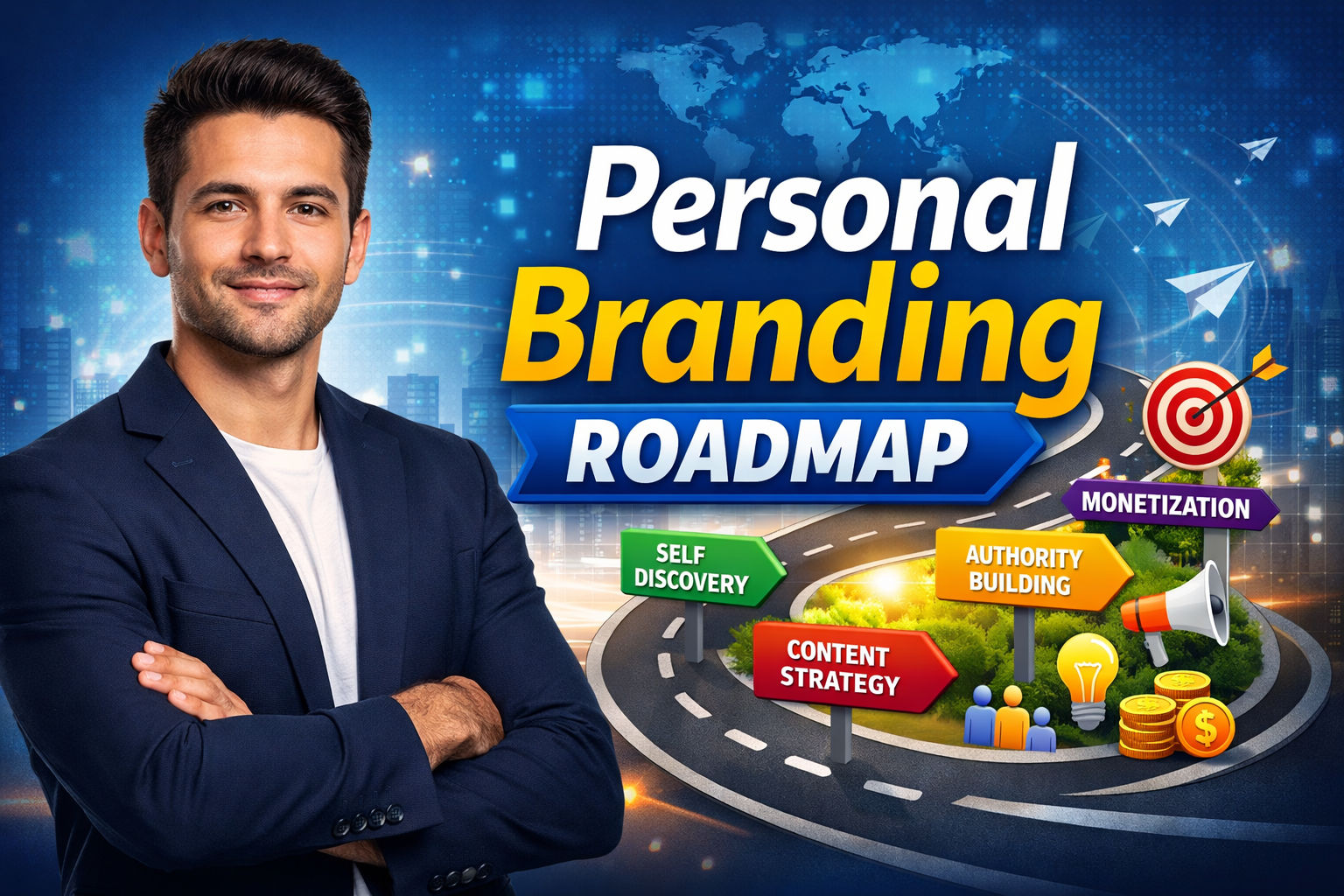

1. Introduction: Understanding Personal Branding at a Deeper Level
Personal branding is not about popularity, aesthetics, or social media fame. It is the deliberate process of shaping how people perceive your expertise, values, and credibility over time.
In the modern digital economy, opportunities flow toward visible, trusted, and clearly positioned individuals. A strong personal brand ensures that:
- People remember you for a specific skill or outcome
- Opportunities come to you instead of you chasing them
- Trust is built before the first conversation
Personal branding is a long-term asset, similar to intellectual property or goodwill.
2. The Mindset Foundation (Most Ignored, Most Critical)
Before tactics, tools, or platforms, personal branding begins with clarity of thinking.
2.1 Shift from “Impression” to “Impact”
Weak branding focuses on:
- Looking good
- Getting likes
- Copying trends
Strong branding focuses on:
- Solving real problems
- Creating measurable value
- Being useful before being visible
2.2 Long-Term Thinking
A personal brand compounds like interest.
Consistency over years > intensity for weeks.
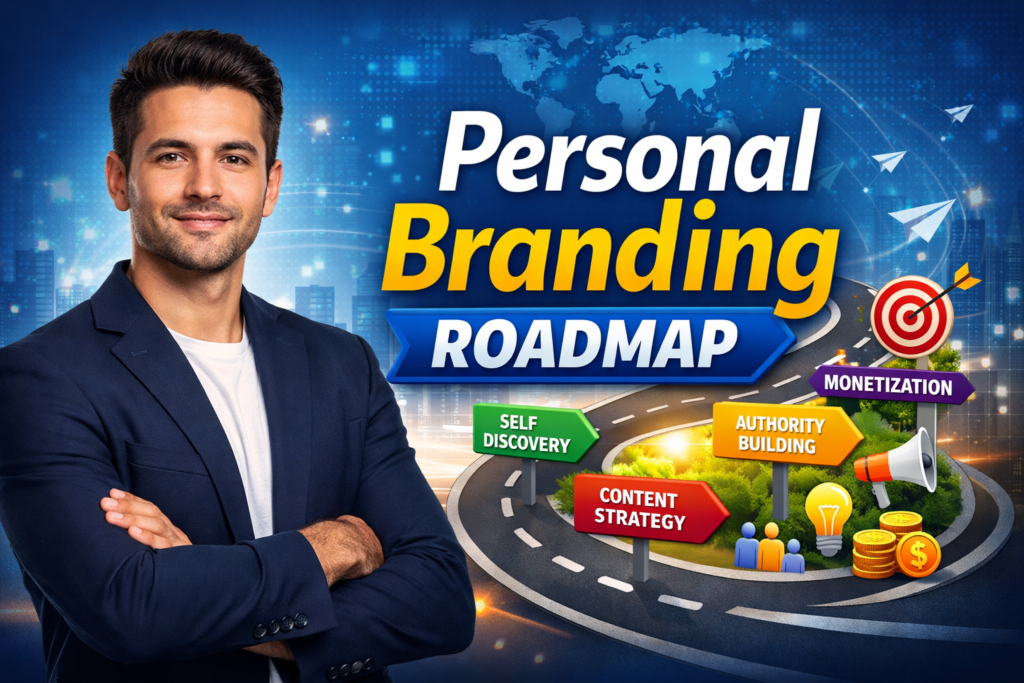
3. Phase 1: Self-Discovery & Identity Clarity
This phase determines who you are in the market, not who you want to imitate.
3.1 Skill & Experience Audit
Ask:
- What skills have I actually practiced (not just learned)?
- Where have I delivered results?
- What do people already ask me for help with?
Categorize skills into:
- Core expertise (primary strength)
- Supporting skills (enhancers)
- Learnable gaps (future growth)
3.2 Values & Belief System
Your values shape your audience.
Examples:
- Transparency vs hype
- Process vs shortcuts
- Education vs entertainment
People follow beliefs, not just skills.
3.3 Personal Story Mapping
Your background is a strategic asset.
Map:
- Struggles
- Transitions
- Failures
- Turning points
Stories create emotional connection and trust.
4. Phase 2: Purpose & Direction
Without direction, branding becomes noise.
4.1 Define Your “Known For” Statement
Example format:
“I help [audience] achieve [result] using [method].”
This statement guides:
- Content
- Platforms
- Offers
- Collaborations
4.2 Vision Timeline
- 1-year positioning goal
- 3-year authority goal
- 5-year influence goal
Your roadmap must align with your future self.
5. Phase 3: Niche & Market Positioning
5.1 Choosing the Right Niche
A strong niche is:
- Specific
- Problem-focused
- Monetizable
Bad niche: “Digital marketing”
Strong niche: “Conversion-focused WordPress websites for service businesses”
5.2 Competitive Differentiation
Ask:
- What do others ignore that I emphasize?
- What is my unique angle?
- What do I explain better or simpler?
Differentiation is clarity, not complexity.
6. Phase 4: Personal Brand Identity System
6.1 Visual Identity (Trust Signals)
Includes:
- Professional profile image
- Consistent colors & typography
- Clean layouts and spacing
Visual consistency = perceived professionalism.
6.2 Verbal Identity (Voice & Language)
Define:
- Tone (educational, direct, friendly, authoritative)
- Vocabulary level (beginner-friendly vs technical)
- Core messaging themes
Your words must sound like you, not a template.
7. Phase 5: Platform Strategy (Leverage, Not Everywhere)
7.1 Platform Selection Logic
Choose platforms based on:
- Where your audience already exists
- Content format you can sustain
- Long-term discoverability
Typical roles:
- LinkedIn → Authority & networking
- Instagram → Reach & relatability
- YouTube → Depth & trust
- Blog/Website → Ownership & SEO
7.2 Owned vs Rented Platforms
Social media = rented land
Website/email list = owned asset
A serious personal brand always builds ownership.
8. Phase 6: Content Strategy (Core of Personal Branding)
8.1 Content Pillars
Create 3–5 pillars:
- Education (how-to, frameworks)
- Experience (lessons, mistakes)
- Opinion (industry insights)
- Proof (results, case studies)
8.2 Authority Content
Focus on:
- Explaining why, not just what
- Breaking complex ideas into simple logic
- Teaching from experience, not theory
Authority is built through clarity, not volume.
8.3 Consistency System
- Realistic posting frequency
- Repeatable formats
- Content batching
Sustainability beats creativity burnout.
9. Phase 7: Profile & Asset Optimization
9.1 Bio & Headline Framework
Your bio must answer:
- Who you help
- How you help
- Why you are credible
9.2 Proof of Work
Include:
- Case studies
- Testimonials
- Metrics
- Before/after results
Trust accelerates decisions.
10. Phase 8: Trust, Authority & Thought Leadership
10.1 Opinion Leadership
Share:
- What you agree with
- What you disagree with
- What you believe is misunderstood
Thought leaders take positions, not sides.
10.2 Collaboration & Visibility
- Podcasts
- Guest blogs
- Joint content
- Community contributions
Borrow trust, then build your own.
11. Phase 9: Community & Network Effects
A personal brand grows faster through relationships, not algorithms.
- Reply to comments thoughtfully
- Start meaningful conversations
- Build a small but loyal audience
Community creates defensibility.
12. Phase 10: Monetization Alignment (Optional but Strategic)
Monetization should feel natural, not forced.
Paths include:
- Services & consulting
- Courses & digital products
- Speaking & mentoring
- Brand partnerships
Your brand should pre-sell your offers.
13. Phase 11: Measurement & Brand Evolution
Track:
- Engagement quality
- Inbound opportunities
- Audience feedback
- Conversion signals
Refine messaging, not identity.
14. Common Long-Term Mistakes
- Inconsistency
- Copy-paste branding
- Over-polishing without publishing
- Chasing trends over trust
15. Final Insight: Personal Branding Is Reputation Engineering
A strong personal brand is:
- Built intentionally
- Maintained consistently
- Protected strategically
It is not about being famous.
It is about being trusted, remembered, and chosen.