India – The Land of Diversity

India is one of the world’s most fascinating and diverse nations, known for its rich culture, vibrant traditions, and deep-rooted history. Stretching from the snow-covered Himalayas in the north to the tropical beaches of the south, India offers a breathtaking mix of landscapes, languages, and lifestyles. Every region of the country tells a unique story — from ancient temples and royal palaces to bustling modern cities and peaceful villages.

India is not just a geographical entity; it’s an emotion that thrives on the values of togetherness, tolerance, and harmony. The true essence of India lies in its motto: “Unity in Diversity”, which reflects how millions of people belonging to different religions, cultures, and traditions live together with respect and love.

Capital - New Delhi

New Delhi is the heart of the nation — a city that blends ancient heritage with modern development. It houses the Indian Parliament, the Rashtrapati Bhavan (President’s House), and several iconic monuments like India Gate and Qutub Minar.

Currency - Indian Rupee (₹)

The Indian Rupee is the official currency of India, symbolized by ₹. The design of the symbol combines the Devanagari “र” (Ra) and the Roman “R,” symbolizing the nation’s cultural blend of tradition and progress.

Population - 1.4+ Billion

India is home to over one-sixth of the world’s population. This immense population reflects a vibrant mix of ethnicities, religions, and languages, making India a true reflection of global diversity.

National Motto -Unity in Diversity

This timeless phrase perfectly captures India’s spirit — a nation where people of different faiths, customs, and communities coexist peacefully. Despite diversity in religion, culture, food, festivals, and attire, Indians share a deep sense of unity, pride, and belonging.

Languages - 22 official languages

India is a linguistic treasure chest. The Constitution of India recognizes 22 official languages, including Hindi, Bengali, Tamil, Telugu, Marathi, Urdu, Gujarati, and more. English also serves as a common language for communication across states and in business and education. Each region has its own language, literature, and local expression that enrich India’s cultural mosaic.

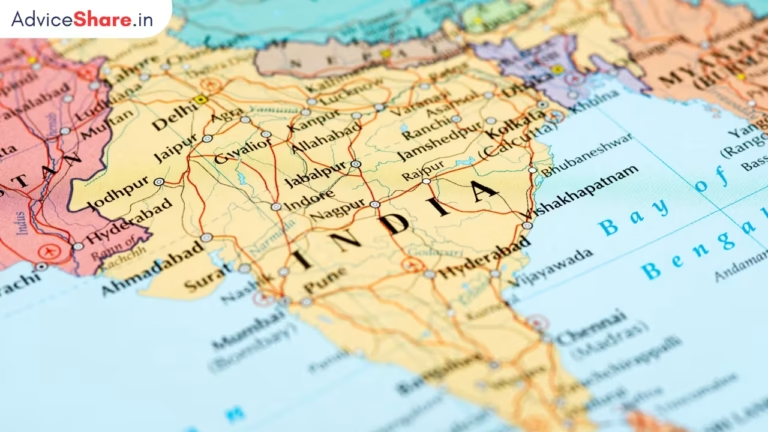
India Map
India
Women At Work

Geography & Nature Beauty

India is a land blessed with breathtaking natural diversity — from the snow-capped peaks of the Himalayas to the golden sands of the Thar Desert, from serene beaches to dense tropical forests. Its geographical richness makes it one of the most naturally gifted countries in the world. Every corner of India showcases a unique blend of nature’s wonders, offering something extraordinary to travelers and explorers alike.

India’s varied landscapes, climates, and ecosystems are spread across its vast territory, stretching from the northern mountains to the southern seas. This incredible range of geography not only adds to its scenic charm but also supports diverse wildlife, vegetation, and cultural lifestyles.

Mountains – The Majestic Himalayas

The mighty Himalayas, known as the “Abode of Snow,” form India’s natural crown in the north. These mountain ranges span across states like Jammu & Kashmir, Himachal Pradesh, Uttarakhand, and Sikkim, extending all the way to Arunachal Pradesh in the northeast.

Home to some of the world’s highest peaks, including Kanchenjunga, the third-highest mountain in the world.

The Himalayas are not just scenic but sacred, giving birth to major rivers and housing many pilgrimage sites like Kedarnath, Badrinath, and Amarnath.

The cool hill stations — Manali, Shimla, Darjeeling, Gangtok — attract tourists year-round for their beauty and peace.

Deserts – The Golden Thar of Rajasthan

In the west lies the Thar Desert, often called the “Great Indian Desert,” spread across Rajasthan and parts of Gujarat.

The desert’s golden dunes, vibrant sunsets, and camel safaris in Jaisalmer and Bikaner create a magical experience.

Despite its harsh conditions, the region bursts with color through folk music, Rajasthani dances, and desert festivals.

The Thar is also home to unique flora and fauna that have adapted to its arid environment.

Beaches – Serenity Along the Coasts

India’s coastline stretches over 7,500 kilometers, offering countless beaches where land meets the sea in perfect harmony.

Goa is famous for its golden sands, palm-fringed shores, and vibrant nightlife.

Kerala’s beaches, like Varkala and Kovalam, offer tranquility and natural beauty.

The Andaman and Nicobar Islands boast pristine turquoise waters, coral reefs, and white sandy beaches, perfect for scuba diving and nature lovers.

These coastal regions not only attract tourists but also play a vital role in India’s fishing and maritime industries.

 Forests & Wildlife – India’s Green Treasure

India is home to some of the world’s richest biodiversity, with lush forests, wildlife sanctuaries, and national parks spread across the country.

The Sundarbans in West Bengal host the majestic Royal Bengal Tiger and are known for their mangrove forests.

Gir National Park in Gujarat is the only home of the Asiatic Lions.

Jim Corbett National Park in Uttarakhand, India’s first national park, is famous for its tigers and elephants.

Kaziranga National Park in Assam is renowned for the one-horned rhinoceros and vast grasslands.

These forests not only protect wildlife but also regulate the climate and provide livelihood to many local communities.

Rivers – The Lifelines of India

India’s great rivers have been the cradle of its civilization, culture, and economy for thousands of years.

The Ganga – The holiest river, worshipped as Goddess Ganga, flowing from the Himalayas to the Bay of Bengal.

The Yamuna – Sacred and historically significant, passing through Delhi and Agra.

The Brahmaputra – One of Asia’s mightiest rivers, flowing through the northeast with immense power.

The Godavari and Narmada – Lifelines of central and southern India, nourishing vast plains and valleys.

These rivers not only provide water for agriculture and power but also hold deep spiritual importance in Indian culture.

Indian Culture & Traditions

India’s culture is one of the oldest and most diverse in the world. Rooted in history and enriched by countless traditions, it reflects harmony between the ancient and the modern. From colorful festivals and traditional clothing to music, dance, and art — every element of Indian culture tells a story of unity, creativity, and spirituality.

Across its length and breadth, India celebrates a unique way of life where customs, rituals, and values shape the heart of society. It’s a land where traditions are not just preserved — they are lived every single day.

Indian Clothing – Colors of Identity

Indian attire is a beautiful blend of tradition, elegance, and regional diversity. Each state and community has its own traditional dress, often reflecting the local climate, culture, and heritage.

Saree: The timeless symbol of grace worn by women in countless styles across India — from Kanjeevaram silks of Tamil Nadu to Banarasi weaves of Varanasi.

Kurta & Pajama: Comfortable yet elegant attire commonly worn by men, suitable for both daily wear and festivals.

Dhoti & Lungi: Traditional lower garments, especially in rural India, reflecting simplicity and comfort.

Turban (Pagri): A mark of honor and pride in many regions — especially in Punjab, Rajasthan, and parts of Gujarat.

 Did you know? The style of draping a saree changes every few hundred kilometers in India — there are more than 80 regional saree styles!

Indian Dance – Expression of Soul

Indian classical and folk dances are powerful forms of storytelling that blend rhythm, expression, and devotion.

Bharatanatyam (Tamil Nadu): One of the oldest classical dances, known for its graceful poses and spiritual expressions.

Kathak (North India): A storytelling dance using rhythmic footwork and graceful spins.

Odissi (Odisha): A dance that depicts mythological tales with elegant body movements.

Bhangra (Punjab): A lively folk dance celebrating harvest and joy, full of energy and color.

Garba (Gujarat): A circular dance performed during Navratri, representing devotion to Goddess Durga.

 Dance in India is not just entertainment — it’s devotion, celebration, and heritage in motion.

Music – The Heartbeat of India

Music in India transcends time, connecting generations through melody and rhythm.

Classical Music: India has two great traditions — Hindustani (North India) and Carnatic (South India). Both are rooted in devotion and nature’s elements.

Folk Music: Every region has its own folk tunes — from Rajasthani desert songs to Assamese Bihu and Bengali Baul music.

Bollywood Music: Modern India’s most popular genre, blending classical notes with contemporary styles.

Instruments like sitar, tabla, veena, flute, and dholak add to India’s rich musical heritage.


Did you know? The world-famous sitar player Pandit Ravi Shankar inspired The Beatles and introduced Indian classical music to the world stage.

Art & Handicrafts – The Creativity of India

Indian art is as diverse as its culture — a blend of color, craftsmanship, and storytelling.


Madhubani (Bihar): Folk paintings that use natural dyes and depict mythological themes.


Warli (Maharashtra): Tribal art made with white patterns on mud walls.


Pattachitra (Odisha & West Bengal): Scroll paintings narrating tales of gods and folklore.


Pottery & Terracotta: Ancient craft forms still practiced in rural areas.


Weaving & Embroidery: Each region has its own textile art — from Kashmiri shawls to Kutch embroidery and Banarasi silk.


 Did you know? The Indus Valley Civilization (around 2500 BCE) already had advanced pottery, jewelry, and sculpture — showing that India’s artistic roots go back over 4,000 years!

Values & Way of Life – The Soul of India

At the heart of Indian tradition lies a deep sense of respect, compassion, and community.

Namaste Culture: Greeting with folded hands symbolizes respect and equality — “The divine in me bows to the divine in you.”

Respect for Elders: Elders are considered a source of wisdom and guidance.

Family Bonding: Joint families, love, and togetherness form the foundation of Indian society.

Spiritual Living: Yoga, meditation, and mindfulness are everyday practices that balance body, mind, and soul.

Festivals & Celebrations: Every festival, whether Diwali, Eid, Christmas, or Pongal, strengthens the bond of unity among diverse communities.

 Did you know? India is the birthplace of Yoga and Ayurveda, ancient sciences that promote holistic well-being and harmony between nature and humans.

Indian Festivals – The Heartbeat of Indian Culture

India is a land of festivals, where every season, every month, and every region brings new colors of celebration. Festivals here are not just events — they are emotions that unite people across religions, languages, and traditions. Each festival tells a story of faith, joy, gratitude, and togetherness.

From the glowing lamps of Diwali to the colorful splashes of Holi, from the rhythmic beats of Baisakhi to the spiritual serenity of Eid, Indian festivals showcase the country’s true spirit — Unity in Diversity.

National Festivals of India

These festivals are celebrated by the entire nation, symbolizing patriotism and respect for India’s journey and heroes.

Republic Day (26th January)

Marks the day India’s Constitution came into effect in 1950. The grand parade in New Delhi showcases India’s cultural and military strength.

Independence Day (15th August)

Celebrates India’s freedom from British rule in 1947. The Prime Minister hoists the national flag at the Red Fort, and people across the country celebrate with pride and tricolor decorations.

Gandhi Jayanti (2nd October)

The birth anniversary of Mahatma Gandhi — the Father of the Nation. A day dedicated to peace, simplicity, and truth.