Physical Address
Mumbai, Maharashtra - 400037

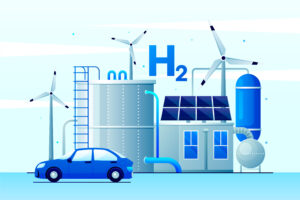
Hydrogen – the simplest, lightest, and most abundant element in the universe – is much more than just a name on the periodic table. It fuels stars, forms the building blocks of life, and has the potential to revolutionize clean energy.
In this blog, you will delve deep into the science, history, and future of hydrogen. Whether you are a curious student, a science lover, or a green energy advocate, this post will ignite your fascination with the element that powers the universe.
Isotopes of Hydrogen:
Physical Properties:
Chemical Properties:
Hydrogen’s journey through scientific history is both fascinating and foundational to modern chemistry. Although hydrogen is the most abundant element in the universe, its formal discovery and understanding came much later in human history.
🧪Discovery by Henry Cavendish (1766)
In the mid-18th century, British scientist Henry Cavendish conducted a series of groundbreaking experiments with acids and metals. In 1766, he discovered that when certain metals, such as zinc or iron, react with dilute acids, they release a colorless, odorless gas. Cavendish called this mysterious substance “inflammable air” because of its explosive properties when ignited in the presence of oxygen.
While others before him had observed this gas, Cavendish was the first to recognize it as a unique, distinct substance. He also made an important observation: when the gas burned, it formed water. This was a significant breakthrough that challenged the prevailing belief of the time that water was an elemental substance.
🔥 The Naming by Antoine Lavoisier (1783)
Shortly after Cavendish’s discovery, Antoine Lavoisier, a French chemist often called the “father of modern chemistry,” took the findings a step further. In 1783, Lavoisier confirmed through experimentation that water was a compound made of two elements—one of which was Cavendish’s “inflammable air.”
Lavoisier named the gas “radiogen,” derived from the Greek words:
– “hydro” meaning water
– “genes” meaning creator or former
Therefore, hydrogen literally means “water-maker,” acknowledging its role in the formation of water during combustion.
🔬Impact on Chemistry and Science
The discovery and naming of hydrogen were important in shaping modern chemistry. This marked a transition from alchemical thinking to a more scientific, element-based understanding of matter. Hydrogen became the first element to be formally recognised and studied in detail, laying the groundwork for:
– The development of the periodic table
– The understanding of chemical bonding and reactions
– The formulation of the law of conservation of mass
Hydrogen also played a central role in the development of atomic theory and later served as a test case for early models in quantum mechanics due to the simplicity of its atomic structure.
Hydrogen is not only the lightest element — it’s also the most abundant in the entire universe. From powering stars to fueling life on Earth, hydrogen plays a central role in nature’s grand design. Despite being so prevalent, it’s rarely found in its pure form on our planet due to its high reactivity. Let’s explore how hydrogen exists in both cosmic and earthly environments, and how it constantly cycles through nature.
🌌Hydrogen in the Universe
Hydrogen makes up about 75% of all common matter by mass and about 90% by number of atoms. It’s the cosmic building block — the first element to form after the Big Bang, and the fuel that keeps stars shining.
– 🌟 Stellar Fusion: At the core of stars like our Sun, hydrogen atoms fuse together through nuclear fusion, creating helium and releasing massive amounts of energy in the form of light and heat. This process not only powers stars, but also creates heavier elements — the raw materials of planets and life.
– 🌌 Interstellar medium: Vast clouds of hydrogen, called nebulae, fill the space between stars and galaxies. These clouds are often the birthplaces of new stars and planetary systems.
– 🌍 Planetary atmospheres: In gas giants like Jupiter and Saturn, hydrogen dominates the atmospheres, influencing their weather patterns, magnetism, and internal structure.
🌱Hydrogen on Earth
On our planet, hydrogen is rarely found in its free gaseous form (H₂) because of its extreme reactivity. Instead, it is chemically bound with other elements in a variety of forms:
– 💧 Water (H₂O): The most familiar and abundant compound of hydrogen. Each drop of water contains hydrogen atoms bonded with oxygen — essential for all known life.
– 🧬Organic compounds: Hydrogen is a major component of hydrocarbons (such as methane and petroleum) and biomolecules such as proteins, fats and DNA – making it vital to biology and energy systems.
– 🌿Living organisms: Hydrogen plays a fundamental role in metabolism, particularly in processes such as cellular respiration and photosynthesis.
🔁Hydrogen cycle
Like carbon and nitrogen, hydrogen also goes through a natural biogeochemical cycle, although it is less well known.
– 🌱Photosynthesis: In plants, hydrogen from water molecules is split during photosynthesis, contributing to the formation of glucose and the release of oxygen.
– 😮💨Respiration: In animals and humans, hydrogen atoms are transferred through redox reactions to produce energy (ATP) during cellular respiration.
– 🌦️ Water circulation: As water evaporates, condenses, and precipitates, hydrogen is continually recycled through Earth’s hydrosphere, biosphere, and atmosphere.
Although subtle, the hydrogen cycle plays a vital supporting role in Earth’s life systems, linking air, water, and living beings in a continuous loop.
Recent Advances:
Hydrogen is not just an element — it’s a fundamental bridge between chemistry, biology, and astrophysics.
The hydrogen economy refers to a vision of a future energy system where hydrogen becomes the primary carrier of energy, replacing fossil fuels in key sectors such as transportation, industry, and power generation. This shift aims to decarbonize the global energy system, significantly reduce greenhouse gas emissions, and mitigate climate change. Hydrogen, when used as a fuel, produces only water vapor as a byproduct, making it a clean and sustainable alternative. In this economy, hydrogen would be produced using renewable energy (through processes such as electrolysis), distributed via advanced pipelines or transported in tanks, and used in fuel cells or combustion systems to power vehicles, factories, and even homes.
Despite its promising potential, several technological and economic hurdles must be addressed:
Hydrogen is the lightest and smallest molecule, making it difficult to store efficiently. It must either be:
All these methods are energy-intensive and costly, and improving storage efficiency remains a major R&D focus.
Transporting hydrogen safely and economically is another barrier:
A widespread hydrogen economy requires a robust and accessible infrastructure, which is still in early stages:
Several countries are taking ambitious steps to build a hydrogen-powered future:
Hydrogen vs. Batteries vs. Solar – A Comparison
| Feature | Hydrogen | Batteries | Solar Energy |
| Energy Storage | Excellent for long durations | Best for short-term use | Not a storage technology itself |
| Mobility | Suitable for heavy-duty transport | Ideal for light vehicles | Needs battery integration |
| Industrial Use | Can provide high-temperature heat | Limited application | Indirect use only |
| Scalability | Promising with infrastructure | Scalable but resource-limited | Highly scalable in generation |
| Carbon Impact | Zero-emission when green | Zero-emission, but manufacturing has a footprint | Zero-emission during use |
Hydrogen excels in:
The hydrogen economy has the potential to transform global energy systems, especially when integrated with renewables. It can:
However, realizing this future depends on:
Hydrogen is a promising clean fuel, but its unique properties also pose specific safety concerns. Understanding and mitigating these risks is crucial for widespread adoption in transport, industry, and energy sectors.
Hydrogen is extremely flammable, far more so than many conventional fuels:
Hydrogen can form explosive mixtures with air:
To safely manage hydrogen in industrial and public environments, strict protocols and technologies must be in place. Key safety measures include:
Despite its potential, public perception of hydrogen safety remains a significant barrier:
The hydrogen sector is undergoing a technological renaissance, with cutting-edge research and breakthroughs making hydrogen production, storage, and use more efficient, sustainable, and scalable.
One of the most promising innovations is solid-state hydrogen storage, which involves embedding hydrogen in solid materials like metal hydrides or porous materials such as MOFs (Metal-Organic Frameworks).
Photocatalysis is a method that uses sunlight and special catalysts to split water into hydrogen and oxygen.
Transportation is one of hydrogen’s most exciting frontiers:
A new wave of hydrogen-focused startups and established companies are driving progress through innovation and commercialization:
Hydrogen isn’t just important—it’s fundamental to the universe and to life itself. Here are some fascinating hydrogen facts:
Hydrogen is much more than just a chemical element — it’s a cosmic cornerstone and a clean energy catalyst with the power to reshape our world.
From its role in the birth of the universe to its potential to drive a zero-carbon future, hydrogen is both ancient and revolutionary. It offers solutions to some of the biggest energy and environmental challenges we face today — from powering vehicles and homes to storing renewable energy at scale.
As the climate crisis deepens, hydrogen stands out as a versatile and powerful ally in building a sustainable future. But unlocking its full potential will require bold investments, continued research, and global collaboration.
🔬 Let’s invest in it.
✨ And let’s be inspired by it.
The Hydrogen Era is just beginning.