Physical Address
304 North Cardinal St.
Dorchester Center, MA 02124
Physical Address
304 North Cardinal St.
Dorchester Center, MA 02124

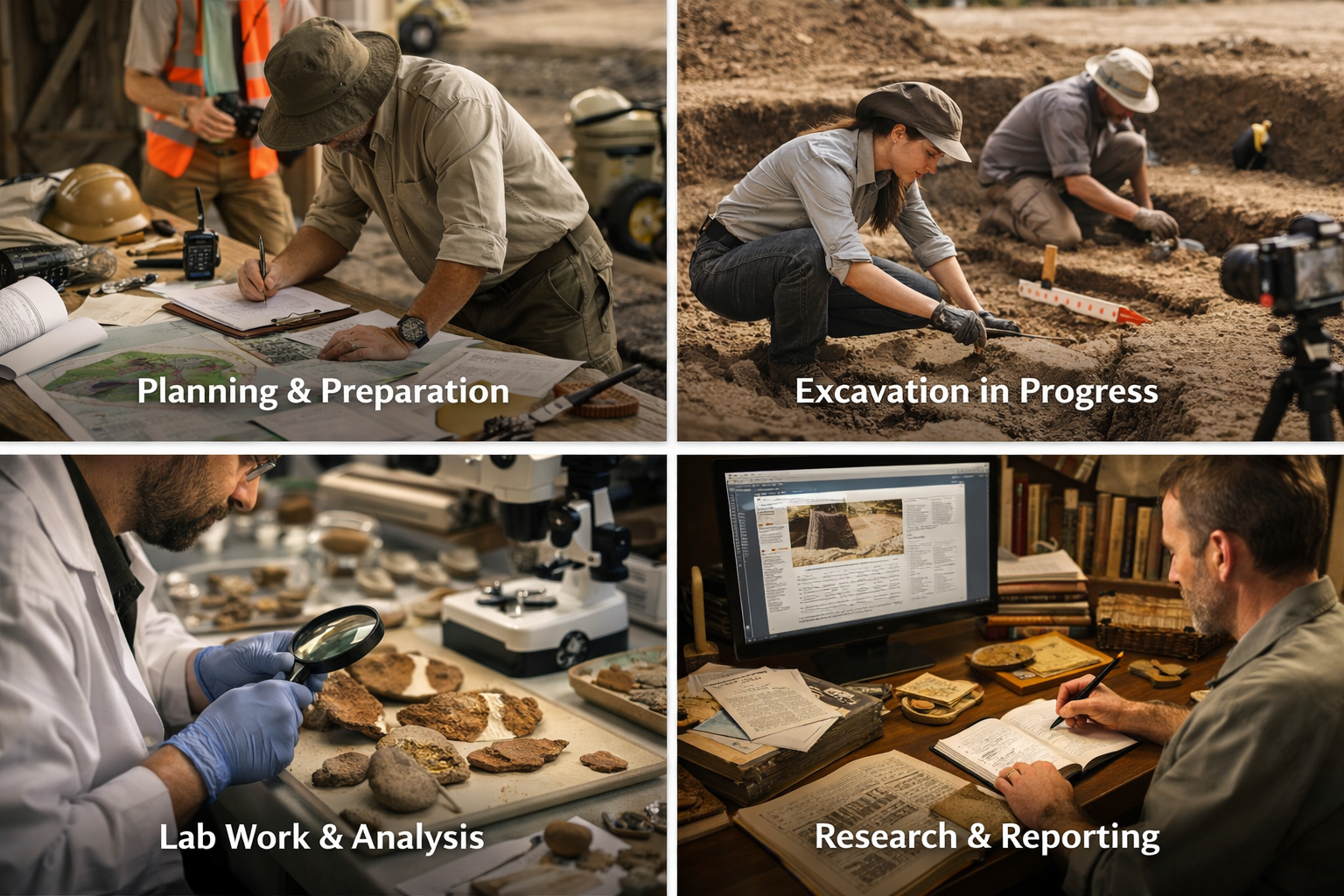
When most people hear the word archaeologist, they imagine someone discovering golden treasures, dodging traps, or traveling the world like a movie hero. While archaeology can be exciting, the real work is far more detailed, scientific, and meaningful than the myths suggest.
So what does an archaeologist actually do every day? Let’s walk through a realistic day in the life of an archaeologist—from early morning planning to late-night research.
Archaeology is not about collecting valuables. It is the scientific study of human history through material remains such as tools, buildings, bones, pottery, and landscapes. Archaeologists focus on understanding how people lived, not on finding objects to sell or display.
Most of their time is spent researching, recording data, and preserving history rather than digging dramatic discoveries.
A typical day often starts early, especially during fieldwork seasons.
Before reaching the site, archaeologists:
Every dig follows strict methods to ensure that no information is lost. Once something is disturbed, it can never be replaced, so preparation is critical.
Before excavation even begins, archaeologists conduct surveys to locate potential sites. This may involve:
Surveys help archaeologists decide where to dig and where not to.
Excavation is slow, careful, and highly controlled.
Archaeologists:
Each artifact is carefully labeled, recorded, and stored. The context of an object is often more important than the object itself.
Documentation is the backbone of archaeology.
During breaks from digging, archaeologists:
If something is not recorded properly, it is considered lost to science—even if the object is preserved.
Not all archaeology happens outdoors.
In laboratories, archaeologists:
This stage helps answer questions such as:
A large part of an archaeologist’s job happens at a desk.
This includes:
Archaeology relies heavily on written records to share knowledge with the world.
Archaeologists rarely work alone.
They collaborate with:
Many archaeologists also:
Public outreach ensures cultural heritage is respected and preserved.
Despite its importance, archaeology comes with challenges:
Patience and dedication are essential traits in this profession.
Even with challenges, archaeology is deeply rewarding.
Archaeologists get to:
Few careers offer such a strong connection between the past and the present.
Archaeology may be a good fit if you:
With careers in academia, museums, heritage management, and research institutions, archaeology offers diverse paths.
A day in the life of an archaeologist is not about adventure movies—it is about curiosity, discipline, and respect for history. Through careful study and preservation, archaeologists help us understand where we come from and how humanity has evolved.
In many ways, archaeologists are storytellers—using soil, stone, and artifacts to tell the story of humankind.