Physical Address
304 North Cardinal St.
Dorchester Center, MA 02124
Physical Address
304 North Cardinal St.
Dorchester Center, MA 02124

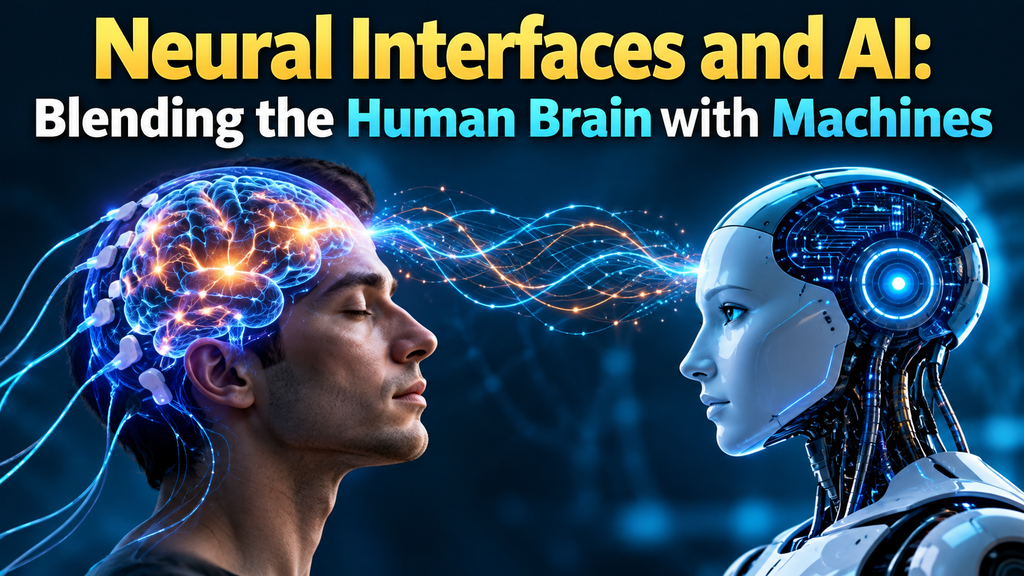
Neural interfaces and artificial intelligence are bringing humans and machines closer than ever before. But how does a computer understand brain signals, what can AI do with those signals, and could we eventually control machines simply by thinking?
For decades, the idea of connecting the human brain directly to a computer belonged largely to science fiction. Today, brain-computer interfaces (BCIs) and other forms of neurotechnology are turning parts of that idea into real scientific research.
A neural interface can detect activity from the nervous system and translate it into information that a computer or another device can understand. Artificial intelligence can then help analyze those extremely complex signals and convert them into useful commands.
This combination could help people with paralysis communicate, control computers, operate robotic devices, or regain some lost functions. Recent research has even demonstrated brain-to-voice systems capable of producing expressive synthetic speech from neural activity.
However, the technology also raises difficult questions. If brain data can be recorded, who should control it? How private should neural information be? And where should society draw the line between medical assistance and human enhancement?
In this article, we explore how neural interfaces and AI work together, their current applications, challenges, ethical questions, and what the future of human-machine interaction may look like.
A neural interface is a technology that creates a communication pathway between the nervous system and an external device.
The nervous system communicates using electrical and chemical signals. When we move a hand, speak, see something, or perform another activity, networks of neurons generate patterns of activity.
Neural interfaces attempt to measure, interpret, stimulate, or otherwise interact with these signals.
Depending on the technology, neural interfaces can work:
The broader field is often called neurotechnology.
UNESCO describes neurotechnology as a rapidly developing field involving technologies that interact with the nervous system, including technologies capable of measuring, monitoring, analyzing, predicting, or modulating nervous-system activity.
A Brain-Computer Interface (BCI) is a system that translates brain activity into commands for an external device.
Instead of moving a physical mouse with your hand, for example, a BCI may attempt to identify the neural activity associated with the intention to move a cursor.
A simplified BCI system looks like this:
Brain → Neural Signals → Sensors → Signal Processing → AI/Decoder → Computer or Device
For example:
The user can then receive visual or other feedback and adjust their neural activity.
This creates a closed-loop interaction between the person and the machine.
Although different systems use different technologies, most neural-interface systems can be understood through several major stages.
The brain contains billions of neurons that communicate through electrical and chemical processes.
Different tasks produce different patterns of neural activity.
For example, activity associated with movement intention can contain information that researchers may use to estimate the direction or type of movement a person intends to make.
The next step is measuring brain or nervous-system activity.
There are several approaches.
Non-invasive systems do not require electrodes to be implanted inside the body.
One of the best-known approaches is electroencephalography (EEG), where electrodes placed on the scalp measure electrical activity.
Advantages include:
However, signals measured from outside the skull can be weaker and more difficult to interpret.
Invasive BCIs use electrodes implanted in or near the brain.
Because the sensors can be much closer to neural activity, they may capture more detailed signals.
The trade-off is that implantation requires surgery and introduces medical risks.
The U.S. FDA and NIH have described implanted BCIs as technologies being investigated for restoring motor and communication capabilities in people with disabilities.
The human brain produces extraordinarily complex signals.
A neural recording is not simply a sentence such as:
“Move the cursor to the left.”
Instead, researchers receive patterns of electrical activity that must be interpreted.
This is where artificial intelligence and machine learning become extremely important.
AI models can learn relationships between neural signals and desired actions.
A simplified process might look like:
Raw Brain Data → Cleaning → Feature Extraction → Machine Learning Model → Intended Action
For example, researchers may train a system using:
Brain signal + known movement
The AI gradually learns patterns associated with different movements.
Later, when the user generates a similar neural pattern, the system estimates what the person intends to do.
Traditional algorithms can perform many signal-processing tasks, but neural data can vary significantly.
The signal may change because of:
Machine learning can help systems adapt to these variations.
Modern BCI research increasingly combines neural decoding with deep learning, adaptive algorithms, and other AI techniques.
A 2025 study published in Nature Machine Intelligence demonstrated an AI-assisted BCI in which AI copilots helped users perform cursor-control and robotic-arm tasks. The researchers reported substantially improved cursor target-hit performance for a participant with paralysis and demonstrated a robotic-arm task that the participant could not perform without the AI assistance.
This illustrates an important shift:
The future BCI may not simply decode the brain. AI may actively help interpret and complete the user’s intended action.
Imagine asking a computer to move a robotic arm.
A conventional BCI might attempt to decode every movement directly from neural activity.
But AI can potentially provide another layer of assistance.
For example:
Human intention:
“Pick up that object.”
BCI:
Detects the user’s intended direction or action.
AI:
Understands the task and predicts the necessary sequence of movements.
Robot:
Performs the movement.
This concept is known as shared autonomy.
Instead of requiring the human brain to control every tiny movement, AI can handle some lower-level details while the person provides the overall intention.
This can potentially make BCIs easier and more efficient to use.
One of the most important applications of BCI technology is communication.
People with conditions that severely affect speech or movement may have difficulty communicating through conventional methods.
Researchers are therefore investigating systems that decode attempted or imagined speech from neural activity.
Recent research has produced remarkable results.
A 2025 study published in Nature demonstrated a brain-to-voice neuroprosthesis that used neural activity recorded from implanted electrodes in a participant with ALS and severe dysarthria to generate synthesized speech. The system was also able to reproduce aspects of vocal expression, including changes in intonation, and demonstrated the ability to produce short melodies.
This is significant because communication is not simply about converting thoughts into written words.
Human speech contains:
Future neural communication systems may therefore become much more natural than simple text output.
Another major application is assistive robotics.
A person with paralysis may not be able to control their muscles normally, but the brain can still generate movement-related signals.
A BCI can potentially capture these signals and send commands to:
The goal is not necessarily to make the brain directly control every motor detail.
Instead, AI can potentially help translate high-level intentions into practical physical actions.
For example:
Brain intention → BCI → AI → Robotic arm → Object
This could eventually support activities such as reaching, grasping, feeding, or interacting with objects.
The FDA has highlighted the potential of neural interfaces to restore lost sensorimotor functions while also noting the technical and clinical challenges that must be solved before these technologies can become broadly usable.
One of the most widely discussed companies in the BCI field is Neuralink.
Neuralink’s PRIME Study is an investigational clinical study involving a fully implantable, wireless BCI. The company says its system is designed to evaluate safety and initial functionality for enabling people with severe paralysis to control external devices using neural signals.
Neuralink has described its N1 implant as using thousands of recording sites distributed across flexible threads.
Its clinical research is still part of an investigational process. This distinction is important:
A clinical trial result is not the same thing as a universally available medical product.
The broader BCI field includes many research groups and technologies, not just one company.
Popular discussions sometimes make BCIs sound like mind-reading machines.
The reality is much more complicated.
Current neural interfaces generally work with specific signals and specific trained tasks.
For example, a system may be trained to distinguish neural patterns associated with:
That does not mean a computer can simply connect to someone’s brain and automatically read their entire stream of consciousness.
Brain activity is extremely complex, and interpreting it accurately remains a major scientific challenge.
This distinction is essential when discussing neural interfaces responsibly.
One fascinating direction is brain-to-text communication.
Researchers can train machine-learning models to associate neural activity with speech-related or movement-related patterns.
The system can then produce:
Neural Activity → Decoded Language → Text
For someone who cannot physically speak or type, such a system could potentially provide a new communication channel.
Research into neural speech decoding has explored both electrocorticography and other neural recording approaches combined with machine learning and speech synthesis.
However, performance depends heavily on the participant, recording technology, task, training data, and experimental conditions.
This is one of the most fascinating possibilities—but also one of the areas where speculation can easily get ahead of science.
Researchers are investigating how neural activity relates to memory, learning, perception, and other cognitive processes.
However, the idea of simply uploading human memories to a computer remains far beyond current capabilities.
Human memory is not understood as a simple collection of digital files stored in one location.
It involves complex networks distributed throughout the brain and depends on biological processes that researchers are still studying.
Therefore, concepts such as:
should currently be treated as speculative ideas rather than established technologies.
In limited experimental contexts, this is already being investigated.
A BCI can potentially allow users to interact with digital systems without conventional physical input.
Instead of:
Hand → Mouse → Computer
the interaction could become:
Brain → BCI → AI → Computer
Potential applications include:
The long-term objective is not necessarily to eliminate keyboards and touchscreens for everyone.
For many researchers, the most immediate value is helping people who cannot easily use conventional interfaces.
Today’s dominant interfaces include:
Neural interfaces represent another possible layer:
Thought or neural intention → Machine
If the technology becomes sufficiently reliable, future computing could combine multiple interfaces.
For example:
Voice + Eye Tracking + Gesture + Neural Signals + AI
AI could determine which input represents the user’s intended action.
This could create highly adaptive human-computer interfaces.
Neural interfaces may eventually contribute to several areas of medicine and rehabilitation.
Potential applications include:
Neural interfaces could provide new communication options for people with severe speech impairments or paralysis. These systems can detect specific patterns of neural activity associated with attempted speech or communication. AI can then process these signals and translate them into text or synthesized speech. This may allow a person to communicate without relying entirely on conventional keyboards or physical movements. Recent research has demonstrated experimental brain-to-voice systems capable of producing increasingly natural and expressive speech. As the technology develops, neural communication could help improve independence and everyday interaction.
Neural interfaces could help people with paralysis interact with computers and assistive technologies using brain signals. Instead of relying entirely on physical movement, users may be able to generate neural commands associated with intended actions. AI can process these signals and translate them into commands for a computer cursor, robotic arm, wheelchair, or other device. This could make everyday tasks more accessible for people with significant motor impairments. Research is exploring how AI-assisted BCIs can improve the control of robotic devices and digital interfaces. As these systems become more reliable, they could support greater independence and mobility.
Neuroprosthetics combine neural interfaces with artificial limbs and other assistive technologies to help restore lost physical functions. These systems can detect neural signals associated with a person’s intended movement and translate them into commands for a prosthetic device. AI can help interpret these signals and improve the device’s responsiveness and control. Advanced neuroprosthetic systems may allow users to perform actions such as reaching, grasping, or moving an artificial limb. Researchers are also exploring ways to provide sensory feedback, helping users receive information about the interaction between the prosthetic and its environment. As the technology develops, neuroprosthetics could provide more natural and intuitive control for people with limb loss or paralysis.
Neural interfaces are being explored as a tool for rehabilitation after neurological injuries or conditions that affect movement. These systems can create a connection between brain activity and an external device, allowing users to practice controlling a computer interface, robotic device, or other assistive system. Real-time feedback can help users understand how their neural activity is being translated into actions. AI can assist by analyzing neural signals and adapting the system to the individual user. Researchers are studying whether these brain-computer interactions can support motor training and recovery. As research progresses, neural interfaces could become an additional tool within personalized rehabilitation programs.
Neurotechnology also includes systems that stimulate or monitor brain activity for medical purposes.
It is important, however, to distinguish BCIs, which primarily create communication/control pathways, from other neurotechnologies such as deep brain stimulation (DBS), which uses electrical stimulation to influence neural circuits.
These technologies overlap conceptually but are not identical.
Despite rapid progress, neural interfaces face major challenges.
Brain signals can be weak, noisy, and difficult for neural interface systems to interpret accurately. Electrical activity from the brain can contain unwanted signals from movement, muscles, equipment, or the surrounding environment. These sources of noise can make it harder for an AI model to identify the user’s intended action. Even small changes in signal quality may affect the accuracy and reliability of the system’s predictions. Researchers therefore use signal-processing techniques and machine-learning methods to improve the quality and interpretation of neural data. Developing reliable ways to capture clear and consistent brain signals remains an important challenge for practical neural interfaces.
Every human brain has unique patterns of neural activity, which can make it difficult to develop a single neural interface that works equally well for everyone. An AI model trained using one person’s brain signals may not interpret another person’s neural activity in exactly the same way. Differences in brain activity, anatomy, learning patterns, and signal characteristics can affect system performance. As a result, many neural-interface systems require some level of personalized training or calibration. AI can help adapt the system to the individual user and improve how neural signals are interpreted over time. Developing interfaces that can adapt efficiently to different users remains an important challenge in BCI research.
Implanted neural-interface systems need to function reliably and safely over long periods, which presents an important engineering and medical challenge. Over time, researchers need to understand how implanted electrodes interact with surrounding biological tissue and whether these interactions can affect signal quality. Changes in the interface may make neural signals more difficult to record or interpret consistently. The device must also remain durable while operating within the body for extended periods. Researchers therefore study both the long-term performance of the electrodes and the body’s response to the implant. Improving long-term stability is essential for making implanted neural interfaces practical for sustained use.
Implanted brain-computer interfaces require medical procedures to place electrodes or other components in or around the brain. Because these procedures involve surgery, they can carry risks that are generally not associated with non-invasive technologies such as EEG. Potential concerns may include infection, bleeding, inflammation, or complications related to the surgical procedure itself. The long-term interaction between an implant and surrounding brain tissue also needs careful evaluation. Researchers and medical teams therefore conduct extensive testing to assess the safety and reliability of implanted systems. Reducing surgical and long-term medical risks will be essential before these technologies can become widely available for clinical use.
Users may need time and practice to learn how to generate neural patterns that a neural interface can reliably recognize. Different tasks may require users to become familiar with how their thoughts or intended movements affect the system’s response. At the same time, the AI model can learn from the user’s neural signals and gradually adapt to their individual patterns. This creates an ongoing feedback loop in which both the person and the technology adjust to each other. Effective training can help improve the accuracy, consistency, and usability of the interface. In simple terms, it becomes a two-way adaptation process:
Human learns the machine + Machine learns the human
Implanted neural-interface devices need safe, reliable, and efficient power systems to operate continuously inside the body. Researchers must carefully balance battery capacity with the size and weight of the implant, while also managing heat generation during operation. Wireless communication can add further power requirements, particularly when neural data needs to be transmitted to an external device. The power system must also be designed for long-term reliability so that frequent maintenance or replacement can be avoided where possible. Improving energy efficiency can help make implanted neural interfaces smaller, safer, and more practical for long-term use. These requirements make power management an important part of the engineering challenges involved in developing advanced neural interfaces.
If a neural interface communicates wirelessly with computers, smartphones, or other networks, cybersecurity becomes an important consideration. Neural systems may handle highly sensitive information, including neural signals and data related to how a person interacts with the device. Unauthorized access could potentially expose this information or interfere with the operation of connected equipment. Unlike ordinary consumer devices, a neural interface may have a direct connection to systems that interact with a person’s nervous system. Strong encryption, authentication, secure software, and regular security testing can therefore be important parts of responsible neural-interface design. As these technologies become more connected, protecting both neural data and device functionality will remain a major challenge.
This may become one of the biggest debates surrounding neurotechnology.
Imagine that a wearable or implanted device records neural signals continuously.
Who owns that data?
And what happens if the data is used to train an AI model?
Neural data can potentially reveal information about a person’s neurological state and other characteristics.
UNESCO specifically identifies mental privacy, brain-data confidentiality, autonomy, freedom of thought, and human dignity as major ethical issues associated with neurotechnology.
This is why brain data may require stronger protection than ordinary personal information.
The term neurorights is increasingly used in discussions about protecting people in an era of advanced neurotechnology.
The concept includes concerns such as:
The underlying idea is simple:
Technology should not undermine fundamental human autonomy.
UNESCO adopted a Recommendation on the Ethics of Neurotechnology following an international process involving experts and member states. The framework addresses neurotechnology across its lifecycle and emphasizes human rights, dignity, privacy, and responsible governance.
Cybersecurity is a serious concern.
Any connected digital system can potentially create security risks.
For neural interfaces, possible concerns include:
The exact risks will depend on the architecture of a particular device.
Therefore, security should not be treated as an optional feature added later.
It needs to be designed into the technology from the beginning.
The relationship between AI and neural interfaces may eventually become more sophisticated.
Today, a simplified model is:
Brain → AI → Machine
But future systems could become:
Brain ↔ AI ↔ Machine
The human provides intention.
AI interprets the intention.
The machine performs the action.
The result is fed back to the human.
The human then adjusts their intention.
AI updates its interpretation.
The machine responds again.
This creates a continuous closed-loop human-machine system.
Potentially, yes.
A human does not consciously think about every tiny movement required to pick up a cup.
We simply think:
“Pick up the cup.”
The brain and nervous system automatically coordinate many lower-level actions.
AI could potentially provide similar assistance for BCI-controlled systems.
Instead of requiring a user to control every individual movement, the system could infer a higher-level goal and handle some of the detailed execution.
This is one reason AI copilots are an important research direction for BCIs. Research published in Nature Machine Intelligence has already demonstrated experimental benefits from AI-assisted shared autonomy in BCI control.
The medical applications of neural interfaces are easier to understand:
Restore lost function.
But another possibility is:
Enhance existing human abilities.
For example, researchers and futurists have discussed hypothetical technologies that could improve:
These possibilities raise difficult social questions.
If neural enhancement becomes possible, will it be available to everyone?
Could employers pressure workers to use it?
Could schools or institutions encourage cognitive enhancement?
Could wealthy individuals gain access to capabilities unavailable to others?
UNESCO has highlighted inequality and the possibility that unequal access to advanced neurotechnology could increase existing social divides.
The word cyborg generally describes an organism whose biological functions are integrated with technological systems.
From that perspective, humans already interact extensively with machines.
We use:
Neural interfaces could make this relationship much more direct.
Instead of interacting with technology through our hands, eyes, or voice, some devices could interact more directly with neural signals.
But becoming technologically integrated does not automatically mean losing our humanity.
The important question is how such technologies are designed, controlled, regulated, and used.
As neural-interface technology develops, its role could gradually expand beyond research laboratories and specialized medical applications. A future neural-interface ecosystem could connect the human brain with computers, artificial intelligence, robotic systems, prosthetic devices, and other technologies through a continuous communication process.
Instead of interacting with technology only through a keyboard, mouse, touchscreen, or voice, a person could potentially communicate an intention through neural activity. AI would then help interpret that activity and translate it into a useful action.
A simplified future system could be organized into five connected layers:
Human Intention → Neural Interface → AI Interpretation → Digital or Physical Action → Feedback
Each layer would perform a different role in the communication loop.
Everything begins with the person’s intention.
Before interacting with a device, the user decides what they want to accomplish. For example, a person may want to move a computer cursor, select an item, control a robotic arm, or communicate a word.
The brain generates patterns of neural activity associated with these intentions and actions. A neural interface does not simply receive a sentence such as “move the cursor”; instead, it records patterns of neural activity that a trained system attempts to interpret.
In a future system, the user may be able to focus on a goal rather than manually control every individual movement.
Example:
Human intention: “Move the cursor to the right.”
The neural activity associated with that intention becomes the starting point for the next layer.
The neural interface acts as the communication bridge between the nervous system and the external technology.
Depending on the system, sensors may detect neural activity using non-invasive or implanted methods. The recorded signals are then transferred to processing hardware and software for analysis.
The purpose of this layer is to capture useful information from neural activity while minimizing unwanted noise and other interference.
For example, the system could detect neural patterns associated with an intended movement and convert those signals into digital data.
The basic process can be represented as:
Brain Activity → Sensors → Neural Data
The neural interface therefore serves as the connection point between the biological nervous system and the digital system.
Raw neural signals are complex and can be difficult to interpret directly. This is where artificial intelligence and machine-learning models can play an important role.
AI can analyze patterns in the recorded neural data and estimate what the user is trying to accomplish.
For example:
Neural Signals → AI Model → Estimated Intention
The AI system may have previously been trained using examples of neural activity associated with specific actions. As the system receives more information, it can potentially adapt to the individual user’s patterns.
This layer is particularly important because every person’s neural activity is different.
AI can therefore act as an interpretation layer, helping translate complex biological signals into commands that a computer or other device can understand.
Once the AI system estimates the user’s intention, the command can be sent to an external device.
Depending on the application, the output could control a:
For example, if the AI interprets the neural activity as an intention to move a cursor to the right, the computer can execute that movement.
The process becomes:
Human Intention → Neural Signals → AI Interpretation → Computer Action
For physical systems, the same principle could potentially control a robotic or prosthetic device.
The important idea is that the user does not necessarily have to physically operate every component of the device. The neural interface provides another pathway for expressing the user’s intention.
The process does not necessarily end when the machine performs an action.
Feedback allows the user to understand what the system has done and adjust their interaction.
Feedback could potentially be provided through:
For example, if a user attempts to move a cursor and sees it move on the screen, that visual information helps them determine whether the system correctly interpreted their intention.
The user can then adjust their next command.
This creates an ongoing interaction:
Intention → Neural Signal → AI → Action → Feedback → New Intention
The five layers are not isolated components. They form a continuous communication system between the human and the machine.
A simplified example could look like this:
The person decides to move a cursor.
The neural interface records relevant brain activity.
The AI model analyzes the neural data and estimates the intended movement.
The computer moves the cursor according to the interpreted command.
The person sees the cursor move and can adjust their next intention.
The process then repeats continuously.
The future of neural interfaces may therefore be better understood as a closed-loop system rather than a one-way connection.
Human → Neural Interface → AI → Machine → Feedback → Human
The human provides the intention.
The neural interface captures relevant signals.
AI interprets those signals.
The machine performs an action.
Feedback informs the human about the result.
The human then generates another intention based on that feedback.
This continuous loop could allow humans and machines to interact more naturally.
Without AI, interpreting complex neural signals can be extremely difficult.
AI can potentially help systems recognize patterns, adapt to individual users, and estimate intended actions from noisy or changing neural data.
This could make future neural interfaces more responsive and personalized.
The relationship could eventually become:
Human provides the goal + AI helps interpret the goal + Machine performs the action
This does not mean that AI replaces human decision-making. Instead, the AI can function as an interpretation and assistance layer between the person’s neural activity and the external device.
Imagine a person using a neural interface to control a robotic arm.
The process could work like this:
1. Human Intention
The person decides to reach toward an object.
2. Neural Interface
Sensors detect relevant neural activity.
3. AI Interpretation
The AI estimates the intended direction and movement.
4. Robotic Action
The robotic arm moves according to the interpreted command.
5. Feedback
The person receives visual or other feedback about the arm’s movement.
The user can then adjust their intention and continue controlling the device.
This illustrates how all five layers can work together as one system.
The most immediate applications of neural interfaces are largely focused on medical and assistive needs. However, if the technology becomes safer, smaller, more reliable, and easier to use, researchers and technology developers may explore broader applications.
Future possibilities could include interacting with computers, controlling smart environments, communicating with digital systems, or operating assistive technologies with less physical effort.
However, many of these everyday applications remain potential future scenarios rather than established capabilities.
The technology would need to overcome significant challenges involving accuracy, safety, privacy, cybersecurity, cost, and long-term reliability before widespread everyday adoption could become realistic.
The long-term vision of neural interfaces is not necessarily about removing all traditional interfaces.
Instead, future systems could combine multiple forms of interaction.
A person might use:
Voice + Eyes + Touch + Gesture + Neural Signals + AI
AI could determine which signals are relevant and help coordinate the interaction.
This could create a more flexible form of human-computer interaction in which people communicate with machines through whichever method is most appropriate for a particular situation.
A future neural-interface ecosystem could be organized around five interconnected layers:
1. Human Intention – The person decides what they want to accomplish.
2. Neural Interface – Sensors capture relevant neural activity.
3. AI Interpretation – AI analyzes the signals and estimates the user’s intention.
4. Digital or Physical Action – A computer, robot, prosthetic, or other device performs the action.
5. Feedback – The system provides information that allows the user to adjust and continue the interaction.
Together, these layers create a continuous human-machine communication loop.
The most important development may not be simply connecting the brain to a machine. It may be creating a system where humans provide intention, AI helps interpret it, machines perform the task, and feedback allows the human to remain actively involved.
As research continues, this model could become an important foundation for the next generation of human-computer interaction.
This is perhaps the most misunderstood part of the topic.
Current BCI technology should not be described as a universal “thought reader.”
Neural decoding is generally designed around particular tasks, signals, participants, and training conditions.
Even impressive speech-decoding experiments do not mean that researchers can freely read every private thought a person has.
That distinction matters because exaggerated claims can create unnecessary fear and unrealistic expectations.
At the same time, advances in AI could make neural decoding increasingly capable.
Therefore, society needs strong safeguards before the technology becomes widespread rather than waiting until after problems occur.
The development of neural interfaces and AI creates exciting possibilities for medicine, communication, rehabilitation, and human-computer interaction. However, technologies that interact directly with the nervous system also raise important ethical questions.
The central challenge is not simply:
“Can we connect the brain to a computer?”
A more important question is:
“How should we connect brains and computers while protecting human freedom and dignity?”
As neural technologies become more sophisticated, responsible development needs to consider several important principles.
People should understand how a neural technology works, what it is designed to do, and what information it may collect before agreeing to use it.
This is particularly important for implanted technologies because they may involve medical procedures and long-term interaction with the nervous system. Users should receive understandable information about potential benefits, limitations, risks, and alternatives.
Meaningful consent also means that people should be able to make decisions about participating in research or using a technology without being misled or pressured.
Neural interfaces may generate highly sensitive information about brain activity and interactions with technology.
Protecting this information is therefore an important part of responsible neurotechnology development. Organizations handling neural data need to consider how the information is collected, stored, processed, shared, and eventually deleted.
Users should also have clear information about who can access their neural data and for what purposes.
As neural technologies become more capable, protecting mental privacy could become an increasingly important part of digital privacy.
Neural interfaces that communicate with computers, smartphones, cloud services, or other devices may introduce cybersecurity considerations.
A security failure could potentially expose sensitive neural data or interfere with connected equipment.
For this reason, security should be considered throughout the development process rather than added only after a product has been created.
Possible safeguards can include strong authentication, encryption, secure software architecture, access controls, and regular security testing.
Users should be able to understand, at an appropriate level, how a neural-interface system and its AI components process their information.
AI models can be complex, and users may not always be able to understand exactly how a particular prediction or command was generated. Clear documentation can nevertheless explain what data the system uses, what the AI is designed to interpret, and what limitations may affect its performance.
Transparency is particularly important when neural technology is used for medical or assistive purposes, where system errors may have meaningful consequences.
Advanced medical and assistive technologies can be expensive to develop and manufacture.
If effective neural technologies become available but remain accessible only to people with significant financial resources, their benefits could be distributed unequally.
Accessibility therefore involves more than simply making a technology technically possible. Researchers, healthcare systems, policymakers, and technology developers may also need to consider affordability, availability, infrastructure, and access to specialist care.
The broader goal is to ensure that useful advances in neurotechnology do not automatically create deeper social inequalities.
Neural interfaces are designed to create a closer connection between people and machines, making meaningful human control especially important.
Users should understand when a system is interpreting their neural signals and when an AI system is making decisions or recommendations based on those signals.
In assistive technologies, AI may help interpret a person’s intention or control detailed aspects of a task, but the overall system should be designed around the user’s needs and authorized actions.
Maintaining meaningful human involvement is particularly important when technology is connected to physical devices or other systems that can affect the user’s environment.
Safety is especially important for implanted neural technologies because the device may remain inside the body for an extended period.
Researchers need to evaluate not only whether an implant works initially, but also how reliably it performs over time and how the body responds to the implanted components.
Clinical evaluation can help researchers understand potential risks, benefits, device performance, and long-term outcomes.
Technologies involving implantation therefore require rigorous testing and appropriate medical oversight before they can be considered for broader clinical use.
Neural interfaces are different from many ordinary consumer technologies because they can interact directly with biological systems and potentially generate highly sensitive neural information.
This means that technical progress alone is not enough.
A successful neural-interface ecosystem also needs appropriate safeguards for:
International discussions around the ethics of neurotechnology, including UNESCO’s Recommendation on the Ethics of Neurotechnology, address issues such as human rights, mental privacy, autonomy, safety, and responsible access to neurotechnology.
The ethical framework will need to continue developing alongside the technology itself.
The goal should not be to stop innovation.
Neural interfaces could provide important benefits, particularly for people who have lost the ability to communicate or control parts of their body.
At the same time, responsible innovation requires researchers and developers to consider potential risks before technologies become widely deployed.
The challenge is therefore to maintain a balance:
Innovation → Benefits → Safety → Privacy → Human Rights
A technology can be scientifically impressive while still requiring careful consideration of how it affects individuals and society.
The future of neural interfaces will depend not only on what scientists and engineers are capable of building, but also on how responsibly those technologies are designed, tested, governed, and used.
The next stage of development will likely focus on making neural interfaces:
Researchers are also working toward more natural communication and control.
The most meaningful advances may not be flashy demonstrations.
They may be technologies that quietly help a person:
The FDA has emphasized that implanted BCI development still requires robust methods for evaluating both benefits and risks in real-world settings.
Neural interfaces represent a major change in the relationship between humans and computers.
For most of computing history, humans have communicated with machines through physical interfaces:
Keyboard → Mouse → Touchscreen → Voice
Neural interfaces introduce another possibility:
Brain → Machine
When AI is added, the system becomes even more powerful because AI can help interpret complicated neural signals and translate them into meaningful actions.
The result could be a new generation of human-machine interaction.
But the future should not be measured only by how powerful the technology becomes.
It should also be measured by whether it remains:
Safe, private, accessible, transparent, and under meaningful human control.
The most valuable future of neural interfaces may therefore not be about creating superhumans.
It may be about helping people overcome disabilities and expanding the ways humans can communicate with the world.
Neural interfaces and AI are bringing neuroscience and computing closer together.
Brain-computer interfaces can already demonstrate the ability to translate certain patterns of neural activity into computer commands, while AI is helping researchers improve decoding, adaptation, communication, and device control.
Recent research has shown progress in AI-assisted BCI control and brain-to-voice communication, demonstrating that the field is moving beyond theoretical concepts toward increasingly sophisticated experimental systems.
However, the technology is still developing.
Many challenges remain, including signal reliability, long-term safety, personalization, clinical validation, cybersecurity, data protection, and ethical governance.
The biggest transformation may ultimately come from the combination of three technologies:
Human neuroscience + Neural interfaces + Artificial intelligence
Together, they could create a new form of human-computer interaction—one where technology does not simply respond to what we type or say, but can interpret aspects of our neural activity.
The future of this field is exciting, but it should be approached with both scientific curiosity and human responsibility.
Because when technology gets closer to the human brain, protecting the person behind the technology becomes just as important as improving the technology itself.
A neural interface is a technology that interacts with the nervous system to measure, analyze, stimulate, or communicate with neural activity.
A brain-computer interface, or BCI, is a system that uses brain activity to control or communicate with an external computer or device.
AI can analyze complex neural signals and learn patterns associated with intended actions, helping translate brain activity into commands.
Current BCIs are not universal mind-reading systems. They are generally designed and trained for specific tasks, signals, users, and experimental conditions.
Research has demonstrated experimental systems that decode neural activity associated with attempted speech and generate text or synthesized voice. These technologies remain an active area of research.
Yes. Neuralink is developing an implanted BCI and is conducting investigational clinical studies involving people with severe paralysis.
Safety depends on the specific technology. Non-invasive systems and implanted systems have very different risk profiles. Implanted BCIs require clinical evaluation because surgery and long-term implantation introduce additional risks.
Neurorights is a term used in discussions about protecting human rights in relation to neurotechnology, including concerns about mental privacy, cognitive liberty, autonomy, and control over neural data.
Deeper integration between humans and AI is technologically conceivable, but many forms of human-AI brain integration remain experimental or speculative. It is not currently possible to upload a person’s complete consciousness or memories into an AI system.


Disclaimer: This article is intended for educational and informational purposes. Neural interfaces, brain-computer interfaces, and related medical technologies are rapidly developing fields. Experimental research results should not be interpreted as established medical treatments or guarantees of future capabilities.