A Complete Guide to Transform Your Habits, Focus & Life
1. Introduction
What is Self-Discipline?
Self-discipline is the ability to control your actions, emotions, and habits to achieve long-term goals. It’s the skill that turns intentions into consistent action — even when you’re tired, distracted, or unmotivated.
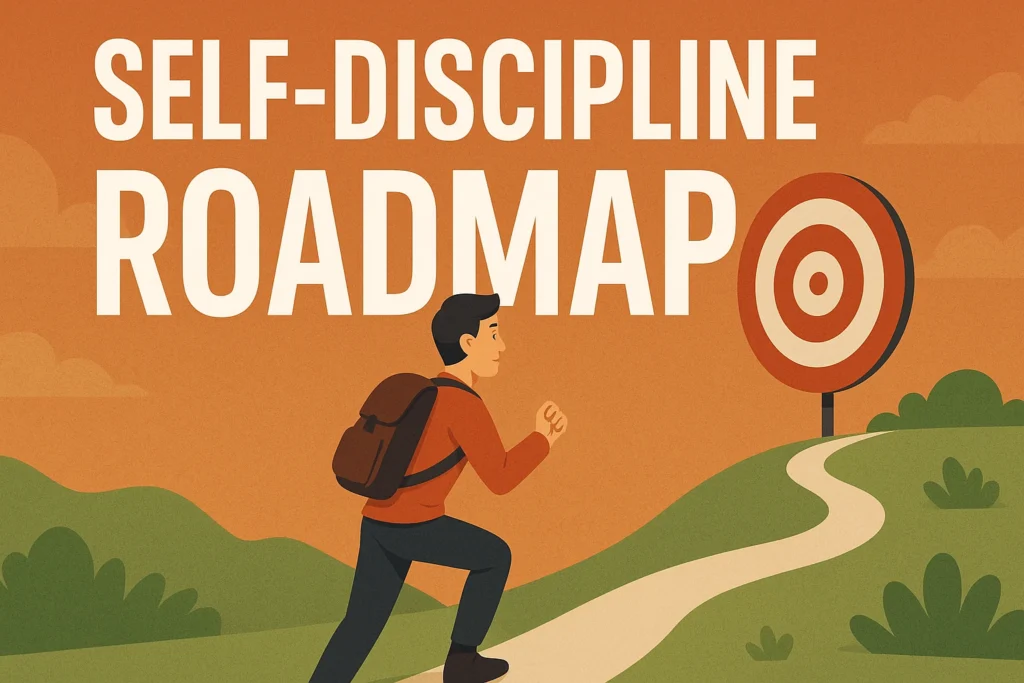
Self-Discipline Roadmap
Why It Matters
Self-discipline impacts every area of life:
Better health
More productivity
Stronger financial stability
Improved relationships
Faster personal growth
It is the foundation of success—more important than talent or motivation.
Common Misconceptions
“I need to feel motivated first.” No — action creates motivation.
“Discipline means being strict all the time.” No — discipline is about consistency, not perfection.
“Some people are born disciplined.” Discipline is a skill anyone can build.
2. Understanding Self-Discipline
2.1 The Science Behind Discipline
Dopamine & Habits
Your brain repeats what gives it dopamine. Good habits = controlled dopamine Bad habits = instant dopamine Self-discipline is training your brain to choose long-term rewards.
Willpower as a Limited Resource
You have limited daily willpower. That’s why:
Morning = better discipline
Night = more cravings & procrastination Building routines reduces willpower usage.
Environmental Influence
Your environment controls 50% of your discipline. If your room, phone, social circle, and routine are chaotic, your habits will be too.
Doing small tasks every day beats doing big tasks occasionally.
Micro-Habits
5 push-ups → become 50 1 page reading → becomes 50 pages Small steps trigger big change.
4.2 Time Management
Prioritize Tasks
Use the Eisenhower Matrix:
Important + urgent
Important + not urgent
Not important + urgent
Not important + not urgent
Use Time-Blocking
Allocate specific time for:
Work
Learning
Fitness
Family
Rest
Avoid Multitasking
One task at a time = faster and better results.
4.3 Accountability
Self-Accountability
Set personal rules and track them daily.
Find an Accountability Partner
Share goals with someone who pushes you.
Use Digital Tools
Notion
Trello
Google Calendar
Habit tracking apps
4.4 Delayed Gratification
Marshmallow Principle
People who delay rewards become more successful.
Train Your Brain to Wait
Wait 10 minutes before reacting
Choose long-term benefits over instant pleasure
5. Building Habits Step-by-Step
5.1 Start Small
2-Minute Rule
Start any habit for just 2 minutes. The goal is to show up.
1% Improvement Strategy
Improve 1% daily = massive results in 1 year.
5.2 Habit Stacking
Attach a new habit to an old one. Examples:
After brushing → meditate 2 minutes
After lunch → walk 10 minutes
After waking → drink water
Habit stacking = zero resistance.
5.3 Tracking & Reviewing
Daily Log
Write what you did today.
Weekly Reflection
What improved? What failed? Why?
Monthly Progress Check
Reset goals, upgrade habits.
6. Mindset Development
6.1 Growth Mindset
Believe Discipline Is a Skill
Your mind can be trained like your muscles.
Learn From Failures
Failure = feedback Use mistakes to upgrade your strategy.
6.2 Handling Stress
Stress Management Techniques
Breathing exercises
Meditation
Journaling
Walks
Stay Disciplined on Bad Days
Have a backup routine for low-energy days.
6.3 Overcoming Procrastination
Identify Triggers
Sleep? Fear? Overthinking? Perfectionism?
5-Second Rule
Count 5–4–3–2–1 → Start immediately.
Pomodoro Technique
25-minute focus + 5-minute break.
7. Advanced Discipline Techniques
7.1 Deep Work
Enter Flow State
Remove phone
Work in chunks
Use noise-free environment
Eliminate Deep-Work Killers
Notifications
Conversations
Multitasking
7.2 Routine Optimization
Morning Routine
No phone
Hydrate
Plan your day
Quick workout
Mindfulness
Night Routine
Digital detox
Reflect on the day
Prepare for next day
Weekly Ritual
Reset your environment, goals, work system.
7.3 Self-Control Techniques
Temptation Bundling
Pair a good habit with a fun activity. Example: Listen to music only while walking.
Reward Systems
Reward yourself for completing goals.
Environment Redesign
Control surroundings → control behavior.
8. Self-Discipline in Different Life Areas
8.1 Health & Fitness
Diet Discipline
Avoid junk
Track calories
Maintain hydration
Exercise Consistency
Do something daily — even 10 minutes.
8.2 Career & Learning
Skill-Building Habits
Learn 1 new thing daily
Build projects
Take online courses
Avoid Burnout
Rest is part of discipline.
8.3 Money & Finances
Spending Discipline
Avoid impulsive buying.
Saving & Investing Discipline
Keep a percentage aside every month.
8.4 Relationships
Communication Discipline
Speak respectfully, listen more.
Emotional Control
React less. Observe more.
9. Tools & Resources
Recommended Apps
Notion
Habitify
Todoist
Forest
Google Calendar
Books
Atomic Habits
The Power of Habit
Deep Work
Templates & Planners
Habit tracker
Weekly planner
Minimalist to-do sheet
10. 30-Day Self-Discipline Challenge
Daily Habits
10-minute workout
10 pages reading
1-hour skill-building
No junk food
No phone for first 30 minutes & last 30 minutes
Make your bed
Plan your day
Weekly Accountability
Review progress
Identify failures
Reset next week
End-of-Month Evaluation
What habits changed?
What identity improved?
What next?
11. Conclusion
Self-discipline is not a talent — it’s a buildable skill. Start small, stay consistent, and keep improving 1% every day. Your disciplined version will unlock a completely different life.