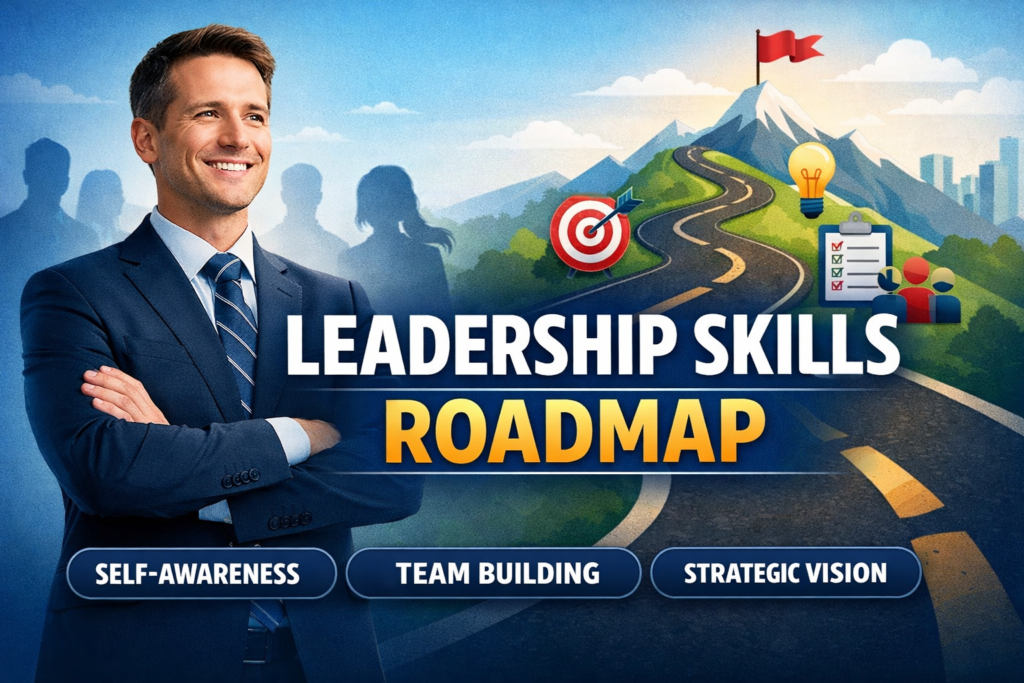
From Self-Awareness to High-Impact Leadership Leadership Skills Roadmap: Learn, Build & Master Leadership Step by Step 1. Introduction: Understanding Leadership Leadership is not defined by job title, seniority, or authority. It is the ability to influence, guide, and inspire people toward a shared goal while maintaining trust, integrity, and accountability.
In today’s dynamic work environment, leadership is required at every level—students, professionals, entrepreneurs, managers, and founders alike. This roadmap is designed to help individuals build leadership skills step by step , from foundational mindset to advanced execution.
What this roadmap will help you achieve:
Develop confidence and clarity as a leader
Improve communication, decision-making, and influence
Build high-performing teams
Lead effectively during change and uncertainty
Create long-term leadership impact
2. Self-Awareness & Leadership Mindset (Foundation) Self-awareness is the cornerstone of leadership. Before leading others, a leader must understand themselves.
Key Focus Areas:
Identifying personal values and beliefs
Understanding strengths, weaknesses, and blind spots
Developing a growth mindset instead of a fixed mindset
Taking responsibility for actions and outcomes
Skills to Build:
Self-reflection and introspection
Emotional maturity
Accountability and ownership
Ethical thinking and integrity
Outcome:
3. Emotional Intelligence (EQ) Emotional intelligence determines how well a leader manages emotions—both their own and others’.
Core Components:
Self-awareness (recognizing emotions)
Self-regulation (controlling reactions)
Motivation (internal drive)
Empathy (understanding others)
Social skills (building relationships)
Practical Applications:
Managing stress and pressure
Responding calmly during conflict
Understanding team morale and emotions
Building psychological safety
Outcome:
4. Communication Skills for Leaders Effective leadership depends heavily on communication clarity.
Verbal & Written Communication:
Structuring clear messages
Speaking with confidence and purpose
Writing professional emails, messages, and reports
Listening & Feedback:
Active listening techniques
Asking open-ended questions
Giving constructive feedback
Receiving feedback without defensiveness
Advanced Communication:
Public speaking and presentations
Remote and virtual communication
Cross-cultural communication
Outcome:
5. Decision-Making & Critical Thinking Leaders are expected to make decisions—often with incomplete information.
Skills to Develop:
Problem identification and analysis
Logical and critical thinking
Risk evaluation
Data-driven decision-making
Ethical judgment
Decision Contexts:
Routine decisions
High-stakes decisions
Crisis decisions
Long-term strategic decisions
Outcome:
6. Team Building & Collaboration A leader’s success depends on the team’s performance.
Key Leadership Responsibilities:
Building trust and mutual respect
Creating role clarity
Delegating effectively
Encouraging collaboration
Managing diversity of skills and personalities
Conflict Handling:
Identifying root causes
Managing disagreements professionally
Preventing toxic work culture
Outcome:
7. Influence, Motivation & Leadership Presence Leadership is influence, not authority.
Influence Skills:
Persuasion and negotiation
Leading without formal power
Stakeholder management
Motivation Techniques:
Aligning work with purpose
Recognition and appreciation
Performance encouragement
Creating a sense of belonging
Leadership Presence:
Confidence and body language
Consistency in behavior
Credibility and trust-building
Outcome:
8. Strategic Thinking & Vision Building Leaders must think beyond daily tasks.
Strategic Capabilities:
Setting long-term vision
Goal alignment across teams
Prioritization and focus
Resource planning
Innovation mindset
Execution Alignment:
Translating vision into actionable plans
Monitoring progress
Adjusting strategies when needed
Outcome:
9. Execution, Accountability & Results Ideas only matter when executed effectively.
Execution Skills:
Action planning
Time and energy management
Setting expectations and KPIs
Monitoring performance
Ensuring follow-through
Accountability Culture:
Ownership of outcomes
Transparency in results
Learning from failures
Outcome:
10. Conflict Management & Difficult Conversations Leaders cannot avoid difficult conversations.
Core Areas:
Performance issues
Behavioral concerns
Team disagreements
High-pressure conversations
Skills Required:
Emotional control
Clear communication
Fairness and empathy
Problem-focused approach
Outcome:
Leadership Skills Roadmap: Learn, Build & Master Leadership Step by Step 11. Leading Through Change & Crisis Modern leaders must manage uncertainty and change.
Change Leadership:
Communicating change effectively
Reducing resistance
Maintaining morale during transitions
Crisis Leadership:
Calm decision-making
Transparent communication
Rapid response and recovery
Team reassurance
Outcome:
12. Coaching, Mentoring & Talent Development Great leaders develop other leaders.
Coaching Skills:
Asking guiding questions
Supporting growth and learning
Providing constructive guidance
Mentorship:
Knowledge sharing
Career guidance
Building future leadership pipeline
Outcome:
13. Personal Branding & Professional Reputation Leadership extends beyond the workplace.
Areas to Focus:
Personal values and consistency
Online professional presence
Networking and relationship building
Thought leadership and credibility
Outcome:
14. Advanced & Ethical Leadership At higher levels, leadership requires broader responsibility.Advanced Topics:
Ethical decision-making
Inclusive leadership
Global and cross-cultural leadership
Systems thinking
Stakeholder responsibility
Outcome:
15. Continuous Leadership Growth Plan Leadership development never stops.
Growth Practices:
Self-assessments
Feedback loops
Learning plans
Mentors and peer learning
Reflection and improvement cycles
Outcome:
16. Conclusion: Becoming a Complete Leader Leadership is a journey, not a destination. By following this roadmap, you move from self-awareness to influence, execution, and legacy-building leadership .
True leaders:
Lead by example
Serve before they command
Grow others while growing themselves
Reader: 118