Physical Address
Mumbai, Maharashtra - 400037

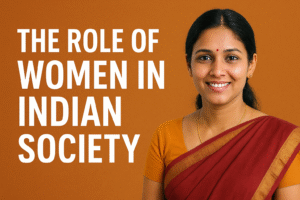
Women have always played a crucial role in shaping Indian society. From ancient times to the present day, they have contributed significantly to the cultural, social, and economic fabric of the country. This article explores the evolution of women’s roles in Indian society, the challenges they have faced, and the progress made towards gender equality.
1. Introduction
The introduction provides an overview of the article’s topic, highlighting the importance of women in Indian society and their contributions throughout history.
2. Historical Perspective
2.1 Ancient India
In this section, we delve into the position of women in ancient Indian society. Despite the existence of patriarchal norms, there were instances of women holding influential positions and making significant contributions.
2.2 Medieval India
During the medieval period, societal norms became more restrictive for women. However, there were still notable exceptions where women held positions of power and influence.
2.3 Colonial Era
The arrival of the British in India brought significant changes to women’s lives. We explore the impact of British colonialism on the status and rights of Indian women.
3. Women’s Status in Traditional Indian Society
This section focuses on the prevailing gender roles and the challenges faced by women in traditional Indian society.
3.1 Patriarchy and Gender Roles
Patriarchy has been deeply ingrained in Indian society, influencing gender roles and limiting women’s opportunities.
3.2 Education and Opportunities
The lack of educational opportunities for women has been a significant barrier to their empowerment. We discuss the historical context and the gradual progress made in this regard.
3.3 Marriage and Family
Marriage and family play a vital role in the lives of Indian women. We explore the dynamics of traditional Indian marriages and their impact on women’s lives.
4. Women’s Empowerment Movements
This section highlights the various social reform movements and women’s rights activism that have played a pivotal role in challenging the status quo and advocating for women’s rights.
4.1 Social Reformers
Prominent social reformers and their contributions to women’s empowerment are discussed, showcasing the efforts made to improve women’s lives.
4.2 Women’s Rights Activism
Women’s rights activism gained momentum during the freedom struggle against British rule. We explore the key organizations and movements that fought for women’s rights and equality.
4.3 Legal Reforms
Legal reforms and landmark judgments have played a crucial role in safeguarding women’s rights. We discuss significant legal milestones and their impact on women’s empowerment.
5. Women in Modern India
This section highlights the progress made by women in various fields in modern India, including education, professional careers, politics
, science, and technology.
5.1 Education and Professional Careers
Women’s education and career opportunities have expanded significantly in recent decades. We discuss the advancements made in these areas and the challenges that still persist.
5.2 Political Participation
Women’s political participation has seen a gradual increase, with more women occupying positions of power and decision-making. We examine the progress made and the road ahead.
### 5.3 Women in Science and Technology
The contributions of Indian women in science and technology have been substantial. We explore the achievements of women scientists and their impact on various fields.
6. Challenges Faced by Women
This section sheds light on the challenges and obstacles that women continue to face in Indian society, including gender-based violence, discrimination in the workplace, and socio-economic disparities.
6.1 Gender-based Violence
Gender-based violence remains a significant issue in India. We discuss the forms of violence women encounter and the measures taken to address this pervasive problem.
6.2 Discrimination in the Workplace
Despite progress, women still face discrimination in various professional settings. We delve into the challenges and the need for workplace equality.
6.3 Socio-economic Disparities
Socio-economic disparities continue to affect women, particularly those from marginalized communities. We explore the reasons behind these disparities and the initiatives aimed at bridging the gap.
7. Government Initiatives for Women’s Welfare
This section highlights the various initiatives and policies introduced by the Indian government to promote women’s welfare and empowerment.
7.1 Reservation Policies
Reservation policies have been implemented to ensure women’s representation and participation in decision-making bodies. We discuss the impact and effectiveness of these policies.
7.2 Women Empowerment Schemes
The government has launched several schemes and programs to uplift women and address their specific needs. We provide an overview of these initiatives and their impact.
8. Changing Mindsets and Attitudes
This section focuses on the changing mindsets and attitudes towards women in Indian society, including the role of media, cultural influences, and evolving role models.
8.1 Media Representation
The portrayal of women in media has a significant influence on societal perceptions. We examine the evolving representation of women and its impact on gender norms.
8.2 Cultural Influences
Indian culture plays a crucial role in shaping societal attitudes towards women. We discuss the positive and negative influences of culture on women’s empowerment.
8.3 Changing Role Models
The emergence of strong female role models has had a profound impact on the aspirations and self-perception of Indian women. We highlight the importance of diverse and inspiring role models.
9. Conclusion
In conclusion, we summarize the key points discussed in the article and emphasize the importance of women’s empowerment for the progress and well-being of Indian society.
10. FAQs
1. What are some famous women leaders in Indian history?
2. How has education for women improved in India?
3. What are the major challenges faced by rural women in India?
4. How can gender-based violence be effectively addressed?
5. What are some successful women empowerment schemes in India?