Physical Address
304 North Cardinal St.
Dorchester Center, MA 02124
Physical Address
304 North Cardinal St.
Dorchester Center, MA 02124

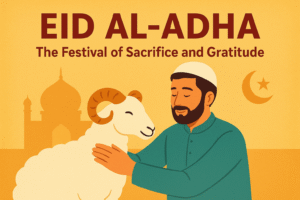
Eid al-Adha, also known as the Festival of Sacrifice, is one of the most significant and sacred celebrations in Islam. It is observed by Muslims all over the world, including in India, marking the completion of the Hajj pilgrimage to Mecca — a spiritual journey that symbolizes faith and devotion to Allah.
But did you know? Eid al-Adha isn’t just about sacrifice. It’s also about sharing, compassion, and gratitude — values that bring families and communities together in the true spirit of unity and faith.

The term Eid al-Adha literally translates to “Festival of Sacrifice.” It commemorates the unwavering faith of Prophet Ibrahim (Abraham), who was willing to sacrifice his beloved son as an act of obedience to Allah’s command. Seeing his devotion, Allah replaced his son with a ram, showing mercy and rewarding Ibrahim’s faith.
This powerful story reminds Muslims of the importance of obedience, faith, and submission to God’s will. The festival also coincides with the end of Hajj, the annual pilgrimage to Mecca, which millions of Muslims undertake each year.
The story of Prophet Ibrahim is central to the celebration of Eid al-Adha. When Allah tested his devotion by commanding him to sacrifice his son, Ibrahim did not hesitate. He trusted Allah completely. At the last moment, Allah spared his son and replaced him with a ram — a divine sign of mercy and faithfulness.
This story is more than a historical tale — it teaches us the meaning of true devotion, submission, and compassion. It reminds every believer that faith sometimes means surrendering our own desires for the greater good.
Eid al-Adha is a time of prayer, charity, and celebration. The day begins with a special Eid prayer (Eid Salah), performed in mosques or open grounds, where Muslims gather to offer gratitude to Allah.
Those who can afford it perform the Qurbani — the ritual animal sacrifice of a goat, sheep, or cow — in remembrance of Prophet Ibrahim’s act of obedience. The meat is then divided into three parts: one for the family, one for relatives and friends, and one for the poor and needy.
The rest of the day is filled with festive meals and family gatherings. Traditional dishes like biryani, kebabs, mutton curry, and sheer khurma are lovingly prepared and shared with guests and neighbors. The air is filled with joy, laughter, and the warm greetings of “Eid Mubarak!”
In India, Eid al-Adha is celebrated with great enthusiasm and unity across the country. From the grand prayers in Delhi and Lucknow to the joyful gatherings in Hyderabad, Bhopal, and Kerala, every region brings its unique flavor to the festivities.
Mosques and marketplaces glow with lights and decorations, while people dress in new traditional clothes, visit loved ones, and share delicious food. The essence of the festival — community, charity, and togetherness — shines through every celebration.
Beyond the rituals and feasts, Eid al-Adha carries a deep and timeless message. It reminds us of the values of obedience, compassion, and gratitude. It teaches us to be selfless — to put others’ needs before our own and to share our blessings with those less fortunate.
The festival encourages Muslims to help the poor, spread kindness, and reflect on the importance of faith and humility in daily life. It’s a beautiful reminder that true devotion to Allah is reflected through acts of generosity, empathy, and love for humanity.
6. Modern Ways of Celebrating
In today’s world, celebrations are evolving while still keeping their spiritual essence alive. Many families now adopt eco-friendly practices to ensure ethical and hygienic animal sacrifices.
Digital technology has also made it easier to stay connected — people share warm wishes and Eid Mubarak messages through social media, video calls, and virtual greetings. Some communities organize charity drives, food distributions, and social service programs, spreading joy to those who need it most.
Even those living far from home celebrate through virtual gatherings, cooking traditional dishes together online, and keeping the festive spirit alive across borders.
Eid al-Adha is not just a festival of sacrifice — it’s a celebration of faith, humility, and humanity. It reminds us to be grateful for what we have, to help those in need, and to strengthen our connection with Allah and with one another.
🌙 As families gather and hearts unite, Eid al-Adha reminds us that true devotion lies in kindness, generosity, and love for all.
1. When is Eid al-Adha celebrated?
Eid al-Adha is observed on the 10th day of Dhu al-Hijjah, the final month of the Islamic lunar calendar, following the completion of Hajj.
2. What’s the difference between Eid al-Adha and Eid al-Fitr?
Eid al-Fitr marks the end of Ramadan (the month of fasting), while Eid al-Adha honors Prophet Ibrahim’s sacrifice and coincides with the end of Hajj.
3. Is animal sacrifice mandatory for everyone?
The Qurbani is obligatory only for those who can afford it. Those unable to do so can participate by donating food, money, or performing acts of charity.
Tips for Celebrating Eid al-Adha at Home
Eid Mubarak! 🌙
May this Eid bring peace, prosperity, and happiness to your home and heart.