Physical Address
304 North Cardinal St.
Dorchester Center, MA 02124
Physical Address
304 North Cardinal St.
Dorchester Center, MA 02124

Indian weddings are not just ceremonies; they are grand celebrations that beautifully blend tradition, spirituality, and community. Every ritual, color, song, and gesture has a deep cultural meaning that reflects India’s rich heritage and diversity. From sacred fire rituals to colorful attire, Indian weddings symbolize not just the union of two individuals but also the coming together of two families, values, and generations.
In India, marriage is seen as one of the most sacred institutions — a samskara (sacrament) that purifies and binds two souls for life. Whether it’s a Hindu, Muslim, Sikh, or Christian wedding, the underlying essence remains the same: love, respect, and commitment. Weddings are also a cultural mirror, showcasing traditional music, regional cuisines, languages, and clothing that vary from state to state.
Each Indian wedding ritual carries symbolic depth:
These rituals connect the spiritual with the emotional — blending ancient customs with modern-day celebration.
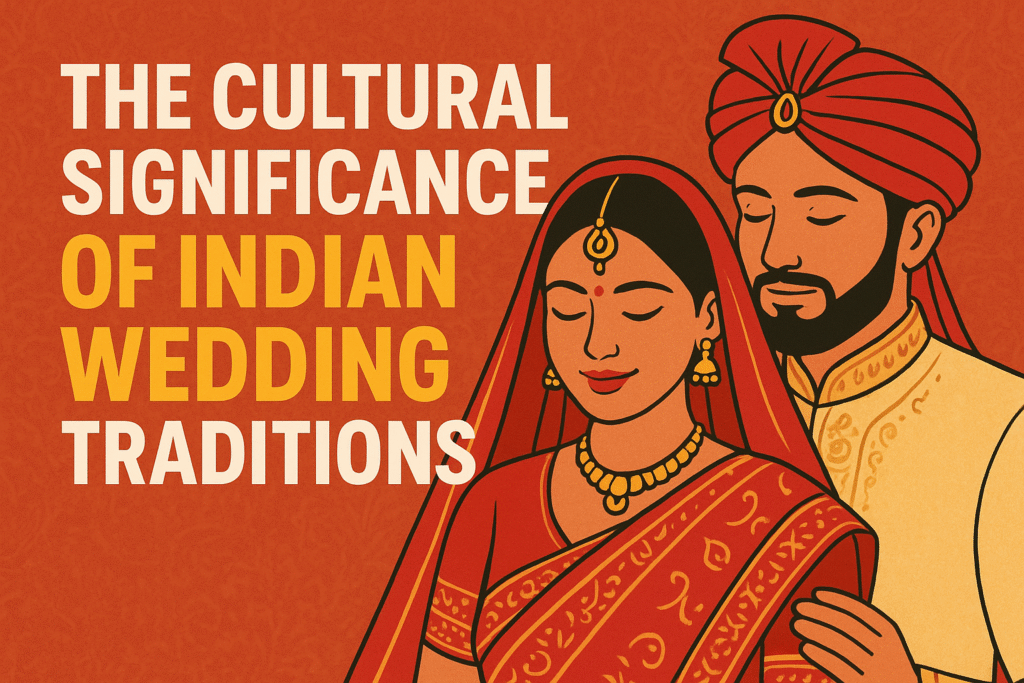
Colors play a crucial role in Indian weddings. Red, the dominant bridal color, represents love, fertility, and prosperity. Gold signifies wealth and divinity, while white is used in some regions for purity.
The groom’s sherwani and turban symbolize honor and royalty. Together, the couple’s attire reflects not only their personalities but also their cultural heritage.
Unlike many Western weddings, Indian weddings are community events that can last from a few days to a week. Families, relatives, and friends come together in joy, dancing, feasting, and blessing the couple. These gatherings foster bonds between extended families and communities, turning the event into a social reunion.
No Indian wedding is complete without music and dance. From sangeet nights filled with Bollywood tunes to traditional folk performances, every beat and lyric tells a story of joy and devotion.
The baraat (groom’s procession) itself is a musical spectacle — symbolizing excitement and the blending of two joyous worlds.
Beyond the celebrations, Indian weddings emphasize spiritual growth and companionship. The rituals highlight the principles of dharma (duty), karma (actions), and artha (purpose). Marriage is viewed as a partnership where both individuals support each other in fulfilling life’s responsibilities and achieving higher consciousness.
While modern Indian weddings incorporate destination themes, designer outfits, and digital invites, the essence remains deeply traditional. Many couples now personalize rituals, blending modern romance with ancient customs — a perfect example of how India’s culture evolves yet stays rooted.
The cultural significance of Indian wedding traditions lies in their power to unite — not only two hearts but entire communities and generations. Every song, color, and ritual carries the legacy of India’s history and values. In celebrating love, Indian weddings remind us that marriage is not just a personal milestone — it’s a sacred journey woven into the cultural fabric of a timeless civilization.