Physical Address
304 North Cardinal St.
Dorchester Center, MA 02124
Physical Address
304 North Cardinal St.
Dorchester Center, MA 02124

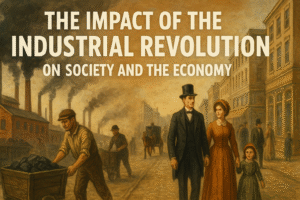
The Industrial Revolution was a major turning point in human history. It marked a period of great change, both in terms of society and the economy. The revolution began in the late 18th century and continued through the 19th century. During this time, new inventions and innovations transformed the way people lived and worked. In this article, we will explore the impact of the Industrial Revolution on society and the economy.
The Industrial Revolution began in Britain in the late 18th century and quickly spread to other countries in Europe and North America. It was characterized by the development of new machinery and technology, which allowed for the mass production of goods. This led to an increase in productivity and a reduction in the cost of goods, making them more affordable for people.
One of the most significant impacts of the Industrial Revolution was on the economy. The new machinery and technology led to the creation of new industries and the expansion of existing ones. This resulted in an increase in jobs and wages for many people. It also led to an increase in trade between countries, as goods could be produced more efficiently and shipped over longer distances.
The Industrial Revolution also had a profound impact on society. The rise of factories and industrialization led to a shift away from rural life and agriculture. Many people moved from the countryside to cities to work in factories. This led to the growth of urban areas and the development of new social classes.
The working conditions in factories were often harsh, with long hours and low wages. This led to the rise of labor movements and the push for better working conditions and wages. The Industrial Revolution also led to the development of new technologies and infrastructure, such as railroads and steamships, which allowed people and goods to move more easily and quickly than ever before.
The Industrial Revolution also had a significant impact on the environment. The use of coal and other fossil fuels led to increased pollution and the degradation of natural resources. This, in turn, led to the development of new environmental policies and regulations.
In conclusion, the Industrial Revolution was a period of significant change in human history. It transformed the way people lived and worked, and had a profound impact on the economy, society, and the environment. While the revolution had many positive effects, it also had negative consequences, such as harsh working conditions and environmental degradation. Nonetheless, the innovations and developments of the Industrial Revolution paved the way for many of the technological advancements we enjoy today.