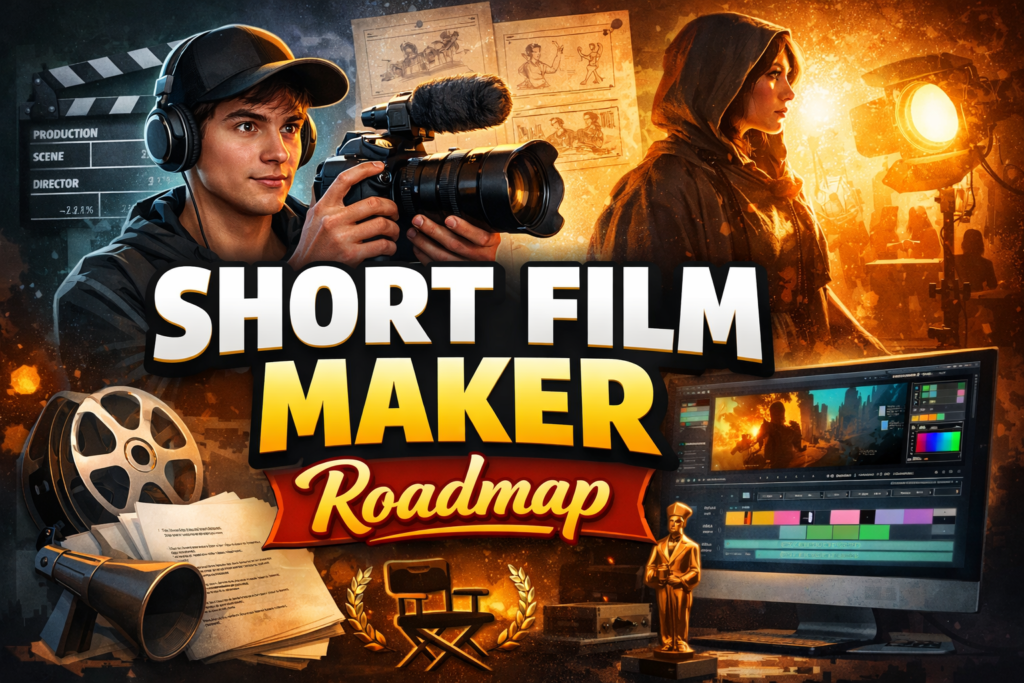
1. Foundation: Mastering the Language of Film How to Make Short Films: Step-by-Step Filmmaking Roadmap
Understand what a short film really is: Unlike feature films, short films rely on compact storytelling. Every shot, line of dialogue, and cut must carry meaning.Roles & responsibilities: Learn what a director, cinematographer, editor, sound designer, and producer do—and how their decisions impact the story.Film language essentials:
Shots & angles: close-up, wide, over-the-shoulder, POV
Composition: rule of thirds, leading lines, symmetry
Continuity & pacing: how editing choices shape perception
Storytelling fundamentals: Focus on conflict, emotion, and visual metaphors. In short films, every second counts.
Mindset Tip: Watch short films critically—ask yourself: “Why does this shot exist? How does it make me feel?”
2. Story & Script Development: Crafting Your Narrative
Idea generation: Draw from personal experiences, societal issues, or imaginative concepts. Brainstorm in a mind-map style to expand possibilities.Short film scripting:
Keep it concise (3–15 min runtime)
Focus on one core conflict or emotional journey
Visual storytelling over exposition—“show, don’t tell”
Dialogue & subtext: Every line should reveal character or advance storyFormatting & structure: Proper screenplay formatting ensures clarity for cast and crew.
Pro Tip: Always write the script with visuals in mind—imagine how it will look, sound, and feel.
3. Pre-Production: Planning for Success
Script breakdown: Identify scenes, props, costumes, and locations.Storyboarding & shot lists: Draw your vision frame by frame. Even rough sketches help plan camera movement and lighting.Casting actors: Choose performers who understand your vision; chemistry matters.Location scouting: Check lighting conditions, noise levels, and permits.Budget & scheduling: Plan resources wisely; low-budget films require creative problem-solving.Call sheets & production plans: Keep the team aligned and efficient.
Mindset Tip: Pre-production is where most short films succeed or fail—think of it as your blueprint.
4. Cinematography & Camera Skills
Camera basics: Understand ISO, aperture, shutter speed, frame rates.Composition & framing: Learn how camera placement conveys emotion.Camera movement: Pan, tilt, dolly, handheld, and gimbal shots—use intentionally.Lighting mastery:
Three-point lighting for interviews
Natural light for mood
Shadows & contrast for storytelling
Lenses & focal lengths: Use them to evoke depth, intimacy, or drama.
Pro Tip: Even smartphone filming can look cinematic with good lighting, composition, and movement.
5. Sound & Audio Design
Dialogue clarity: Bad sound ruins even the best visuals.Microphones & techniques: Lavalier, shotgun, and condenser mics for different setups.Ambient & room tone: Record to blend background noise smoothly.Sound effects & Foley: Footsteps, door creaks, environmental sounds—these add realism.
Mindset Tip: Listen to films critically for how sound affects emotion; apply the same in your project.
6. Directing & On-Set Execution
Actor direction: Inspire authentic performances, guide tone and energy.Blocking & staging: Plan movement and positioning for maximum visual impact.Team management: Small crews thrive on clear communication.Problem-solving: Be ready to adapt to weather, equipment failures, or actor availability.Maintaining continuity: Avoid jarring mistakes in props, costumes, and lighting.
Pro Tip: Your vision should guide, not dominate—collaborate and adapt with your team.
How to Make Short Films: Step-by-Step Filmmaking Roadmap 7. Post-Production & Editing
Footage organization: Label files and sequences for efficiency.Editing for emotion: Cut for pacing, tension, and clarity.Color correction & grading: Establish mood; consistency matters.Sound mixing: Balance dialogue, music, and effects for clarity.Adding titles & subtitles: Professionalize your film and improve accessibility.
Pro Tip: Less is often more; every cut should serve the story.
8. Music & Soundtrack
Emotional impact: Music reinforces emotion; choose wisely.Royalty-free options: Use resources like Epidemic Sound or Artlist.Foley & effects: Subtle sounds create immersive experiences.Mixing: Blend dialogue, ambient sound, and music seamlessly.
9. Feedback & Refinement
Test screenings: Share with friends, mentors, or online communities.Iterative editing: Refine pacing, clarity, and impact based on feedback.Polishing details: Titles, sound, color, and credits.
Mindset Tip: Seek honest critique, not praise—improvement comes from insight.
10. Distribution & Audience Engagement
Digital platforms: YouTube, Vimeo, Instagram, Shorts, TikTok.Film festivals: Start with local, then international. Festivals add credibility.Promotion strategies: Posters, trailers, social media campaigns.Portfolio building: Archive your work professionally to attract collaborators or sponsors.
11. Growth & Career Development
Keep creating: Multiple short films sharpen skills.Collaborate: Work with writers, cinematographers, and actors to expand expertise.Advanced techniques: Explore visual effects, complex narratives, or sound design.Career paths: Short films → Web series → Ads → Feature films.Brand building: Develop a unique voice and filmmaking style.
Mindset Tip: Treat each project as a learning experience; your next short film should always be better than the last.
Reader: 254