
















































Introduction
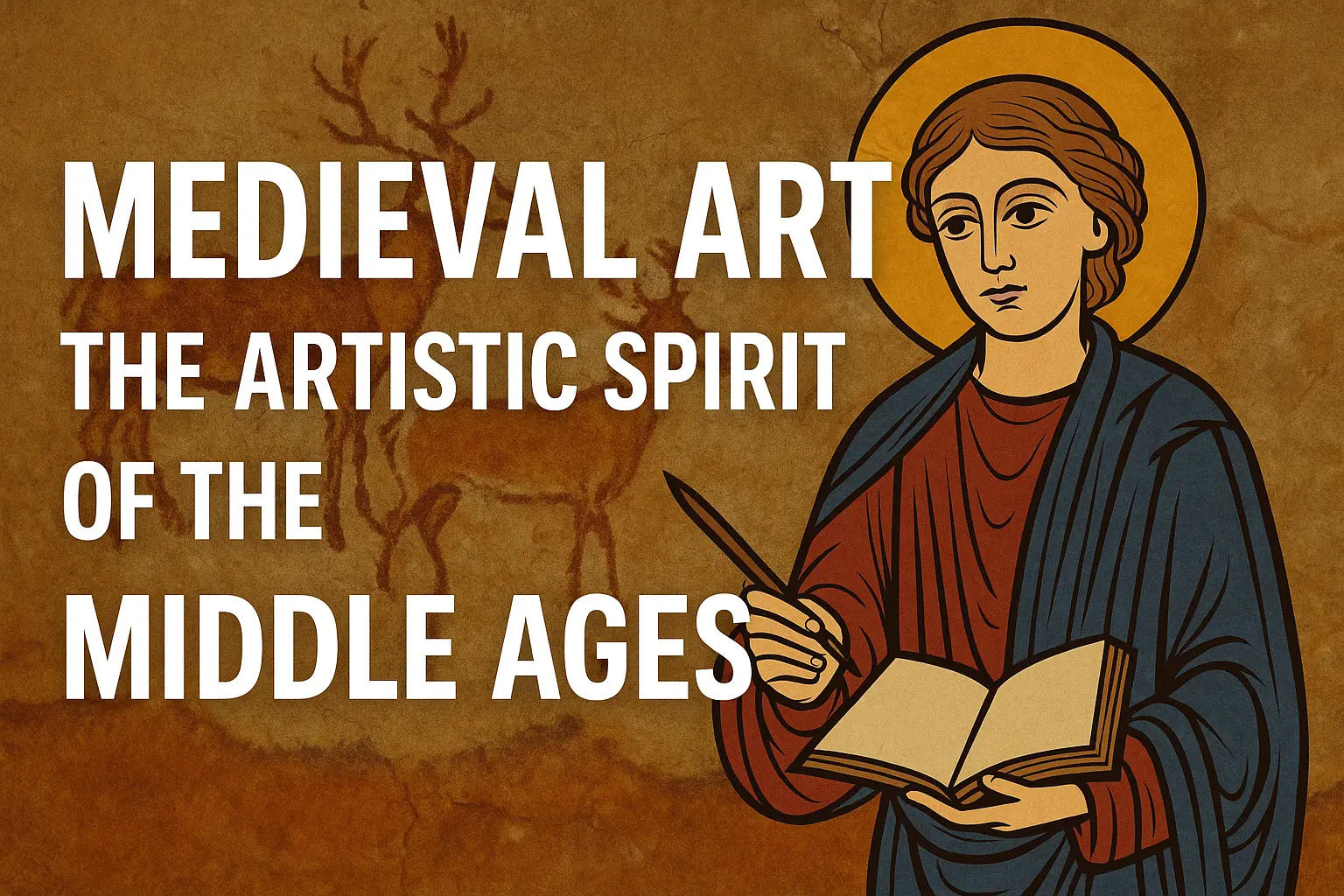
Medieval Art refers to the art created during the Middle Ages (roughly 5th to 15th century CE) — the time between the fall of the Roman Empire and the beginning of the Renaissance.
It reflects a world deeply influenced by religion, royalty, and community life.
This art period focused on expressing spiritual beliefs rather than realism — artists aimed to teach faith and inspire devotion, not just decorate walls.
Time Period of Medieval Art
The medieval art period can be divided into three main phases:
- Early Medieval Art (5th – 10th century)
Influenced by Roman, Christian, and barbarian traditions.
Art was simple and symbolic. - Romanesque Art (10th – 12th century)
Featured large churches, sculptures, and murals.
Art became more detailed and focused on Bible stories. - Gothic Art (12th – 15th century)
Marked by tall cathedrals, stained glass, and naturalistic figures.
It prepared the way for the Renaissance.
Main Features of Medieval Art
- Strong focus on religion and Christianity
- Symbolic representation rather than lifelike images
- Use of bright colors and gold backgrounds to show holiness
- Manuscript illuminations and stained-glass windows
- Expression of faith, morality, and divine beauty
Types of Medieval Art
1. Religious Paintings
Most artworks were created for churches and monasteries.
They depicted:
- Jesus Christ, Virgin Mary, and saints
- Scenes from the Bible (birth of Christ, crucifixion, etc.)
- Heaven, angels, and divine light
These paintings were flat and symbolic, not realistic.
2. Sculpture
Medieval sculptures were mostly found in cathedrals and church facades.
They told stories from the Bible so that even illiterate people could understand religion visually.
Romanesque sculptures were rigid and formal, while Gothic sculptures became more natural and emotional.
3. Manuscript Illumination
One of the most beautiful forms of medieval art.
Monks in monasteries decorated handwritten books (manuscripts) with:
- Gold leaf
- Colorful illustrations
- Decorative letters and borders
These illuminated manuscripts preserved religious and historical knowledge.
4. Stained Glass Windows
In Gothic cathedrals, colored glass pieces formed biblical scenes.
When sunlight passed through, it filled the church with heavenly light — symbolizing the divine presence.
Famous examples:
- Windows of Chartres Cathedral (France)
- Notre Dame Cathedral (Paris)
5. Mosaics and Frescoes
Walls and ceilings of churches were decorated with mosaics (tiny colored stones or glass pieces) and frescoes (wall paintings).
They showed religious themes, saints, and moral stories.
Themes in Medieval Art
- Faith and Religion – devotion to God and the Church
- Heaven vs. Earth – divine beauty vs. human imperfection
- Kings and Warriors – medieval rulers and knights
- Angels and Saints – symbols of purity and virtue
Famous Examples of Medieval Art
- The Book of Kells (Ireland) – illuminated manuscript
- Chartres Cathedral (France) – stained glass and Gothic sculpture
- Giotto’s Frescoes (Italy) – early move toward realism
- Bayeux Tapestry (France) – embroidery showing historical events
Conclusion
Medieval art was not about perfection but about faith, symbolism, and storytelling.
It connected people to spirituality and shaped the culture of Europe for nearly a thousand years.
From golden mosaics to glowing stained glass, every piece of medieval art reflects the deep devotion and imagination of its time.