Physical Address
Mumbai, Maharashtra - 400037

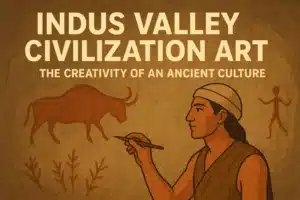
The Indus Valley Civilization (3300 – 1300 BCE), also known as the Harappan Civilization, was one of the oldest and most advanced urban cultures in the ancient world. It flourished mainly in what is now India and Pakistan, along the banks of the Indus River.
The art of this civilization reflects the high level of skill, imagination, and craftsmanship achieved by the Harappan people.

Art in the Indus Valley Civilization was not just decorative — it was a part of everyday life, religion, and trade.
Harappan artists used stone, metal, terracotta, and steatite (soapstone) to create sculptures, seals, pottery, ornaments, and more.
Their artwork shows how urban, organized, and artistic their society was.
The people of the Indus Valley made beautiful sculptures from stone, bronze, and clay.
Famous examples include:
Terracotta figures (made of baked clay) often represented animals, mother goddesses, and toys, showing both artistic and religious aspects.
Thousands of seals have been found in Harappan sites.
They were made from steatite and used for trade or identification.
Each seal had:
These seals are among the most distinctive artworks of the civilization, showing precision and creativity.
Harappan pottery was both functional and artistic.
It was mostly red or buff-colored with black designs, such as:
Some pots were made for everyday use, while others were decorative or ceremonial.
Men and women of the Indus Valley loved ornaments.
They used gold, silver, copper, beads, and semi-precious stones like carnelian and lapis lazuli.
Necklaces, bangles, earrings, and headbands show their sense of beauty and craftsmanship.
Even the city design reflected artistic thought — with symmetrical layouts, drainage systems, and standardized brick sizes.
The Great Bath of Mohenjo-daro is an architectural masterpiece that shows the Harappans valued cleanliness and community life.
The art of the Indus Valley Civilization stands as a timeless symbol of India’s rich cultural heritage.
From the confident Dancing Girl to the dignified Priest King, each artifact tells a story of a civilization ahead of its time — creative, organized, and deeply connected to beauty and meaning.