






































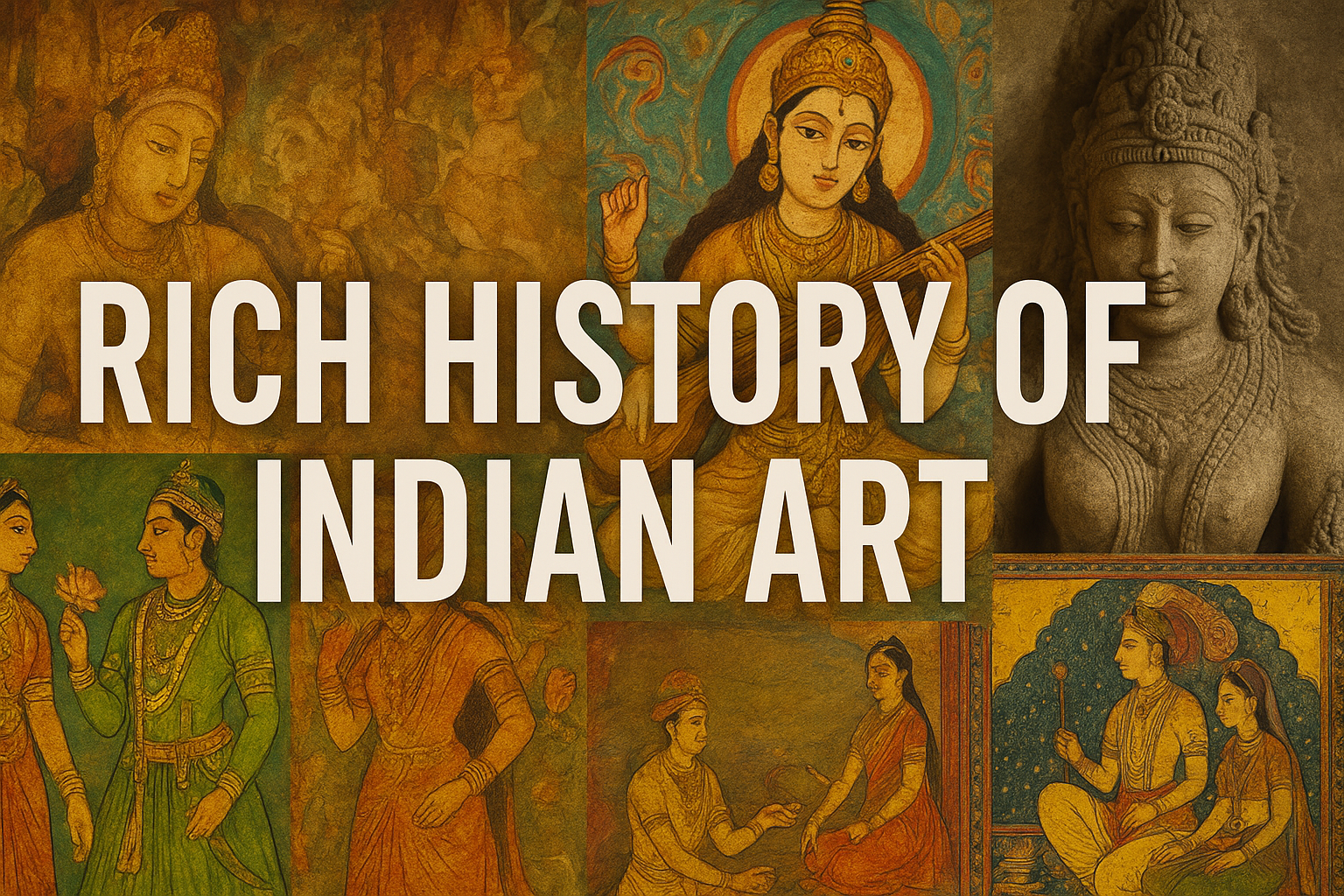

Indian art is as diverse as the country itself, with a rich history that spans thousands of years. From ancient cave paintings to modern-day contemporary art, Indian art has been shaped by its cultural, religious, and social traditions. In this blog, we will take a journey through the history of Indian art and explore the different art forms that have emerged over the centuries.
Prehistoric Art
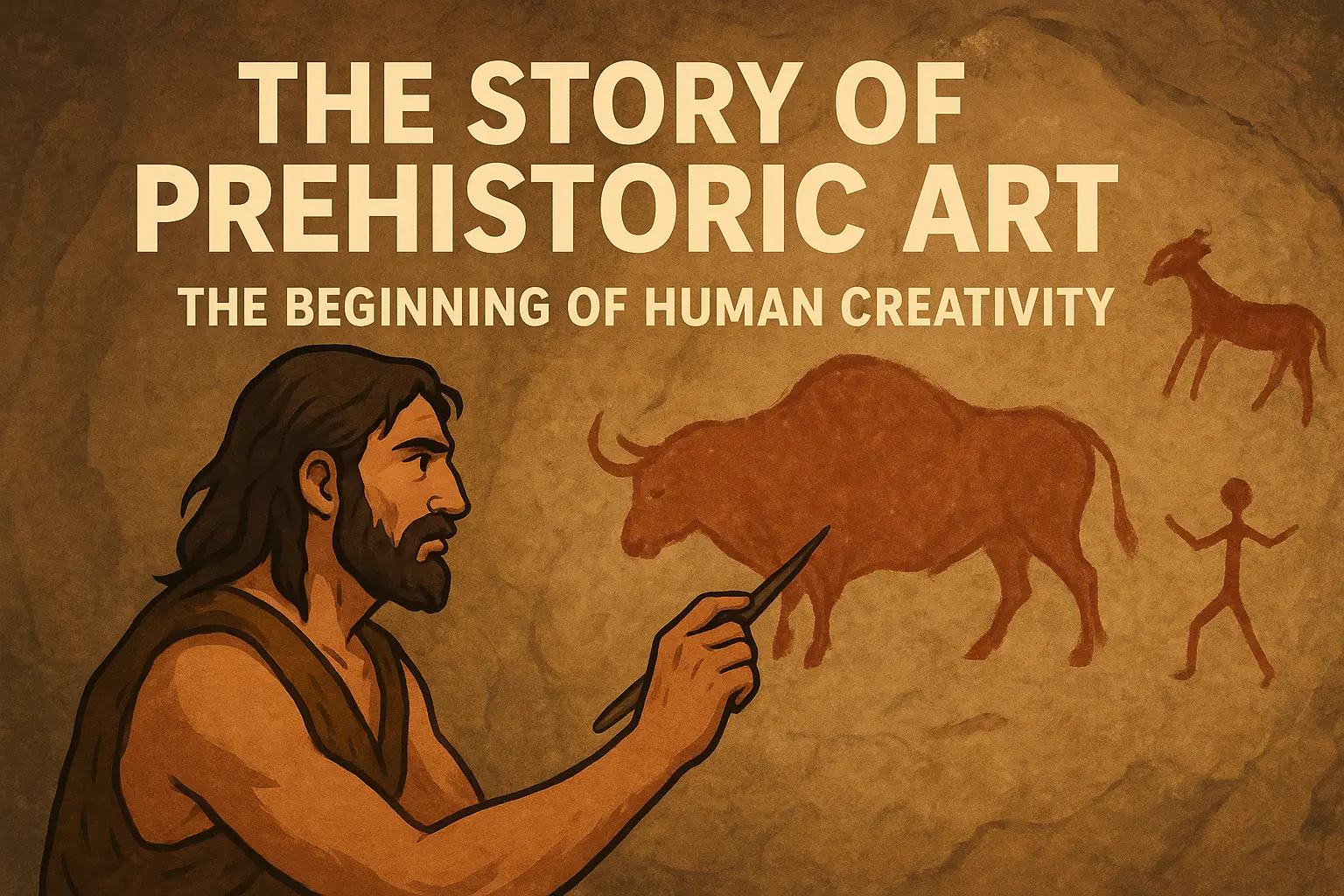
The earliest evidence of Indian art dates back to the prehistoric period, with cave paintings found in Bhimbetka in Madhya Pradesh. These paintings, estimated to be around 30,000 years old, depict animals, hunting scenes, and human figures.
Indus Valley Civilization Art
The Indus Valley Civilization, which existed between 3300 BCE and 1300 BCE, is considered one of the oldest civilizations in the world. The art of the Indus Valley Civilization is known for its intricate stone carvings, pottery, and metalwork. The famous Indus Valley seals, which depict animals and human figures, are also considered to be a form of art.
Buddhist Art
Buddhism, which originated in India in the 5th century BCE, has had a profound influence on Indian art. Buddhist art is characterized by its emphasis on simplicity, serenity, and spiritualism. The Ajanta and Ellora caves, which were built between the 2nd century BCE and 6th century CE, are considered to be some of the finest examples of Buddhist art in India.
Medieval Art
The medieval period in India saw the emergence of different art forms under the patronage of various rulers. The Mughal dynasty, which ruled India from the 16th to the 19th century, is known for its contribution to Indian art in the form of miniature paintings, calligraphy, and architecture. The Rajput and Pahari schools of painting also emerged during this period, known for their use of vibrant colors and intricate details.
Modern Art
The 19th and 20th centuries saw the emergence of modern Indian art, influenced by Western art styles and movements. The Bengal School of Art, founded by Abanindranath Tagore, sought to revive traditional Indian art forms and techniques. The Progressive Artists’ Group, which included artists like M.F. Husain and S.H. Raza, aimed to create a new style of Indian art that was both modern and rooted in Indian culture.
Contemporary Art
Contemporary Indian art is characterized by its diversity and experimentation. Artists like Subodh Gupta, Bharti Kher, and Anish Kapoor have gained international recognition for their innovative use of materials and themes that reflect contemporary Indian society and culture.
In conclusion, Indian art has a rich and diverse history that reflects the country’s cultural, religious, and social traditions. From prehistoric cave paintings to modern-day contemporary art, Indian art has continued to evolve and inspire artists around the world.