Physical Address
304 North Cardinal St.
Dorchester Center, MA 02124
Physical Address
304 North Cardinal St.
Dorchester Center, MA 02124

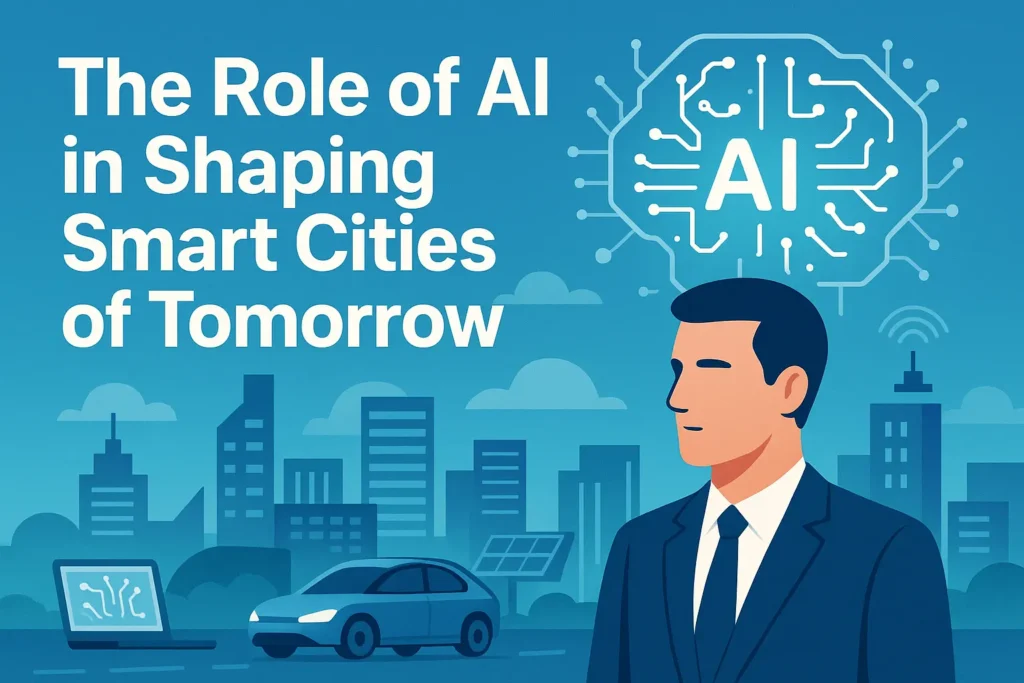
Imagine a city where traffic lights think, buildings learn, and waste manages itself. This isn’t a sci-fi fantasy — it’s the future being shaped by Artificial Intelligence (AI).
A smart city uses technology and data to improve the quality of life for its citizens, enhance sustainability, and optimize urban infrastructure. From energy management to traffic control, AI acts as the brain of these cities, enabling systems to make intelligent, data-driven decisions.
As the world’s urban population continues to grow, AI is becoming the key enabler of next-generation urban living — turning cities into more connected, efficient, and responsive environments.
A smart city is an urban area that uses digital technologies — including AI, IoT (Internet of Things), sensors, and big data — to manage resources efficiently and improve daily life.
Key components of smart cities include:
Examples of globally recognized smart cities include Singapore, Barcelona, and Dubai — all of which leverage AI to enhance governance, mobility, and sustainability.
Artificial Intelligence serves as the intelligent core of smart cities. It processes massive amounts of data collected from sensors, devices, and citizens — transforming it into actionable insights. Let’s see how AI drives the urban revolution:
AI helps cities become more sustainable by managing infrastructure intelligently:
This not only saves costs but also ensures reliability and eco-friendliness.
Urban mobility is one of the biggest challenges — and AI is the perfect solution:
Cities like Singapore and Los Angeles already use AI-driven systems to monitor and manage traffic dynamically.
AI is transforming the way cities handle essential resources:
This ensures resource conservation and reduces environmental impact.
Public safety is a top priority, and AI plays a major role here:
However, this also raises ethical questions around privacy, surveillance, and data usage — making responsible AI governance essential.
AI simplifies governance and improves communication between governments and citizens:
Cities like Dubai are already using AI in public administration to increase transparency and reduce bureaucracy.
The adoption of AI brings numerous advantages:
✅ Efficiency: Automated systems minimize manual intervention.
✅ Sustainability: Smart energy use reduces environmental impact.
✅ Safety: Faster emergency responses and predictive crime prevention.
✅ Better Quality of Life: Citizens enjoy cleaner, safer, and more responsive environments.
✅ Cost Savings: Optimized use of public funds and reduced operational costs.
Despite its benefits, implementing AI in smart cities comes with challenges:
Let’s look at how AI is already shaping cities around the globe:
The future belongs to self-learning cities — where systems evolve through continuous AI-driven insights.
Upcoming trends include:
AI will not just make cities smarter — it will make them greener, safer, and more human-centered.
AI is redefining how cities think, move, and grow. It’s not merely about automation but about building intelligent ecosystems that improve human lives.
The cities of tomorrow will be shaped by a powerful partnership between human creativity and artificial intelligence — creating smarter, safer, and more sustainable communities for everyone.
“The cities of tomorrow are being designed today — powered by AI and driven by human vision.”
“Artificial Intelligence will be the heartbeat of future cities — invisible, intelligent, and indispensable.”
🔗 Call to Action:
Want to explore how AI can transform your city or business? Read more tech insights and innovation stories on our blog!





Thank you, I’ve recently been searching for information approximately this subject for ages and yours is the greatest I’ve came upon till now. But, what concerning the conclusion? Are you positive in regards to the source?