Physical Address
Mumbai, Maharashtra - 400037
Physical Address
Mumbai, Maharashtra - 400037

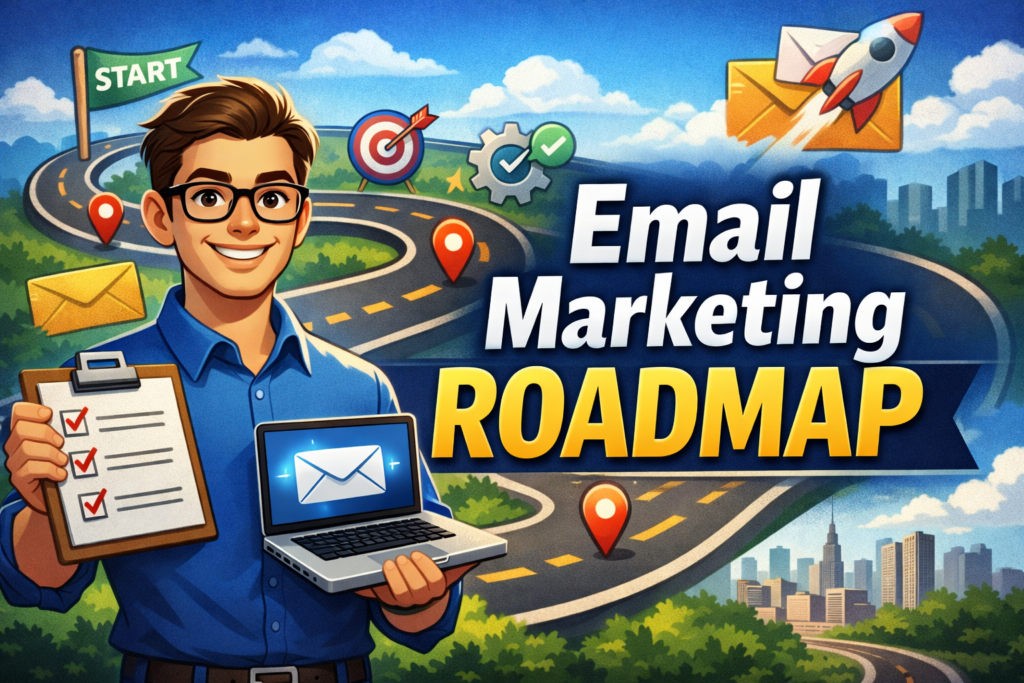
Email marketing is one of the most powerful and cost-effective digital marketing channels. Unlike social media platforms where algorithms control reach, email marketing allows businesses and creators to communicate directly with their audience.
A well-planned email marketing strategy can help build strong relationships with subscribers, nurture leads, promote products, and increase long-term customer loyalty.
This roadmap will guide you step-by-step from beginner understanding to advanced email marketing mastery.
Before starting email campaigns, it is important to understand the basic concepts that form the foundation of email marketing.
Email marketing is a digital marketing strategy that involves sending emails to a group of people to promote products, share information, build relationships, or encourage engagement.
Businesses use email marketing to communicate with their customers, provide updates, deliver value, and influence purchasing decisions.
Email marketing is powerful because it provides:
Email marketing includes different types of messages designed for different purposes.
Regular emails sent to subscribers that include updates, articles, tips, and industry insights.
Emails designed to promote products, services, discounts, or special offers.
The first email sent after someone subscribes to a list. These emails introduce the brand and build the initial connection.
Automated emails sent after specific actions such as purchases, account registrations, or password resets.
A sequence of emails designed to educate and guide potential customers toward a purchase decision.
Email marketing works through a structured process:
Understanding this workflow helps marketers design effective campaigns that engage and convert audiences.
The success of email marketing depends heavily on the quality of the email list. A strong list includes people who are genuinely interested in the brand or content.
Before collecting emails, marketers must understand their audience.
Important factors include:
Creating customer personas helps define the ideal subscriber and improves communication effectiveness.
A lead magnet is a valuable resource offered in exchange for an email address.
Common lead magnets include:
A strong lead magnet solves a specific problem for the audience and encourages them to subscribe.
To grow an email list, multiple signup opportunities should be available.
These include:
The signup process should be simple and easy to complete.
Segmentation means dividing subscribers into smaller groups based on specific characteristics.
Common segmentation methods include:
Segmentation allows marketers to send more relevant and personalized emails.
Once the email list is built, the next step is designing emails that capture attention and encourage engagement.
The subject line is the first thing subscribers see. A strong subject line increases the chances of the email being opened.
Effective subject lines are:
Examples include questions, benefits, or intriguing statements.
Email content should focus on delivering value rather than simply selling.
Good email copywriting includes:
Emails should always guide readers toward a specific action.
Every email should have a clear purpose. The call-to-action tells readers what they should do next.
Examples include:
The CTA should be visible and easy to understand.
Most people check emails on smartphones. Therefore email design must be optimized for mobile devices.
Important design principles include:
Good design improves readability and engagement.
Automation allows marketers to send emails automatically based on specific triggers or user behavior.
Email automation uses software to send targeted emails when certain actions occur.
For example:
Automation helps save time while improving user experience.
Introduces new subscribers to the brand and builds trust.
Educates subscribers about products or services over time.
Reminds customers to complete their purchase.
Encourages inactive subscribers to reconnect with the brand.
Automation sequences guide subscribers through the customer journey.
Sending emails successfully requires understanding deliverability and legal guidelines.
Emails may end up in spam folders if certain practices are not followed.
Best practices include:
Good email practices improve inbox placement.
Email marketing must follow certain legal guidelines.
Important regulations include:
Marketers must always obtain permission before sending marketing emails.
Inactive subscribers can reduce engagement rates.
Regular list maintenance includes:
Healthy lists improve deliverability and campaign performance.
Successful email marketers continuously analyze and improve their campaigns.
Important metrics include:
Open Rate
Shows how many recipients opened the email.
Click-Through Rate (CTR)
Measures how many people clicked links within the email.
Conversion Rate
Shows how many subscribers completed the desired action.
Bounce Rate
Indicates emails that failed to reach recipients.
These metrics help evaluate campaign performance.
A/B testing involves testing two versions of an email to determine which performs better.
Marketers can test:
Testing helps optimize campaigns and increase engagement.
Email marketing is an ongoing process. Marketers must constantly analyze data and adjust strategies to improve results.
After mastering the basics, marketers can explore advanced strategies.
Behavioral emails are triggered by specific actions taken by users.
Examples include:
These emails increase relevance and engagement.
Modern email platforms allow advanced personalization.
Examples include:
Personalization improves customer experience and loyalty.
Email marketing becomes more powerful when combined with other channels.
Integration examples include:
A connected marketing ecosystem improves overall effectiveness.
Email marketing skills are highly valuable in the digital marketing industry.
Successful email marketers develop skills such as:
These skills help create impactful email campaigns.
Email marketing professionals can work in roles such as:
Many companies actively hire specialists to manage email campaigns.
Email marketing also offers strong freelancing opportunities.
Freelancers can provide services such as:
These services are in high demand among businesses and startups.
Email marketing continues to be one of the most reliable and profitable marketing channels. When used strategically, it can build lasting relationships with audiences and generate consistent business growth.
By following this roadmap—learning the fundamentals, building a quality email list, creating engaging campaigns, implementing automation, and optimizing performance—anyone can develop strong email marketing expertise.
Email marketing is not just about sending messages. It is about building meaningful connections with people and delivering value through every interaction.