Physical Address
304 North Cardinal St.
Dorchester Center, MA 02124
Physical Address
304 North Cardinal St.
Dorchester Center, MA 02124

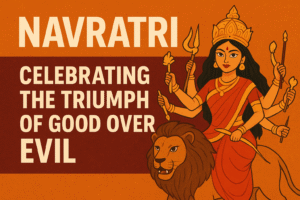
Every year, as autumn begins to paint the skies with golden hues, India lights up in devotion, color, and joy for Navratri — one of the most vibrant Hindu festivals.
Celebrated over nine nights and ten days, this festival honors Goddess Durga and her nine divine forms, symbolizing the victory of good over evil.
Did you know that Navratri is celebrated in different ways across India — from Garba nights in Gujarat to Durga Puja pandals in Bengal? Let’s explore how this festival unites devotion, dance, and divine energy.
The word Navratri comes from Sanskrit — ‘Nav’ meaning nine and ‘Ratri’ meaning nights.
It’s a festival that celebrates the feminine energy (Shakti) and the eternal battle between good and evil.
Throughout these nine nights, devotees worship Goddess Durga, who represents power and purity. Navratri is celebrated differently across regions:

Each day of Navratri is dedicated to one of the nine forms of Maa Durga, each symbolizing a unique power and quality:
🪔 Many devotees change their outfit colors each day to match the goddess being worshipped.
Navratri is not just a festival — it’s a beautiful mix of spiritual discipline and joyful celebration.
Devotees observe fasts as a way to purify the body and mind. Some eat only fruits and milk, while others consume light meals made from ingredients like sabudana (tapioca) and kuttu flour. The fasting is not about deprivation but about devotion and self-control.
In Gujarat and Maharashtra, evenings come alive with Garba and Dandiya Raas — energetic dances performed in colorful traditional attire. These dances celebrate the goddess through rhythm, music, and togetherness.
Every day, devotees perform Durga Puja, chant mantras, and offer flowers, incense, and sweets. Many families set up Kalash (sacred pot) to invite the goddess into their homes.
Homes and temples are decorated with lights, diyas, flowers, and rangolis. Each day has a color significance, such as red for energy, yellow for happiness, and white for peace.
The tenth day, known as Vijayadashami or Dussehra, marks the victory of good over evil.
According to Hindu mythology, this day celebrates two powerful stories:
Across India, Ramlila performances are held, and giant effigies of Ravana, Meghnath, and Kumbhkaran are burned — signifying the destruction of evil and ego.
In today’s fast-paced world, Navratri reminds us to pause, reflect, and reconnect with our inner strength.
Navratri is more than a religious celebration — it’s a spiritual journey of light, courage, and positivity.
Whether you join a Garba night, fast in devotion, or simply light a diya at home, every act of faith adds beauty to this divine festival.
✨ May this Navratri fill your life with energy, happiness, and the strength to overcome all challenges.
👉 What’s your favorite Navratri tradition or memory?
Share it in the comments below — let’s celebrate the spirit of Shakti together!
1. When is Navratri celebrated this year?
Navratri usually falls in September or October, depending on the lunar calendar. In 2025, it begins on September 22 and ends on September 30.
2. What foods are allowed during Navratri fasting?
You can eat fruits, milk, nuts, potatoes, sabudana, and kuttu atta dishes. Onion, garlic, and grains are usually avoided.
3. How can someone new to Navratri participate?
You can join local Garba events, attend online pujas, decorate your home, or simply meditate and pray for peace and positivity.
Tips to Celebrate Navratri at Home