Physical Address
304 North Cardinal St.
Dorchester Center, MA 02124
Physical Address
304 North Cardinal St.
Dorchester Center, MA 02124


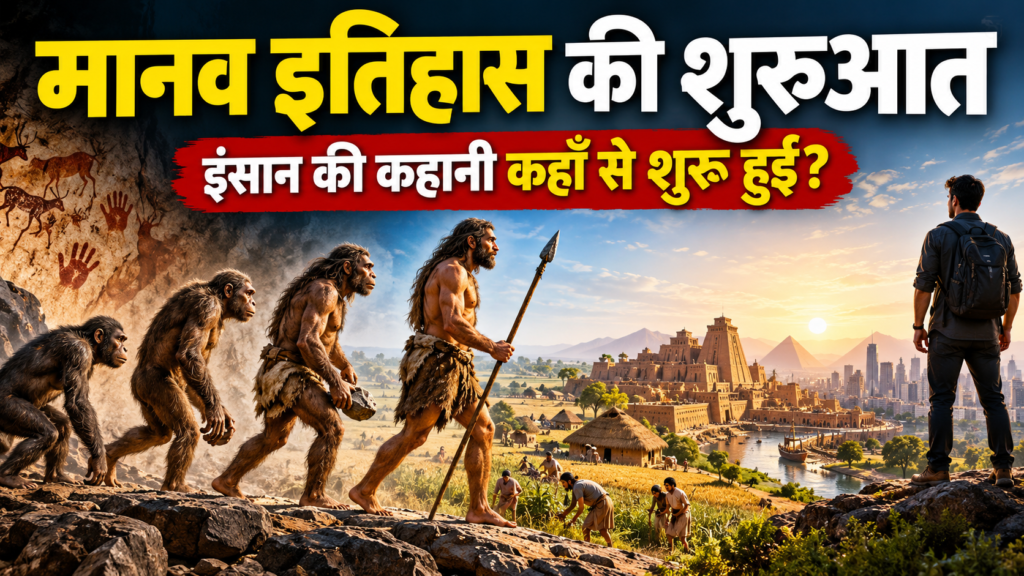
क्या आपने कभी सोचा है कि इंसान की कहानी आखिर शुरू कहाँ से हुई? हम कहाँ से आए? हमारे शुरुआती ancestors कैसे रहते थे? उन्होंने पहली बार पत्थरों के tools क्यों बनाए? आग का इस्तेमाल कैसे सीखा? इंसान ने खेती करना कब शुरू किया और आखिरकार villages, cities और civilizations कैसे बनीं? आज हम History को mostly books, documents, monuments और museums के जरिए समझते हैं। लेकिन human history का एक बहुत बड़ा हिस्सा ऐसा है जब इंसानों ने अभी writing system develop नहीं किया था। इसका मतलब है कि हमारी कहानी का बहुत बड़ा हिस्सा लिखित records के बिना बीता। फिर सवाल आता है कि उस समय के इंसानों के बारे में हमें पता कैसे चलता है? इसका answer हमें fossils, archaeology, stone tools, cave paintings, bones, ancient settlements, pottery, DNA और दूसरे archaeological evidence से मिलता है। यही evidence मिलकर हमें मानव इतिहास की उस बेहद लंबी journey को समझने में मदद करता है, जो लाखों वर्षों पहले शुरू हुई और आज भी जारी है।
Simple language में समझें तो History यानी अतीत का systematic study। इसमें हम यह जानने की कोशिश करते हैं कि पहले क्या हुआ, क्यों हुआ, उस समय लोग कैसे रहते थे और समय के साथ human societies कैसे बदलीं। लेकिन History सिर्फ dates और famous kings को याद करने का subject नहीं है। History हमें यह समझने में मदद करती है कि societies कैसे develop हुईं, cultures कैसे बनीं, technology ने लोगों की जिंदगी को कैसे बदला, migration ने civilizations को कैसे प्रभावित किया और environment तथा climate ने human life पर क्या असर डाला। इसलिए History को सिर्फ “पुराने समय की कहानी” कहना incomplete होगा। यह वास्तव में human society और उसके बदलावों को समझने का तरीका है।
यह सवाल सुनने में simple लगता है, लेकिन इसका answer काफी complex है। सबसे पहले हमें यह समझना होगा कि “इंसान” से हमारा मतलब क्या है। अगर हम आज के modern humans यानी Homo sapiens की बात करें, तो हमारी species की origin Africa में हुई और scientific evidence बताता है कि Homo sapiens लगभग 3 लाख वर्ष पहले या उससे भी पहले मौजूद थे। लेकिन अगर हम पूरी human story की बात करें, तो हमें इससे भी लाखों साल पीछे जाना पड़ेगा। Modern human अचानक एक दिन पैदा नहीं हुआ था। हमारी species एक बहुत लंबी evolutionary process का result है। इस process में कई अलग-अलग human ancestors और hominin species मौजूद थीं। कुछ समय के साथ extinct हो गईं, जबकि कुछ evolutionary lineages आगे बढ़ती रहीं।
Human evolution का मतलब है वह long-term biological process जिसके दौरान हमारे ancestors की physical और behavioral characteristics कई generations में बदलती गईं। यह समझना बहुत जरूरी है कि इसका मतलब यह नहीं है कि “आज का monkey धीरे-धीरे इंसान बन गया।” बल्कि modern humans और आज मौजूद दूसरे primates के बहुत पुराने common ancestors थे। लाखों वर्षों के दौरान अलग-अलग evolutionary branches विकसित हुईं। कुछ branches समाप्त हो गईं और कुछ ने आगे की human evolution में योगदान दिया। इसलिए human evolution को एक straight line की तरह देखने के बजाय एक branching tree की तरह समझना ज्यादा सही है।
Human evolution का सबसे important evidence Africa से मिलता है। Africa में कई important fossil sites मिले हैं, जिनसे scientists को हमारे ancient ancestors के बारे में जानकारी मिली है। इसी वजह से Africa को अक्सर human evolution की महत्वपूर्ण birthplace या “Cradle of Humankind” कहा जाता है। हालांकि इसका मतलब यह नहीं है कि human evolution की हर घटना सिर्फ एक ही जगह पर हुई। समय के साथ human populations अलग-अलग regions में फैलती गईं और नए environments के अनुसार adapt करती रहीं। इसी migration और adaptation ने आगे चलकर human history को shape किया।
Human evolution को समझने के लिए Australopithecus जैसी ancient hominin species बहुत important हैं। इनके fossil remains से scientists को यह समझने में मदद मिली कि हमारे ancient ancestors में bipedalism यानी दो पैरों पर चलने जैसी characteristics कैसे विकसित हुईं। इसके बाद Homo genus की अलग-अलग species दिखाई देती हैं। इनमें Homo habilis, Homo erectus, Homo heidelbergensis, Neanderthals और Homo sapiens जैसे नाम शामिल हैं। हालांकि इन सभी को modern humans का direct ancestor मानना सही नहीं होगा। Human evolution में कई branches थीं और इनके relationships काफी complex थे।
Homo erectus human evolution की सबसे important species में से एक है। इसके fossil evidence से पता चलता है कि early Homo populations Africa से बाहर भी फैल चुकी थीं। यह human history में एक बड़ा turning point था। हमारे ancestors ने अलग-अलग climates और environments में रहना सीखा और उनके अनुसार अपने behavior तथा technology में बदलाव किए। समय के साथ human populations Africa से निकलकर Asia और Europe के अलग-अलग हिस्सों तक पहुँचीं। यह एक single migration नहीं थी, बल्कि अलग-अलग periods में हुई कई population movements का result थी।
Human history में fire का बहुत बड़ा महत्व है। आग ने हमारे ancestors की life को कई तरह से बदलने में मदद की होगी। इससे food को cook करना आसान हुआ, ठंडे environments में warmth मिली, रात के समय light मिली और कुछ situations में wild animals से protection भी मिल सकती थी। Fire के आसपास social interaction का भी development हुआ होगा। हालांकि scientists अभी भी यह study करते हैं कि humans ने controlled fire का regular use exactly कब और किस तरह शुरू किया। इसलिए यह कहना ज्यादा सही है कि fire का use एक gradual development था, न कि एक दिन अचानक हुई discovery।
मानव इतिहास में stone tools का बहुत important role है। Ancient humans ने stones को काटकर, तोड़कर और अलग-अलग shapes में modify करके tools बनाए। इनका इस्तेमाल cutting, food processing, hunting और दूसरे daily activities में किया जाता था। समय के साथ stone tool technology भी improve होती गई। शुरुआती relatively simple tools से लेकर ज्यादा sophisticated और specialized tools तक human technological ability का development दिखाई देता है। इसलिए archaeologists के लिए stone tools सिर्फ पत्थर के pieces नहीं हैं। वे ancient human technology, behavior और intelligence के important evidence हैं।
अब हम उस species तक पहुँचते हैं जिससे हम आज belong करते हैं—Homo sapiens। Modern humans यानी Homo sapiens का evolutionary origin Africa में हुआ। Scientific evidence के अनुसार हमारी species लगभग 3 लाख वर्ष पहले या उससे भी पहले मौजूद थी। इसके बाद अलग-अलग Homo sapiens populations ने धीरे-धीरे Africa से बाहर migration शुरू की। वे Asia, Europe, Australia और eventually दुनिया के दूसरे regions तक पहुँचे। यह process हजारों वर्षों में हुई और अलग-अलग human populations ने अपने आसपास के environment के अनुसार adapt किया।
नहीं। एक समय पृथ्वी पर Homo sapiens के अलावा कई दूसरी human species और populations भी मौजूद थीं। इनमें सबसे famous उदाहरण Neanderthals हैं। Neanderthals mainly Europe और Western Asia के regions में रहते थे। एक समय Homo sapiens और Neanderthals के बीच contact हुआ। Modern genetic evidence बताता है कि आज की कुछ human populations के DNA में Neanderthal ancestry का हिस्सा मौजूद है। इससे पता चलता है कि human evolution सिर्फ अलग-अलग species के अलग रहने की कहानी नहीं थी। कुछ situations में अलग human groups के बीच interaction और interbreeding भी हुआ।
Human history के शुरुआती और बहुत लंबे period में अधिकांश human communities hunter-gatherers थीं। यानी वे food के लिए hunting, fishing और naturally available plants, fruits, seeds, roots और दूसरे resources पर depend करती थीं। आज की तरह उनके पास permanent supermarkets, farms या cities नहीं थे। उन्हें अपने आसपास के environment को समझना पड़ता था और food तथा water की availability के अनुसार movement करनी पड़ती थी। कई hunter-gatherer communities एक जगह permanently नहीं रहती थीं। वे seasons और natural resources के हिसाब से अलग-अलग locations पर move करती थीं। इसलिए early human life काफी mobile थी।
Ancient human life का एक fascinating evidence है cave art और rock art। दुनिया के अलग-अलग हिस्सों में caves और rocks पर ancient paintings और engravings मिली हैं। इनमें animals, human figures, hunting scenes, handprints और geometric symbols दिखाई देते हैं। इन artworks का exact meaning हर case में निश्चित रूप से नहीं बताया जा सकता। फिर भी ये हमें एक important बात बताते हैं—ancient humans केवल food और survival के बारे में ही नहीं सोचते थे। उनमें symbolic thinking, creativity, communication और cultural expression जैसी abilities भी थीं। यही human behavior को समझने के लिए cave art को इतना important बनाता है।
Human history का एक सबसे बड़ा turning point था Agriculture यानी खेती का development। लगभग 10,000 से 12,000 वर्ष पहले दुनिया के कुछ regions में humans ने plants और animals को domesticate करना शुरू किया। यह process हर जगह एक साथ नहीं हुई। अलग-अलग regions में agriculture अलग समय और अलग परिस्थितियों में develop हुई। खेती के कारण कुछ human communities को एक ही जगह ज्यादा समय तक रहने का मौका मिला। धीरे-धीरे permanent settlements बनने लगीं। Food production बढ़ा, population बढ़ी, animal domestication develop हुआ और societies ज्यादा organized होने लगीं। यही बदलाव आगे चलकर villages, towns और cities के development की foundation बना।
Hunter-gatherer lifestyle में humans mostly nature से directly food collect करते थे। Agriculture के साथ उन्होंने food production में active role लेना शुरू किया। वे crops grow करने लगे और कुछ animals को domesticate करने लगे। इसका मतलब यह नहीं है कि agriculture आने के बाद सभी humans तुरंत farmers बन गए। अलग-अलग societies ने अलग-अलग समय तक hunting, gathering, farming और herding के combinations अपनाए। फिर भी agriculture ने human civilization की direction को fundamentally बदल दिया। अब लोग लंबे समय तक एक ही जगह रह सकते थे और larger communities develop कर सकते थे।
Permanent settlements के development के साथ छोटे farming villages बनने लगे। कुछ settlements population, resources, trade और organization के कारण बड़े होते गए। धीरे-धीरे towns और urban centres विकसित हुए। इस process को बहुत simple form में हम इस तरह समझ सकते हैं: Small Settlements → Villages → Towns → Cities → Complex Societies → Civilizations। लेकिन actual historical development इससे कहीं ज्यादा complicated था। हर region में cities और civilizations एक जैसे तरीके से develop नहीं हुईं। Environment, rivers, climate, agriculture, trade और local culture ने हर society के development को अलग shape दिया।
जब human societies larger और more organized हुईं, तो कई regions में complex civilizations develop हुईं। Ancient Mesopotamia, Ancient Egypt, Indus Valley Civilization और Ancient China जैसी societies human history के important examples हैं। इन civilizations में agriculture के साथ trade, administration, architecture, religion, crafts और technology का development हुआ। Large settlements को manage करने के लिए नए social और political systems develop हुए। यही वह stage थी जहाँ human society simple communities से complex civilizations की ओर बढ़ रही थी।
Writing का development human history में एक revolutionary change था। जब humans ने information को written form में record करना शुरू किया, तो हमारे पास past के बारे में एक नया type of evidence आया। इससे administration, trade, laws, religious practices और important events को record करना possible हुआ। हालांकि writing हर region में एक ही समय पर develop नहीं हुई। अलग-अलग civilizations ने अलग writing systems develop किए। Written records आने के बाद historians को past को reconstruct करने के लिए archaeological evidence के साथ textual evidence भी मिलने लगा।
Prehistory broadly उस human past को कहा जाता है जिसके लिए पर्याप्त written historical records उपलब्ध नहीं हैं। इस period को समझने के लिए archaeologists fossils, stone tools, pottery, settlements, bones, paintings और दूसरे physical evidence का इस्तेमाल करते हैं। दूसरी तरफ, जब societies में पर्याप्त written records available होने लगते हैं, तब historians के पास historical reconstruction के लिए textual sources भी उपलब्ध होते हैं। इसे broadly Written History के context में समझा जाता है। दोनों के बीच कोई एक universal date नहीं है, क्योंकि अलग-अलग parts of the world में writing अलग-अलग समय पर develop हुई।
Prehistory और Written History के बीच एक term Protohistory भी इस्तेमाल होती है। इसका उपयोग ऐसे societies या periods के लिए किया जा सकता है जहाँ कुछ written information, external references या symbols मौजूद हों, लेकिन complete और clear historical record उपलब्ध न हो। हालांकि Protohistory की definition अलग-अलग academic contexts में अलग हो सकती है। इसलिए इसे एक strict universal category की तरह नहीं समझना चाहिए।
Archaeology को आप एक तरह की historical investigation समझ सकते हैं। Archaeologists किसी ancient site पर मिले अलग-अलग objects और remains को अकेले नहीं देखते। वे उनकी location, layer, material, age और context को भी study करते हैं। उदाहरण के लिए अगर किसी settlement में pottery, animal bones, grains और tools एक साथ मिलते हैं, तो researchers इन सभी pieces of evidence को जोड़कर यह समझने की कोशिश करते हैं कि उस society में लोग क्या खाते थे, कैसे रहते थे और कौन-सी activities करते थे। इसी तरह buildings और drainage systems से urban planning के बारे में जानकारी मिल सकती है।
Fossils human evolution को समझने के सबसे important sources में से एक हैं। Ancient bones और teeth से scientists हमारे ancestors की body structure, age, health और evolutionary relationships के बारे में information प्राप्त कर सकते हैं। Fossils की dating techniques की मदद से researchers यह estimate कर सकते हैं कि कोई specimen लगभग कितने पुराने समय का है। हालांकि fossil record incomplete है। हर human population या species के पर्याप्त fossils नहीं मिले हैं। इसलिए scientists को available evidence के आधार पर conclusions निकालने पड़ते हैं।
Modern science ने human history को समझने का एक powerful तरीका और दिया है—DNA analysis। Ancient और modern DNA की comparison से researchers human populations के relationships, migration और ancestry के बारे में जानकारी प्राप्त कर सकते हैं। Genetic evidence ने यह समझने में भी मदद की है कि अलग-अलग ancient human populations के बीच contact और interbreeding हुआ था। लेकिन DNA भी अकेले पूरी कहानी नहीं बताता। Archaeology, fossils, geography और genetics को एक साथ देखकर ज्यादा reliable picture तैयार होती है।
India और Indian subcontinent का human history भी बेहद ancient है। यहाँ prehistoric sites, stone tools, rock shelters, ancient settlements और दूसरे archaeological remains मिले हैं। भारत के अलग-अलग regions में human communities ने अलग-अलग environments के अनुसार अपने जीवन को adapt किया। कहीं hunting और gathering important था, तो कहीं agriculture और pastoralism का development हुआ। समय के साथ permanent settlements और complex societies भी विकसित हुईं। भारत की prehistoric और ancient history हमें यह समझने में मदद करती है कि South Asia भी global human story का एक important हिस्सा रहा है।
Central India की Bhimbetka Rock Shelters prehistoric human life को समझने के लिए एक महत्वपूर्ण archaeological site है। यहाँ rock shelters और prehistoric rock art पाए गए हैं। इन paintings में animals, human figures और अलग-अलग scenes दिखाई देते हैं। Bhimbetka जैसे sites हमें यह समझने में मदद करते हैं कि prehistoric communities किस तरह अपने environment के साथ interact करती थीं और symbolic art का इस्तेमाल करती थीं। ऐसे archaeological sites human history के उन chapters को समझने में मदद करते हैं जिनके लिए written records उपलब्ध नहीं हैं।
Indian history के सबसे important chapters में से एक है Indus Valley Civilization, जिसे Harappan Civilization भी कहा जाता है। इसके प्रमुख archaeological sites में Harappa, Mohenjo-daro, Dholavira, Rakhigarhi और Lothal शामिल हैं। इन sites से planned settlements, drainage systems, water management, crafts, trade और urban organization के evidence मिले हैं। यह civilization हमें दिखाती है कि thousands of years ago South Asia में highly organized urban communities मौजूद थीं। Indus Valley Civilization यह भी दिखाती है कि human civilization का development सिर्फ political power की story नहीं था। इसमें technology, trade, environment, craftsmanship और social organization का भी बड़ा योगदान था।
नहीं। यह point समझना बहुत important है। History और Archaeology evidence-based disciplines हैं, लेकिन ancient past के बारे में हमारे पास हमेशा complete information नहीं होती। कई बार evidence incomplete होता है। ऐसी situations में researchers available evidence के आधार पर सबसे likely explanation develop करते हैं। अगर future में कोई नई archaeological discovery, fossil, inscription, DNA evidence या बेहतर dating technique सामने आती है, तो हमारी understanding बदल सकती है। यही science और historical research की strength है—नई evidence आने पर conclusions को update किया जा सकता है।
Human history हमें केवल यह नहीं बताती कि हमारे ancestors कैसे रहते थे। यह हमें यह समझने में मदद करती है कि human societies क्यों और कैसे बदलती हैं। Technology society को कैसे transform करती है, migration cultures को कैसे influence करता है, climate और environment human settlements को कैसे प्रभावित करते हैं, agriculture ने population और social organization को कैसे बदला और cities क्यों develop हुईं—इन सभी questions के answers history और archaeology में मिलते हैं। सबसे important बात यह है कि आज की दुनिया अचानक नहीं बनी। Modern civilization लाखों वर्षों के biological evolution और हजारों वर्षों के cultural development का result है।
अगर पूरी human story को बहुत simple form में समझें, तो हम इसे इस sequence में देख सकते हैं: Evolution → Early Hominins → Homo → Homo sapiens → Migration → Hunter-Gatherer Societies → Agriculture → Permanent Settlements → Villages → Cities → Civilizations → Written History → Modern World। लेकिन यह sequence सिर्फ एक simplified framework है। Reality में human history एक straight line नहीं थी। अलग-अलग societies अलग-अलग directions में develop हुईं। कुछ civilizations powerful बनीं, कुछ decline हुईं, कुछ populations migrate हुईं और कुछ cultures ने दूसरे cultures को influence किया। Human history वास्तव में interactions, adaptations, conflicts, discoveries और cultural exchanges की एक विशाल कहानी है।
मानव इतिहास की शुरुआत किसी एक specific date या single event से नहीं हुई। यह एक बहुत लंबी evolutionary और cultural journey है, जो millions of years में धीरे-धीरे develop हुई। हमारे ancient ancestors से लेकर Homo sapiens तक, hunter-gatherer societies से agriculture तक, villages से cities तक और early civilizations से modern world तक—हर stage ने आज की human society को shape किया है। लेकिन सबसे interesting बात यह है कि human history अभी भी जारी है। हम आज जो technologies create कर रहे हैं, जिस तरह societies को बदल रहे हैं, environment के साथ interact कर रहे हैं और future के लिए decisions ले रहे हैं, वे सब आने वाले समय में history का हिस्सा बनेंगे। इसलिए जब हम History पढ़ते हैं, तो हम सिर्फ यह नहीं पूछ रहे होते कि “हमारे साथ पहले क्या हुआ?” हम इससे भी बड़ा सवाल पूछ रहे होते हैं—“हम इंसान बने कैसे और अब हम कहाँ जा रहे हैं?” शायद यही सवाल human history को इतना fascinating बनाता है।
मानव इतिहास की कहानी किसी एक राजा, युद्ध या civilization से शुरू नहीं होती। इसकी शुरुआत बहुत पीछे, हमारी evolutionary journey में दिखाई देती है। Africa में ancient human ancestors से लेकर Homo sapiens के emergence तक, फिर migration, tools, fire, art, agriculture, villages, cities और civilizations तक, इंसान ने लगातार अपने environment के साथ adapt किया और अपनी दुनिया को बदलता गया। Archaeology, fossils, DNA और written records आज हमें इस विशाल journey को समझने में मदद करते हैं। हमारी कहानी लाखों वर्षों पुरानी है, लेकिन इसका अगला chapter अभी लिखा जाना बाकी है। हम सिर्फ History पढ़ने वाले इंसान नहीं हैं—हम खुद Future History का हिस्सा हैं।