Physical Address
Mumbai, Maharashtra - 400037

प्राचीन फारस, जिसे English में Ancient Persia कहा जाता है, दुनिया की सबसे प्रभावशाली प्राचीन सभ्यताओं और साम्राज्यों में से एक था। इसका मुख्य केंद्र वर्तमान ईरान (Iran) के क्षेत्र में स्थित था। Persian civilization ने राजनीति, प्रशासन, व्यापार, सड़क निर्माण, कला, वास्तुकला और धार्मिक विचारों के विकास में महत्वपूर्ण योगदान दिया। प्राचीन फारस का सबसे प्रसिद्ध साम्राज्य Achaemenid Empire था, जिसने छठी शताब्दी BCE में तेजी से विस्तार किया और अपने चरम पर पश्चिम में Mediterranean क्षेत्र तथा मिस्र से लेकर पूर्व में Central Asia और भारतीय उपमहाद्वीप की सीमाओं तक विस्तृत भूभाग पर शासन किया। इस साम्राज्य के विकास में Cyrus the Great और Darius I जैसे शासकों की अहम भूमिका थी। Persian Empire की विशेषता केवल विशाल क्षेत्र पर विजय प्राप्त करना नहीं थी, बल्कि विभिन्न भाषाओं, संस्कृतियों और समुदायों वाले लोगों को एक संगठित राजनीतिक व्यवस्था के अंतर्गत संचालित करना भी था। इस लेख में हम Ancient Persia का इतिहास, Persian Empire की स्थापना, Cyrus the Great की विजय, Darius के प्रशासनिक सुधार, Royal Road, अर्थव्यवस्था, धर्म, संस्कृति और साम्राज्य के पतन को विस्तार से समझेंगे।
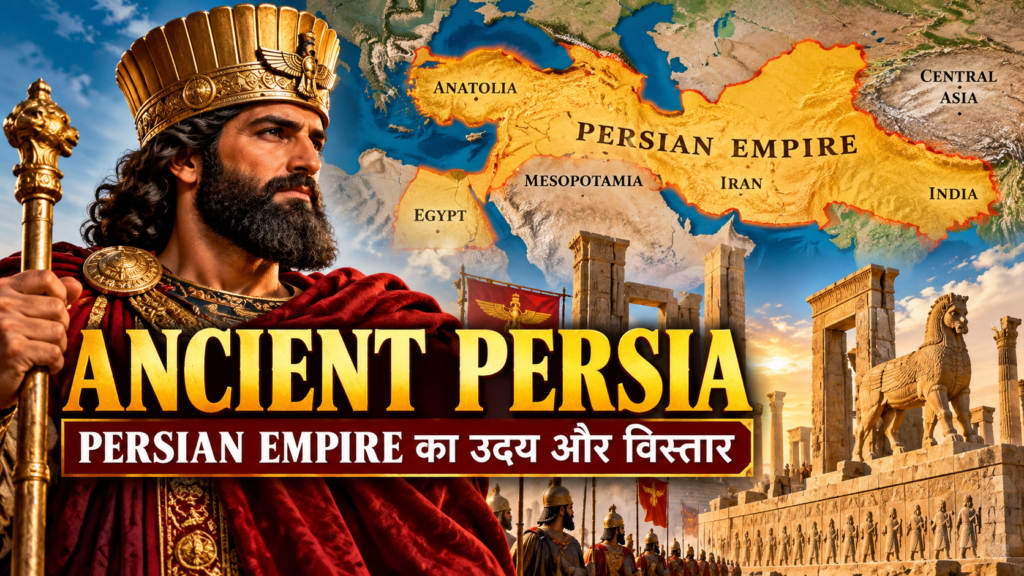
Ancient Persia का मुख्य क्षेत्र आधुनिक Iran के दक्षिण-पश्चिमी भाग में स्थित था। यहाँ Zagros Mountains, विशाल पठार, शुष्क क्षेत्र और उपजाऊ घाटियाँ थीं। इस भौगोलिक विविधता ने Persian society की जीवनशैली, कृषि, व्यापार और सैन्य रणनीतियों को प्रभावित किया। फारस की भौगोलिक स्थिति भी अत्यंत महत्वपूर्ण थी क्योंकि यह Mesopotamia, Central Asia, Anatolia और भारतीय उपमहाद्वीप के बीच संपर्क स्थापित करने वाले क्षेत्रों के निकट था। इससे Persian rulers को व्यापारिक मार्गों और विभिन्न राजनीतिक केंद्रों तक पहुँच बनाने का अवसर मिला। हालांकि साम्राज्य के अलग-अलग क्षेत्रों की जलवायु और प्राकृतिक परिस्थितियाँ काफी भिन्न थीं, फिर भी प्रशासनिक नेटवर्क, व्यापार और संचार ने उन्हें एक बड़े राजनीतिक ढाँचे में जोड़ने में सहायता की। English: Ancient Persia was centered in present-day Iran, a region strategically positioned between Mesopotamia, Central Asia, Anatolia and the lands to its east. Its geography included mountains, plateaus, river valleys and arid landscapes. These conditions influenced agriculture, settlement patterns, trade routes and military campaigns. As Persian rulers expanded beyond their homeland, they brought together regions with different environments, economies and cultural traditions.
Persian Empire के इतिहास में Achaemenid dynasty का विशेष स्थान है। इस राजवंश का नाम Achaemenes से जुड़ा है, जिन्हें परंपरागत रूप से राजवंश का पूर्वज माना जाता है। छठी शताब्दी BCE में Cyrus II, जिन्हें Cyrus the Great कहा जाता है, ने Persian power को एक बड़े साम्राज्य में बदलने की प्रक्रिया शुरू की। लगभग 550 BCE में उन्होंने Median Empire को पराजित करके अपनी शक्ति का विस्तार किया। इसके बाद Cyrus ने आसपास के क्षेत्रों में अभियान चलाए और Lydia तथा Babylon जैसे महत्वपूर्ण राज्यों को अपने नियंत्रण में लिया। Babylon की विजय लगभग 539 BCE में हुई। इन विजयों के कारण फारस एक क्षेत्रीय शक्ति से बढ़कर पश्चिमी एशिया की प्रमुख साम्राज्यवादी शक्ति बन गया। Cyrus ने केवल सैन्य विजय पर निर्भर रहने के बजाय कई क्षेत्रों में स्थानीय प्रशासनिक परंपराओं और धार्मिक संस्थाओं को बनाए रखने की नीति अपनाई। इससे नए विजित क्षेत्रों पर शासन स्थापित करने में मदद मिली। Achaemenid Empire का काल सामान्यतः लगभग 550–330 BCE माना जाता है, जब Alexander the Great की विजय के बाद इस साम्राज्य का अंत हुआ। English: The Achaemenid Persian Empire emerged under Cyrus II, better known as Cyrus the Great. Around 550 BCE, Cyrus defeated the Medes and began expanding Persian power. His campaigns brought major territories, including Lydia and Babylon, under Persian control. The empire became one of the largest political formations of the ancient world. Its success depended not only on military strength but also on the ability to incorporate diverse peoples and established administrative traditions into a wider imperial system.
Cyrus the Great (लगभग 600–530 BCE) प्राचीन इतिहास के सबसे महत्वपूर्ण शासकों में गिने जाते हैं। उन्होंने Persian Empire को संगठित और विस्तृत शक्ति के रूप में स्थापित किया। उनके शासनकाल में Median territories, Lydia और Babylon जैसे क्षेत्रों को साम्राज्य में शामिल किया गया। Lydia की विजय ने फारस को Anatolia के महत्वपूर्ण हिस्सों तक पहुँच प्रदान की, जबकि Babylon की विजय से Mesopotamia के समृद्ध शहरी और प्रशासनिक केंद्रों पर नियंत्रण मिला। Cyrus की एक उल्लेखनीय विशेषता यह थी कि वे कई विजित समुदायों की धार्मिक और सांस्कृतिक परंपराओं को बनाए रखने की अनुमति देते थे, हालांकि उनकी नीतियों को हर क्षेत्र और हर परिस्थिति में एक जैसी सहिष्णुता के रूप में नहीं देखना चाहिए। Babylon में Cyrus के आगमन और स्थानीय धार्मिक संस्थाओं के प्रति उनकी नीतियों की जानकारी प्राचीन अभिलेखों से मिलती है। Cyrus Cylinder नामक मिट्टी का बेलनाकार अभिलेख इस विषय से जुड़ा प्रसिद्ध पुरातात्विक स्रोत है। इसे प्राचीन Babylonian शाही परंपरा और Cyrus के शासन के संदर्भ में समझना चाहिए; इसे आधुनिक अर्थों में सार्वभौमिक मानवाधिकारों की घोषणा कहना ऐतिहासिक रूप से विवादास्पद होगा। Cyrus ने Pasargadae को अपने शाही केंद्रों में से एक बनाया। उनकी मृत्यु लगभग 530 BCE में हुई, लेकिन उनके द्वारा स्थापित साम्राज्य आगे भी विस्तृत होता रहा। English: Cyrus the Great laid the foundations of the Achaemenid Empire through conquest, political consolidation and cooperation with local elites. His victories over the Medes, Lydia and Babylon transformed Persia into a major imperial power. Cyrus is often associated with religious accommodation and the preservation of local traditions, although the details varied by context. The Cyrus Cylinder provides important evidence about his rule in Babylon and the political language of ancient kingship. Cyrus’s legacy established the framework that later Persian rulers expanded and reorganized.
Cyrus the Great के बाद उनके पुत्र Cambyses II ने शासन संभाला। Cambyses के शासनकाल में Persian Empire ने मिस्र (Egypt) पर विजय प्राप्त की, जो लगभग 525 BCE में हुई। मिस्र प्राचीन दुनिया की सबसे पुरानी और समृद्ध सभ्यताओं में से एक था। Nile River की उपजाऊ घाटी, कृषि उत्पादन और रणनीतिक स्थिति ने उसे अत्यंत महत्वपूर्ण बनाया था। मिस्र पर नियंत्रण से Persian rulers को पूर्वी Mediterranean और उत्तर-पूर्वी अफ्रीका में अपनी शक्ति बढ़ाने का अवसर मिला। इस विजय के बाद मिस्र Achaemenid imperial system का हिस्सा बना, हालांकि वहाँ स्थानीय परंपराएँ और धार्मिक संस्थाएँ विभिन्न रूपों में जारी रहीं। Cambyses की मृत्यु 522 BCE में हुई और उनके बाद सत्ता संघर्ष उत्पन्न हुआ। इसी राजनीतिक अस्थिरता के बीच Darius I सत्ता में आए। English: Cambyses II, the son of Cyrus the Great, expanded the empire into Egypt around 525 BCE. Egypt’s agricultural wealth, Nile Valley and strategic location made it a valuable addition to the Persian realm. Following Cambyses’s death in 522 BCE, political instability and competing claims to the throne created a serious challenge for the empire. Darius I subsequently consolidated his position and reorganized imperial rule.
Darius I, जिन्हें Darius the Great कहा जाता है, ने लगभग 522–486 BCE तक शासन किया। उन्होंने सत्ता संभालने के बाद कई विद्रोहों का सामना किया और साम्राज्य पर केंद्रीय नियंत्रण को मजबूत किया। उनके शासनकाल में Persian Empire ने अपने सबसे बड़े क्षेत्रीय विस्तारों में से एक प्राप्त किया। साम्राज्य का प्रभाव Indus Valley के कुछ क्षेत्रों से लेकर मिस्र और Anatolia तक फैला हुआ था। Darius का सबसे बड़ा योगदान केवल विजय अभियान नहीं, बल्कि साम्राज्य को प्रभावी ढंग से चलाने के लिए प्रशासनिक व्यवस्था को व्यवस्थित करना था। उन्होंने प्रांतों के प्रशासन, कर संग्रह, शाही संचार, मुद्रा व्यवस्था और राजकीय निर्माण परियोजनाओं पर विशेष ध्यान दिया। उन्होंने Persepolis में विशाल शाही निर्माण परियोजनाओं को भी आगे बढ़ाया, जो Persian imperial power और विविध सांस्कृतिक प्रभावों का प्रतीक बनी। Darius ने Behistun Inscription भी बनवाया, जिसमें उनके सत्ता प्राप्त करने और विद्रोहों को दबाने की घटनाओं का शाही विवरण दर्ज है। यह अभिलेख आज Achaemenid इतिहास के अध्ययन का एक महत्वपूर्ण स्रोत है, हालांकि इसे राजा के अपने दृष्टिकोण से तैयार किया गया राजकीय विवरण समझना चाहिए। English: Darius I strengthened the Achaemenid Empire after a period of political instability. His reign was marked by administrative reforms, provincial organization, improved communication, taxation systems and major construction projects. The Behistun Inscription records Darius’s account of his accession and the rebellions he faced. It is a crucial historical source, although its claims reflect the perspective and political objectives of the king. Darius’s reforms helped maintain control over a vast and culturally diverse empire.
इतने विशाल साम्राज्य पर शासन करने के लिए एक व्यवस्थित administrative system की आवश्यकता थी। Achaemenid rulers ने अपने क्षेत्रों को प्रशासनिक इकाइयों में संगठित किया, जिन्हें Greek sources में satrapies कहा जाता है। इन प्रांतों के प्रमुख अधिकारियों को satraps कहा जाता था। Satraps का काम कर संग्रह, स्थानीय प्रशासन, कानून-व्यवस्था, सैन्य आवश्यकताओं और राजकीय आदेशों को लागू करने में सहायता करना था। वे राजा के प्रतिनिधि के रूप में काम करते थे, लेकिन उनकी शक्तियाँ और जिम्मेदारियाँ समय तथा क्षेत्र के अनुसार बदल सकती थीं। Darius I ने इस व्यवस्था को अधिक व्यवस्थित रूप दिया और प्रांतों से मिलने वाले करों तथा संसाधनों को शाही शासन से जोड़ा। साम्राज्य की स्थिरता के लिए केवल satrap पर निर्भर रहना पर्याप्त नहीं था, इसलिए केंद्रीय सत्ता विभिन्न अधिकारियों और सैन्य संरचनाओं के माध्यम से प्रांतीय शासन पर निगरानी रखती थी। अलग-अलग क्षेत्रों में स्थानीय शासक, अभिजात वर्ग और पुरानी प्रशासनिक संस्थाएँ भी महत्वपूर्ण भूमिका निभाती थीं। इस व्यवस्था से केंद्रीय सरकार को दूर-दराज के क्षेत्रों से राजस्व और सैन्य सहायता प्राप्त करने में मदद मिली। English: The satrapy system was a key feature of Achaemenid administration. The empire was organized into provinces governed by satraps, who represented the king and supervised taxation, security and local administration. Satraps operated within a wider hierarchy of royal officials and military authorities. The exact organization evolved over time, and local elites often continued to play important roles. This combination of central authority and regional administration made it possible to govern territories spread across a vast geographical area.
Persian Empire की सबसे प्रसिद्ध उपलब्धियों में से एक Royal Road का विकास और उपयोग था। यह मार्ग विशेष रूप से Darius I के शासन से जुड़ा है और पश्चिमी Anatolia के Sardis को साम्राज्य के प्रमुख केंद्र Susa से जोड़ता था। प्राचीन Greek लेखक Herodotus ने इस मार्ग पर स्थित शाही पड़ावों और संदेशवाहक व्यवस्था का वर्णन किया है। Royal Road का उद्देश्य केवल यात्रियों को एक स्थान से दूसरे स्थान तक पहुँचाना नहीं था। इसका उपयोग शाही संदेशों, अधिकारियों, व्यापारिक कारवाँ और प्रशासनिक संपर्कों के लिए भी किया जाता था। मार्ग के किनारे स्थित पड़ावों पर घोड़ों और यात्रियों के लिए सुविधाएँ उपलब्ध कराई जाती थीं, जिससे संदेशवाहक लंबी दूरी तेजी से तय कर सकते थे। ध्यान देने योग्य बात यह है कि Persian rulers ने सभी सड़कें शून्य से नहीं बनाईं; कई मार्ग पहले से मौजूद थे, जिन्हें साम्राज्य ने विकसित किया, जोड़ा और बेहतर प्रशासनिक उपयोग में लाया। Royal Road ने विभिन्न क्षेत्रों के बीच संपर्क बढ़ाया और साम्राज्य के संचालन को अधिक प्रभावी बनाया। English: The Royal Road was an important communication route associated with Darius I. It connected Sardis in western Anatolia with Susa, one of the empire’s major administrative centers. Royal messengers used a network of roads and relay stations to carry official messages across long distances. These routes also supported trade, travel and the movement of officials. The Persian system built upon earlier regional routes rather than creating every road from scratch. Its achievement lay in connecting existing networks into a wider imperial communication system.
Persian Empire के प्रशासन में communication system की महत्वपूर्ण भूमिका थी। जब साम्राज्य हजारों किलोमीटर में फैला हो, तो राजा को प्रांतों में होने वाली घटनाओं, कर संग्रह, सैन्य गतिविधियों और विद्रोहों की जानकारी समय पर मिलना आवश्यक था। Persian royal messenger system इसी जरूरत को पूरा करने में सहायक था। संदेशवाहक घोड़ों और मार्ग के पड़ावों का उपयोग करके एक स्थान से दूसरे स्थान तक शाही संदेश पहुँचाते थे। इस relay system में हर संदेशवाहक को पूरी दूरी अकेले तय करने की आवश्यकता नहीं होती थी। निर्धारित पड़ावों पर घोड़े बदलने और यात्रा जारी रखने से लंबी दूरी पर संचार अपेक्षाकृत तेज हो सकता था। इस व्यवस्था ने केंद्रीय सत्ता और प्रांतीय प्रशासन के बीच संपर्क को मजबूत किया। हालांकि प्राचीन संदेशों की गति मौसम, दूरी, सड़क की स्थिति और राजनीतिक परिस्थितियों पर निर्भर करती थी; इसलिए किसी एक गति को पूरे साम्राज्य के लिए निश्चित नहीं माना जाना चाहिए। English: The Persian royal messenger network helped rulers communicate with distant provinces. Relay stations and fresh horses allowed couriers to carry official messages over long distances more efficiently than ordinary travelers. This network supported administration, military coordination and the delivery of royal orders. Its effectiveness depended on infrastructure, available resources and local conditions, but it represented an important achievement in ancient imperial communication.
Persian Empire की अर्थव्यवस्था कृषि, पशुपालन, शिल्प उत्पादन, व्यापार और कर संग्रह पर आधारित थी। साम्राज्य के अलग-अलग क्षेत्रों में अनाज, फल, पशुधन, धातुएँ, वस्त्र और अन्य उपयोगी वस्तुओं का उत्पादन होता था। विविध क्षेत्रों को एक राजनीतिक व्यवस्था के अंतर्गत जोड़ने से वस्तुओं और संसाधनों के आदान-प्रदान के अवसर बढ़े। साम्राज्य के प्रांत राजा को कर और अन्य प्रकार के राजस्व देते थे। इन संसाधनों का उपयोग शाही प्रशासन, सेना, निर्माण कार्यों और राजकीय गतिविधियों के लिए किया जाता था। Darius I के शासनकाल में मानकीकृत शाही मुद्रा, विशेषकर gold daric और silver siglos, का उपयोग महत्वपूर्ण रहा। हालांकि पूरे साम्राज्य में व्यापार केवल सिक्कों पर निर्भर नहीं था; वस्तुओं के रूप में भुगतान और स्थानीय आर्थिक प्रणालियाँ भी जारी थीं। सड़कों और संचार मार्गों ने व्यापारियों तथा अधिकारियों की आवाजाही में सहायता की, जबकि अलग-अलग क्षेत्रों के संसाधनों ने साम्राज्य की आर्थिक शक्ति को बढ़ाया। English: The Persian economy combined agriculture, pastoralism, crafts, trade and taxation. Different provinces produced food, metals, textiles and other goods, creating opportunities for exchange across the empire. Royal taxation supported administration, military forces and construction. Standardized coinage, including the gold daric and silver siglos associated with the Achaemenid period, facilitated certain commercial transactions, although payments in goods and local economic practices remained important. Roads and communication networks helped connect regional markets and administrative centers.
Persepolis Achaemenid Empire का सबसे प्रसिद्ध शाही निर्माण केंद्र था। यह वर्तमान Iran के Fars क्षेत्र में स्थित है। Darius I ने लगभग 518 BCE के आसपास यहाँ विशाल शाही परिसर के निर्माण की शुरुआत की, जिसे उनके उत्तराधिकारियों ने आगे बढ़ाया। Persepolis केवल एक शहर नहीं था, बल्कि राजकीय समारोहों, शाही प्रतिनिधित्व और साम्राज्य की शक्ति का प्रतीक भी था। इसके महलों, सीढ़ियों, स्तंभों और पत्थर पर उकेरी गई आकृतियों में विभिन्न क्षेत्रों से जुड़े लोगों, प्रतिनिधियों और उपहारों के दृश्य मिलते हैं। ये कलात्मक विवरण साम्राज्य की विविधता और शाही विचारधारा के बारे में जानकारी देते हैं। निर्माण कार्यों में विभिन्न क्षेत्रों के कारीगरों और श्रमिकों ने योगदान दिया, जिससे Persian architecture में कई सांस्कृतिक और कलात्मक परंपराओं का प्रभाव दिखाई देता है। Persepolis आज भी Achaemenid कला, वास्तुकला और शाही सत्ता को समझने के लिए एक महत्वपूर्ण पुरातात्विक स्थल है। English: Persepolis was a monumental royal complex in present-day Iran. Construction began under Darius I around 518 BCE and continued under later Achaemenid kings. Its palaces, monumental stairways, columns and carved reliefs expressed royal authority and the diversity of the empire. The artistic program incorporated contributions from different regions while presenting them within a Persian imperial framework. Persepolis remains one of the most important archaeological sites for understanding Achaemenid architecture and political culture.
Ancient Persia के धार्मिक इतिहास में Zoroastrianism का विशेष स्थान है। यह धर्म Zarathustra, जिन्हें Greek sources में Zoroaster कहा जाता है, की शिक्षाओं से जुड़ा है। Zoroastrian tradition में Ahura Mazda सर्वोच्च देवता के रूप में महत्वपूर्ण स्थान रखते हैं। सत्य, नैतिक चुनाव और अच्छे तथा बुरे के बीच संघर्ष जैसे विचार इस धार्मिक परंपरा में केंद्रीय हैं। हालांकि Achaemenid kings के धार्मिक विश्वासों और उनके द्वारा किए गए अनुष्ठानों की व्याख्या पर इतिहासकारों में चर्चा होती है, विशेषकर इस प्रश्न पर कि उस समय Zoroastrianism किस हद तक अपने बाद के व्यवस्थित रूप में मौजूद था। Persian Empire के भीतर विभिन्न धार्मिक समुदाय रहते थे और कई क्षेत्रों में स्थानीय देवताओं, मंदिरों और पूजा-पद्धतियों को बनाए रखा गया। इसलिए प्राचीन फारस को केवल एक ही धार्मिक परंपरा वाला समाज समझना उचित नहीं होगा। English: Zoroastrianism is one of the most significant religious traditions associated with ancient Iran. It is linked to the teachings of Zarathustra, or Zoroaster, and places Ahura Mazda at the center of its theology. Truth, ethical responsibility and the struggle between good and evil are important themes. However, the precise relationship between early Zoroastrianism and Achaemenid royal religion remains a subject of scholarly discussion. The empire also included communities that maintained their own religious practices and traditions.
Persian Empire की कला और वास्तुकला में शाही शक्ति, धार्मिक प्रतीकों और क्षेत्रीय विविधता का मिश्रण दिखाई देता है। Persepolis और Pasargadae जैसे स्थलों के अवशेषों से महलों, स्तंभों, पत्थर की नक्काशी और नियोजित शाही परिसरों के बारे में जानकारी मिलती है। Achaemenid architecture में विभिन्न क्षेत्रों की तकनीकों और कलात्मक परंपराओं का उपयोग किया गया। Relief sculptures में सैनिकों, दरबारियों और विभिन्न समुदायों के प्रतिनिधियों को दर्शाया गया है। ऐसी कलाकृतियाँ साम्राज्य की सांस्कृतिक विविधता के साथ-साथ राजा की सत्ता को भी प्रदर्शित करती थीं। Persian प्रशासन में अनेक भाषाओं और लेखन प्रणालियों का उपयोग हुआ। शाही अभिलेखों में Old Persian, Elamite और Babylonian जैसी भाषाओं के उदाहरण मिलते हैं, जबकि Aramaic ने साम्राज्य के कई हिस्सों में प्रशासनिक संचार के लिए महत्वपूर्ण भूमिका निभाई। इससे पता चलता है कि विशाल साम्राज्य को चलाने के लिए सांस्कृतिक एकरूपता थोपने के बजाय विभिन्न परंपराओं के साथ काम करना व्यावहारिक था। English: Achaemenid art and architecture combined Persian royal traditions with influences from across the empire. Monumental buildings, stone reliefs, columns and inscriptions communicated political authority while reflecting the participation of diverse communities. The empire also used multiple languages for different administrative and cultural purposes. Old Persian, Elamite, Babylonian and Aramaic all appear in the wider documentary record. These artistic and linguistic traditions provide valuable evidence for the complexity of ancient Persian society.
Persian Empire और Greek city-states के बीच संघर्ष प्राचीन इतिहास की प्रमुख घटनाओं में शामिल है। इन युद्धों की पृष्ठभूमि में पश्चिमी Anatolia के Greek शहरों, Persian imperial expansion और क्षेत्रीय राजनीतिक प्रतिस्पर्धा की भूमिका थी। लगभग 499 BCE में Ionian Revolt शुरू हुआ, जिसमें Anatolia के कुछ Greek समुदायों ने Persian शासन के विरुद्ध विद्रोह किया। इसके बाद Persia और कुछ Greek city-states के बीच संघर्ष बढ़ गया। 490 BCE में Darius I के शासनकाल में Battle of Marathon हुई, जिसमें Athenian forces ने Persian अभियान को पीछे धकेला। बाद में Xerxes I के शासनकाल में 480 BCE में Thermopylae और Salamis की लड़ाइयाँ हुईं। Thermopylae में Greek forces को भारी नुकसान हुआ, जबकि Salamis में Greek नौसेना ने महत्वपूर्ण विजय प्राप्त की। इन घटनाओं के बावजूद Persian Empire तुरंत समाप्त नहीं हुआ और वह कई दशकों तक एक बड़ी शक्ति बना रहा। Greco-Persian Wars को केवल दो सभ्यताओं के बीच संघर्ष के रूप में देखने के बजाय क्षेत्रीय राजनीति, सैन्य रणनीति और साम्राज्यवादी हितों के संदर्भ में समझना अधिक उचित है। English: The Greco-Persian Wars developed from political tensions, imperial expansion and conflicts involving Greek communities in western Anatolia. The Ionian Revolt began around 499 BCE. The Battle of Marathon followed in 490 BCE, during the reign of Darius I. Under Xerxes I, the battles of Thermopylae and Salamis took place in 480 BCE. Greek victories at key engagements limited Persian ambitions in mainland Greece, but they did not immediately destroy the Persian Empire. Persia remained a major political power for many decades afterward.
Achaemenid Empire का पतन एक लंबी ऐतिहासिक प्रक्रिया का परिणाम था। साम्राज्य के अंतिम चरण में शाही उत्तराधिकार से जुड़े विवाद, दरबारी प्रतिस्पर्धा, कुछ प्रांतों में विद्रोह और सैन्य चुनौतियाँ केंद्रीय सत्ता के लिए समस्याएँ पैदा करती रहीं। विशाल भूभाग पर नियंत्रण बनाए रखना भी कठिन था, विशेषकर तब जब विभिन्न सीमावर्ती क्षेत्रों में सैन्य अभियानों की आवश्यकता पड़ती थी। फिर भी यह कहना गलत होगा कि साम्राज्य केवल आंतरिक कमजोरी के कारण अचानक गिर गया। चौथी शताब्दी BCE में Macedonian राजा Alexander III, जिन्हें Alexander the Great कहा जाता है, ने Persian Empire के विरुद्ध अभियान शुरू किया। 334 BCE में उन्होंने Asia Minor में प्रवेश किया और Granicus की लड़ाई में सफलता प्राप्त की। 333 BCE में Battle of Issus और 331 BCE में Battle of Gaugamela निर्णायक घटनाएँ बनीं। Gaugamela के बाद Alexander की सेनाओं ने साम्राज्य के प्रमुख केंद्रों पर नियंत्रण बढ़ाया। 330 BCE तक Darius III की सत्ता समाप्त हो गई और Achaemenid Empire का अंत हो गया। इसके बाद पूर्व के कई क्षेत्र Alexander के विशाल लेकिन अल्पकालिक साम्राज्य का हिस्सा बने। English: The fall of the Achaemenid Empire resulted from a combination of political instability, regional challenges and Macedonian military campaigns. Alexander the Great invaded the Persian Empire in 334 BCE. His victories at Issus in 333 BCE and Gaugamela in 331 BCE weakened Persian resistance and opened the way to major imperial centers. By approximately 330 BCE, Darius III had lost power and the Achaemenid Empire had ended. This marked the conclusion of the Achaemenid dynasty, not the end of Persian culture or Iranian political traditions.
Persian Empire की विरासत उसके पतन के बाद भी बनी रही। इसकी प्रशासनिक परंपराओं, शाही संचार नेटवर्क, सड़क मार्गों और क्षेत्रीय शासन के अनुभवों ने बाद के पश्चिमी एशियाई साम्राज्यों को प्रभावित किया। Persian rulers ने विशाल और विविध आबादी वाले क्षेत्रों को एक केंद्रीय सत्ता से जोड़ने के कई तरीके विकसित किए। Satrapies जैसी प्रशासनिक इकाइयाँ, प्रांतीय राजस्व व्यवस्था और राजकीय संदेशवाहक प्रणाली इस शासन मॉडल के प्रमुख उदाहरण हैं। Persian art और architecture की परंपराएँ भी आगे के ईरानी इतिहास में महत्वपूर्ण रहीं। यह भी ध्यान रखना चाहिए कि Achaemenid Empire के पतन के बाद Persian identity समाप्त नहीं हुई। ईरान के क्षेत्र में बाद के युगों में नए राजवंश और राजनीतिक व्यवस्थाएँ उभरीं, जिनमें Persian language, culture और historical memory ने अलग-अलग रूपों में निरंतरता बनाए रखी। English: The legacy of ancient Persia extended well beyond the fall of the Achaemenid dynasty. Its administrative practices, communication networks, monumental architecture and traditions of regional governance influenced later political systems in the region. Persian culture continued to evolve under subsequent dynasties, and the end of the Achaemenid Empire did not mean the disappearance of Persian identity. Its historical significance lies in both its imperial achievements and its long-lasting cultural influence.
| वर्ष (BCE) | ऐतिहासिक घटना |
| c. 550 BCE | Cyrus the Great ने Median Empire को पराजित करके Persian expansion को आगे बढ़ाया। |
| 546 BCE | Cyrus ने Lydia पर विजय प्राप्त की। |
| 539 BCE | Babylon Persian नियंत्रण में आया। |
| 530 BCE | Cyrus the Great की मृत्यु हुई। |
| 525 BCE | Cambyses II ने Egypt पर विजय प्राप्त की। |
| 522 BCE | Darius I सत्ता में आए। |
| c. 518 BCE | Persepolis में Darius I के शाही निर्माण कार्यक्रम की शुरुआत हुई। |
| 490 BCE | Battle of Marathon हुई। |
| 480 BCE | Thermopylae और Salamis की लड़ाइयाँ हुईं। |
| 334 BCE | Alexander the Great ने Persian Empire के विरुद्ध अभियान शुरू किया। |
| 331 BCE | Battle of Gaugamela में Alexander को निर्णायक विजय मिली। |
| c. 330 BCE | Achaemenid Empire का अंत हुआ। |
Note: प्राचीन घटनाओं की कुछ तिथियाँ अनुमानित हैं और अलग-अलग ऐतिहासिक स्रोतों में मामूली अंतर मिल सकता है।
Ancient Persia प्राचीन ईरान और उससे जुड़े क्षेत्रों की ऐतिहासिक सभ्यता तथा राजनीतिक परंपराओं को संदर्भित करता है। इसका सबसे प्रसिद्ध साम्राज्य Achaemenid Empire था, जो लगभग 550–330 BCE तक अस्तित्व में रहा।
Cyrus II, जिन्हें Cyrus the Great कहा जाता है, को Achaemenid Persian Empire के प्रमुख संस्थापक के रूप में जाना जाता है। उन्होंने लगभग 550 BCE में Median Empire को पराजित करके फारस की शक्ति का विस्तार किया।
Cyrus the Great Achaemenid dynasty के प्रमुख शासक थे। उन्होंने Median territories, Lydia और Babylon सहित अनेक क्षेत्रों को अपने साम्राज्य में शामिल किया और विशाल Persian Empire की नींव रखी।
Darius I ने साम्राज्य को प्रशासनिक रूप से संगठित किया, प्रांतीय शासन और राजस्व व्यवस्था को मजबूत किया, संचार मार्गों को विकसित किया तथा Persepolis जैसे शाही निर्माण कार्यक्रमों को आगे बढ़ाया।
Satrapy System Persian Empire की प्रांतीय प्रशासनिक व्यवस्था थी। प्रत्येक प्रांत का प्रमुख अधिकारी satrap कहलाता था, जो राजा की ओर से स्थानीय प्रशासन, कर संग्रह और व्यवस्था बनाए रखने में सहायता करता था।
Royal Road ने साम्राज्य के प्रमुख केंद्रों के बीच संचार और यात्रा को आसान बनाया। इसका उपयोग शाही संदेशों, अधिकारियों और व्यापारिक गतिविधियों के लिए किया जाता था।
Alexander the Great के अभियानों के परिणामस्वरूप Achaemenid Empire का अंत हुआ। 331 BCE की Battle of Gaugamela एक निर्णायक घटना थी और लगभग 330 BCE तक Darius III की सत्ता समाप्त हो गई।
Ancient Persia का मुख्य केंद्र आधुनिक Iran के क्षेत्र में था, लेकिन प्राचीन साम्राज्य की सीमाएँ आज के Iran से कहीं अधिक विस्तृत थीं। इसलिए Ancient Persia को आधुनिक Iran की वर्तमान सीमाओं के बराबर नहीं माना जाना चाहिए।
Ancient Persia का इतिहास बताता है कि किसी विशाल साम्राज्य की सफलता केवल सैन्य विजय पर निर्भर नहीं करती। प्रभावी प्रशासन, आर्थिक संसाधनों का प्रबंधन, संचार नेटवर्क, क्षेत्रीय सहयोग और सांस्कृतिक विविधता को संभालने की क्षमता भी महत्वपूर्ण होती है। Cyrus the Great ने Persian Empire की नींव रखी, Cambyses II ने मिस्र तक उसका विस्तार किया और Darius I ने प्रशासनिक व्यवस्था तथा शाही संचार को मजबूत किया। Royal Road, satrapy system और Persepolis जैसे ऐतिहासिक उदाहरण प्राचीन शासन की जटिलता और उपलब्धियों को समझने में मदद करते हैं। अंततः Alexander the Great की विजय से Achaemenid Empire समाप्त हुआ, लेकिन Persian culture और राजनीतिक परंपराएँ इतिहास में आगे भी विकसित होती रहीं। Ancient Persia का अध्ययन हमें प्राचीन दुनिया की राजनीति, अर्थव्यवस्था, संस्कृति और साम्राज्य निर्माण की प्रक्रियाओं को बेहतर ढंग से समझने का अवसर देता है।
Explore More on AdviceShare.in: प्राचीन सभ्यताओं, विश्व इतिहास, विज्ञान, प्रकृति और मानव विकास से जुड़े अन्य लेख पढ़ें और अपने ज्ञान को लगातार बढ़ाएँ।