Physical Address
304 North Cardinal St.
Dorchester Center, MA 02124
Physical Address
304 North Cardinal St.
Dorchester Center, MA 02124

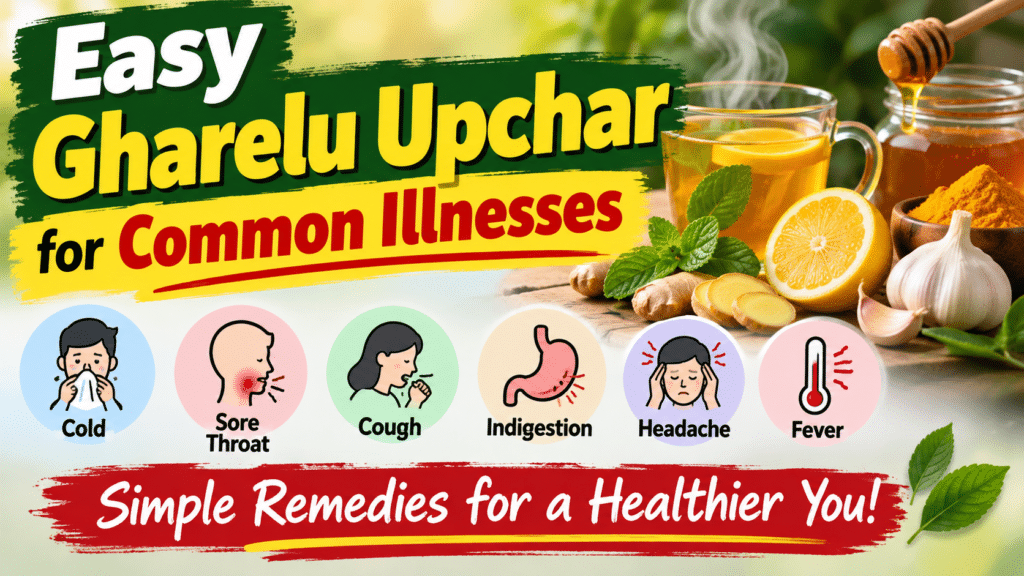
When common health problems such as a cold, cough, sore throat, headache, mild indigestion, or muscle soreness appear, many people first look for simple remedies they can try at home. Fortunately, several everyday measures can help relieve symptoms and make you more comfortable while your body recovers.
However, a gharelu upchar (home remedy) should not automatically be considered a cure. Some illnesses require medical diagnosis and treatment, and delaying professional care can sometimes make a condition worse.
In this article, Advice Share explores some simple and generally safe home-care approaches for common minor illnesses, along with precautions and signs that indicate when you should consult a doctor.
A common cold can cause symptoms such as:
Stay hydrated:
Drink enough water and other suitable fluids. Hydration can help prevent dehydration and may make throat and nasal secretions easier to manage.
Warm liquids:
Warm water, soup, or other non-irritating warm beverages can provide temporary comfort, particularly when you have a sore throat.
Get enough rest:
Adequate sleep and rest give your body time to recover.
Saline nasal drops or spray:
A saline solution can help moisturize the nasal passages and relieve congestion.
Antibiotics generally do not help a typical common cold because colds are usually caused by viruses.
A sore throat can occur with a cold, viral infection, allergies, or other conditions.
One of the simplest traditional remedies is gargling with warm salt water.
A commonly used mixture is:
½ teaspoon of salt in a glass of warm water
Gargle and spit it out rather than swallowing it.
This may provide temporary relief from throat irritation.
Important: Honey should not be given to babies under 1 year of age because of the risk of infant botulism.
Coughing is a natural reflex that helps clear the airways. A mild cough associated with a cold often improves as the infection resolves.
For adults and children over 1 year, a small amount of honey may help soothe a cough, particularly at night.
You can take it directly or add it to warm water.
Drinking adequate fluids can help keep mucus thinner and may make coughing more comfortable.
If the air is very dry, a clean humidifier may help relieve irritation.
However, humidifiers need to be cleaned properly because contaminated devices can spread microorganisms.
Smoking and exposure to second-hand smoke can irritate the respiratory tract and make coughing worse.
Headaches can have many different causes, including dehydration, lack of sleep, stress, eye strain, or illness.
For a mild, familiar headache, you can try:
If dehydration is contributing to the headache, drinking fluids may help.
Reducing bright light, loud sounds, and screen exposure may make some headaches more comfortable.
If lack of sleep is contributing to the headache, adequate rest can be helpful.
Slow breathing, gentle relaxation, and reducing stress may help when tension is contributing to the headache.
A sudden, extremely severe headache, particularly one that feels unlike previous headaches, requires urgent medical assessment.
A headache accompanied by symptoms such as weakness, confusion, fainting, seizures, severe vomiting, vision problems, or difficulty speaking should also be taken seriously.
Indigestion may cause:
Eat smaller meals:
Large meals can worsen indigestion for some people.
Eat slowly:
Taking time to chew food properly may reduce discomfort.
Avoid personal trigger foods:
Spicy, fatty, or highly acidic foods can trigger symptoms in some individuals.
Don’t lie down immediately after eating:
Remaining upright after meals may help reduce reflux symptoms.
Stay hydrated:
Adequate fluid intake is important, although drinking very large amounts during meals may make some people feel uncomfortable.
Constipation can often be improved through lifestyle changes.
Include fiber-rich foods such as:
Increase fiber gradually to reduce the possibility of bloating.
Adequate fluid intake works together with dietary fiber to support normal bowel movements.
Regular walking and physical activity can support healthy bowel function.
Going to the toilet when you feel the need may help establish a healthier bowel routine.
Mild diarrhea can sometimes be managed at home, but preventing dehydration is the priority.
ORS helps replace water and essential electrolytes lost through diarrhea.
Use a properly prepared commercial ORS according to the package instructions, particularly for children and older adults.
If you can tolerate food, you generally don’t need to completely stop eating. Choose foods that are easy for you to tolerate.
Limit alcohol and be cautious with very sugary drinks, which may sometimes worsen diarrhea.
Fever is usually a sign that the body is responding to an infection or another condition.
Rest:
Give your body time to recover.
Drink fluids:
Fever can increase fluid loss, so hydration is important.
Wear comfortable clothing:
Avoid excessive bundling that can make you uncomfortably hot.
Monitor your symptoms:
Pay attention not only to the temperature but also to how you feel overall.
A fever itself is not necessarily something that must always be eliminated. The underlying cause and severity are more important.
Mild muscle soreness after exercise or physical activity is common.
Give the affected muscles time to recover.
Light movement may reduce stiffness, provided it does not significantly increase pain.
A comfortably warm compress may help relax sore muscles and provide temporary comfort.
Adequate fluid intake supports normal body function during recovery.
If pain is severe, occurs without an obvious reason, or is accompanied by significant swelling, weakness, or other concerning symptoms, medical evaluation may be appropriate.
For a minor thermal burn, immediate first aid is more important than traditional household remedies.
Hold the affected area under cool running water for about 20 minutes as soon as possible.
Remove jewelry or clothing near the burn if it is not stuck to the skin.
Cover the burn loosely with a clean, non-stick dressing if appropriate.
Avoid applying:
These can irritate damaged skin or make the injury worse.
Seek medical attention for large, deep, electrical, chemical, or serious burns, or burns involving sensitive areas such as the face or genitals.
Nausea can have many causes, including infections, food-related problems, motion sickness, medications, and other medical conditions.
For mild nausea:
If vomiting is persistent or you cannot keep fluids down, dehydration can become a concern and medical advice may be necessary.
Home remedies are often most useful when they focus on supporting the body’s recovery and relieving symptoms, rather than claiming to cure an illness.
For example:
Hydration → helps replace lost fluids
Rest → supports recovery
Warm fluids → may soothe an irritated throat
Saline → may relieve nasal congestion
Honey → may soothe cough in people over 1 year
Fiber + fluids → support healthy bowel movements
The key principle is simple:
A home remedy should complement appropriate healthcare, not replace it when medical treatment is necessary.
Not every traditional remedy is safe.
Natural substances can cause allergic reactions, interact with medicines, or be harmful in excessive amounts.
Antibiotics treat certain bacterial infections. They do not treat viral illnesses such as most common colds.
This is an important safety rule.
Proper cooling with running water is safer first aid.
A home remedy should never delay emergency or professional medical care.
Home care is generally intended for mild symptoms. You should seek professional medical advice when symptoms are severe, unusual, persistent, or getting worse.
Seek urgent medical attention for symptoms such as:
For babies, older adults, pregnant people, or individuals with significant underlying medical conditions, the threshold for seeking medical advice may be lower.
Simple gharelu upchar can be useful for managing many minor symptoms at home. Staying hydrated, getting enough rest, eating appropriately, maintaining good hygiene, and using evidence-based comfort measures can often make recovery easier.
But home remedies are not a substitute for diagnosis or medical treatment. If symptoms are severe, persistent, unusual, or worsening, consult a qualified healthcare professional.
At Advice Share, our goal is to make useful knowledge easier to understand while encouraging readers to make informed and responsible decisions.
Founded in 2022, Advice Share is a research-based organization dedicated to exploring knowledge across various fields, with a strong focus on humans, nature, and the universe.
Our mission is to enhance understanding through research, uncover valuable insights, and share well-analyzed information with the world.
The Advice Share YouTube channel provides thoroughly researched and easy-to-understand content for people who want to expand their knowledge.
✔ In-depth research & analysis
✔ Engaging and easy-to-understand explanations
✔ Knowledge across multiple fields
✔ Informative and practical content
Advice Share also provides:
✔ Video Editing
✔ YouTube Channel Management
✔ AI Learning Support
✔ Website Design & Development
📩 Let’s work together!
Website: AdviceShare.in
WhatsApp: 7715050739
Email: adviceshare.in@gmail.com
This article is intended for general educational and informational purposes only. It is not a substitute for professional medical advice, diagnosis, or treatment. Always consult a qualified healthcare professional when you have concerns about your health or symptoms. In an emergency, seek immediate medical assistance.