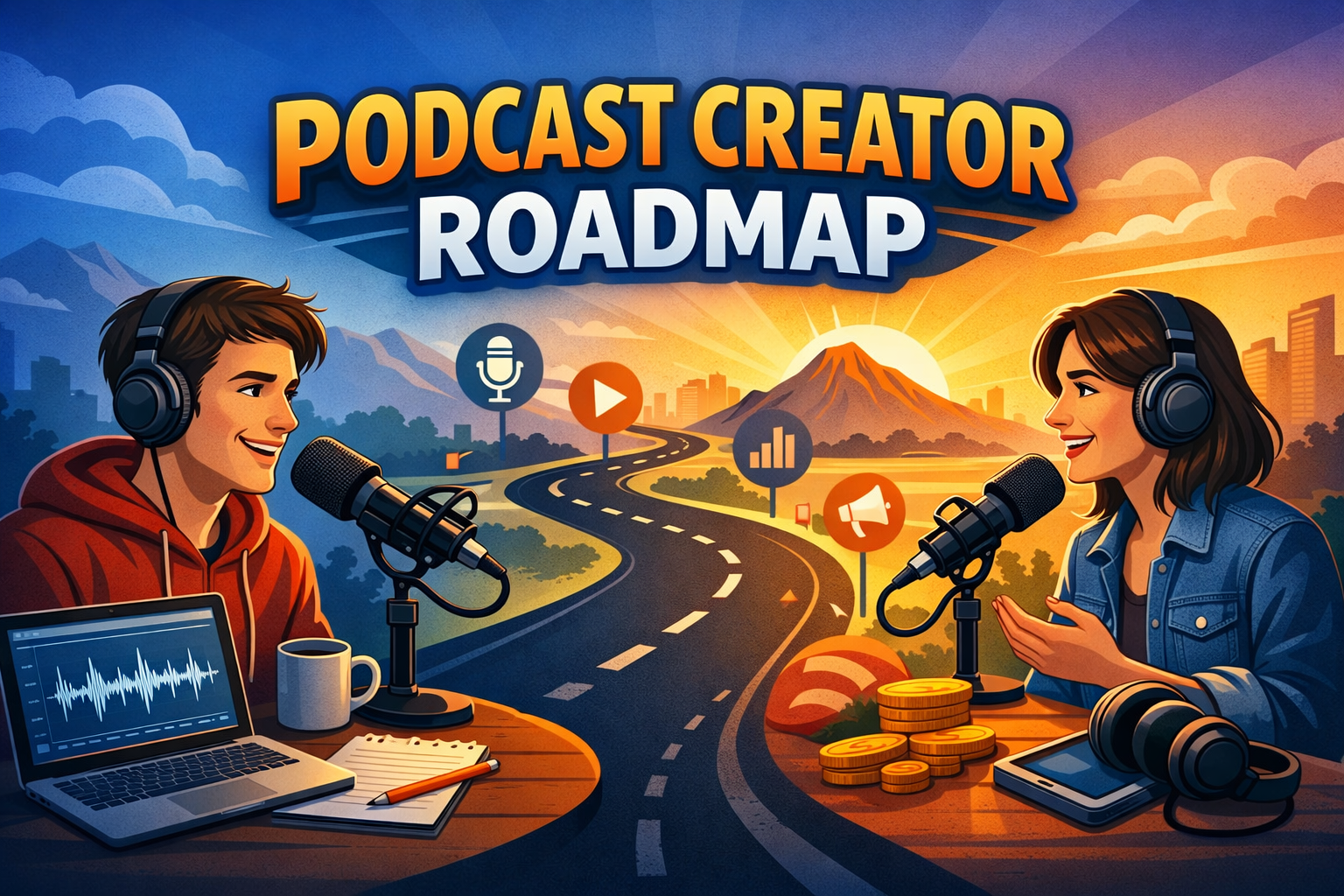
1. Vision & Strategy: Build Your Podcast’s Core
Before recording a single episode, invest time in clarity and purpose:
- Define your “why”: Why does this podcast exist? Who will it impact, and what change do you aim to create?
- Identify your audience persona: Age, interests, challenges, platforms they frequent. This will shape tone, format, and content.
- Choose your niche: Specificity wins. “Tech news” is too broad; “AI tools for small businesses” is precise and memorable.
- Set measurable goals: Downloads, audience growth, engagement, monetization timeline. Goals guide consistency and quality.
Deep thinking note: A podcast without a clear vision will struggle to grow. Think about what makes your voice unique—your perspective is your power.
2. Branding & Identity: Make Your Podcast Memorable
Your podcast must stand out visually and audibly:
- Name & tagline: Short, memorable, SEO-friendly, easy to spell.
- Cover art: Bold, clear, readable at small sizes; reflects niche and tone.
- Voice & tone guidelines: Friendly, authoritative, humorous? Decide early.
- Intro & outro music: Sets mood and reinforces identity. Consider royalty-free or custom-made tracks.
- Logo & visual consistency: Colors, fonts, and visual style across social media and platforms.
Deep thinking note: Podcast branding is more than looks—it builds trust and recognition. The audience should recognize your content in a split second.
3. Tools & Production Mastery
High-quality audio separates casual creators from serious podcasters:
- Microphones: USB for simplicity, XLR for advanced setup.
- Headphones & audio interface: Avoid echo, ensure clarity.
- Recording & editing software: Audacity, GarageBand, Adobe Audition. Learn noise reduction, EQ, compression.
- Hosting platform: Anchor, Podbean, Buzzsprout, Libsyn. Choose one that supports analytics and distribution.
Deep thinking note: Invest in learning sound design basics. Even a mid-level mic sounds amazing with proper editing and EQ.
4. Content Design: Craft Stories That Stick
Content is king—but context is queen:
- Episode planning: Outline each episode. Include hook, story, insights, and actionable takeaways.
- Guest strategy: Plan interviews with people who add value and credibility. Prepare questions that spark meaningful conversations.
- Recording discipline: Focus on energy, pacing, and authenticity. Avoid filler; make every minute valuable.
- Editing finesse: Remove dead space, ums/ahs, background noise. Add sound cues, music, and effects where appropriate.
Deep thinking note: Think of every episode as a mini-course or experience. What should the listener feel, learn, or do after each episode?
5. Distribution & Platform Strategy
Reach your audience where they are:
- Publish on multiple platforms: Apple Podcasts, Spotify, Google Podcasts, Amazon Music, Stitcher.
- Show notes & SEO: Include keywords, timestamps, and links. Optimize for search to attract organic listeners.
- Transcriptions: Improves accessibility and SEO.
- Cross-platform promotion: Embed episodes in blogs, share on YouTube, social media, newsletters.
Deep thinking note: Think of your podcast as an ecosystem—not just audio. Every episode is an opportunity to drive engagement across channels.
6. Growth & Audience Engagement
Sustainable growth comes from connection, not luck:
- Social proof: Ask listeners for reviews and ratings consistently.
- Community building: Create Discord, Telegram, or Facebook groups to engage fans.
- Collaborations & guest swaps: Network with other podcasters to tap into new audiences.
- Analytics-driven adjustments: Track downloads, retention, and demographic data to refine strategy.
Deep thinking note: Treat your audience as partners in creation. Feedback loops will guide content and growth.
7. Monetization & Scaling
Turn passion into profit strategically:
- Sponsorships & brand partnerships: Start with niche-relevant brands; avoid generic ads that alienate listeners.
- Memberships & premium content: Patreon, exclusive episodes, or courses.
- Merchandise & affiliate marketing: Extend your brand into tangible products.
- Repurposing content: Convert episodes into blogs, short videos, social posts to expand reach.
Deep thinking note: Monetization should follow credibility & value, not precede it. A loyal audience is your most valuable asset.
8. Continuous Improvement
Podcasting is a continuous feedback loop:
- Listener surveys: Regularly ask what works, what doesn’t.
- Benchmarking: Analyze other successful podcasts in your niche.
- Experimentation: Try new formats, segments, or storytelling methods.
- Personal growth: Podcasting is also a skill journey—improve your interviewing, storytelling, and editing over time.
Deep thinking note: Your podcast should evolve with your audience and yourself. Growth isn’t linear—anticipate plateaus and iterate.