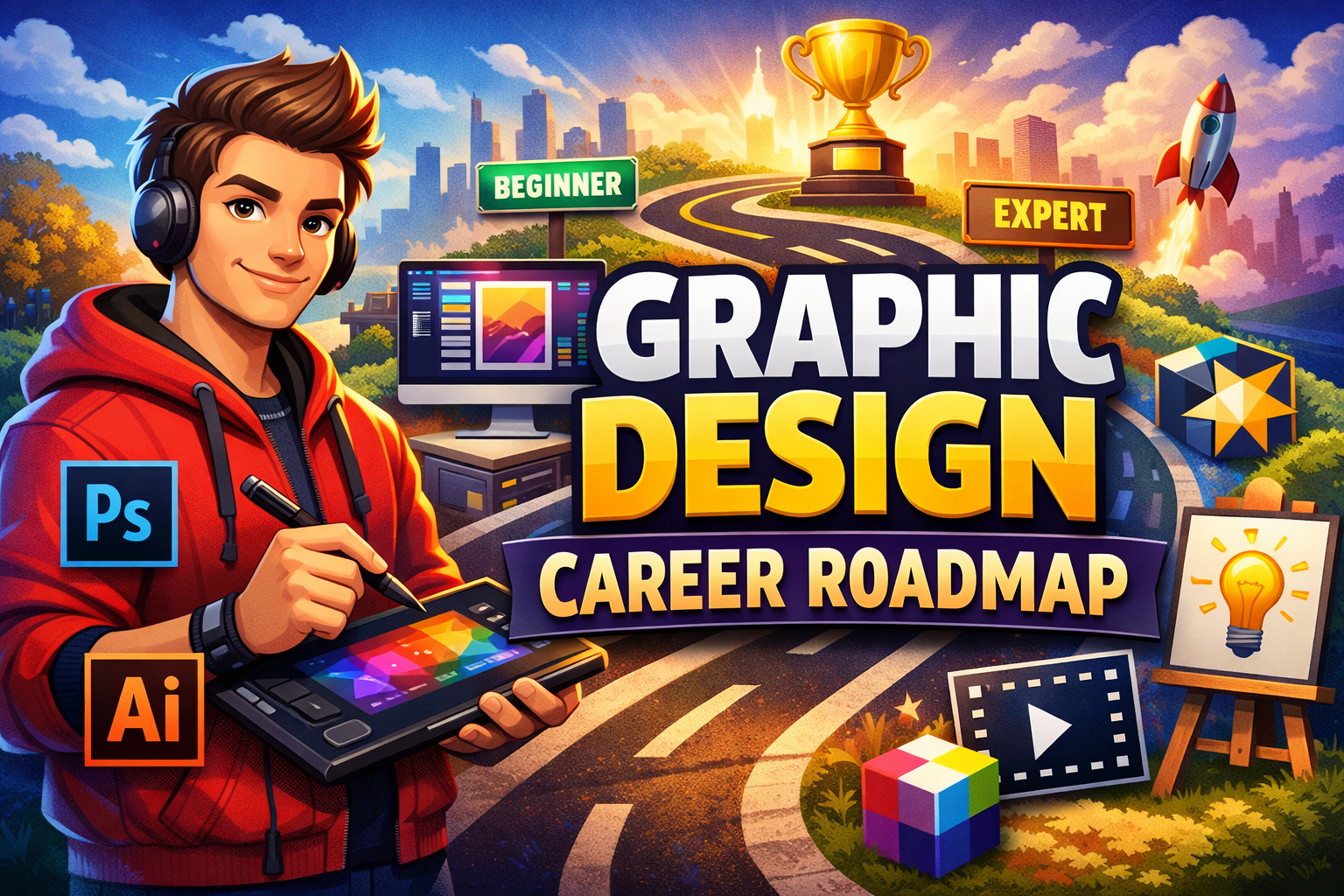
Stage 1: Foundation – The Designer’s Eye & Thinking
Objective: Train perception, visual literacy, and core design thinking.
Skills & Sub-Skills:
- Design Principles
- Color Theory → psychology of colors, complementary palettes, emotional impact
- Typography → font pairing, hierarchy, readability, web-safe fonts
- Layout & Composition → grids, balance, alignment, white space usage
- Visual Analysis & Observation
- Study top brands’ logos, social media graphics, product packaging
- Critique designs: identify what works & why, note mistakes
- Software Basics
- Photoshop → image editing, basic digital painting, layer management
- Illustrator → vector graphics, logos, icons
- Canva → quick prototyping, social media design
- Mini Projects
- Social media posts redesign
- Simple branding/logo for imaginary brands
- Poster/flyer for events
Mindset & Habits:
- Daily sketching or mood board creation
- Observe how colors, fonts, and layouts influence perception
- Document ideas, inspirations, and lessons learned
Stage 2: Skill Expansion – Applying Design Strategically
Objective: Move from theoretical knowledge to real-world problem-solving.
Skills & Sub-Skills:
- Intermediate Software Skills
- Figma → wireframes, mockups, interactive prototypes
- InDesign → print layouts, brochures, magazines
- After Effects → simple motion graphics, animated posts
- Branding Fundamentals
- Logo creation
- Visual identity → colors, fonts, imagery, tone
- Brand storytelling → narrative through visuals
- UX/UI Basics
- User journey mapping
- Wireframing & prototyping
- Responsive design principles
- Portfolio Development
- Create 3–5 polished projects showing problem-solving
- Showcase a “before-after” case study for redesigns
Mindset & Habits:
- Focus on why design decisions work
- Collect real feedback from peers or online communities
- Learn to explain your design choices clearly
Stage 3: Specialization – Depth & Expertise
Objective: Become a go-to expert in a design niche.
Specializations & Skills:
- UX/UI Design
- User research, usability testing, interaction design
- Design systems & responsive grids
- Motion Graphics & Animation
- Storyboarding, keyframing, kinetic typography
- Video editing basics for social media content
- Illustration & Concept Art
- Digital painting, character design, storytelling illustration
- Style exploration & portfolio curation
- Packaging & Product Design
- Structural design, 3D mockups, labeling, branding consistency
- Web/App Design
- Prototyping, front-end collaboration, UI pattern libraries
Portfolio Strategy:
- Build 5–10 niche-focused projects
- Include case studies explaining research, process, and results
- Publish projects online (Behance, Dribbble, LinkedIn)
Mindset & Habits:
- Focus on depth, not breadth
- Constantly explore industry trends & emerging tools
- Develop signature style or approach
Stage 4: Professional Growth – Career & Leadership
Objective: Transition from a skilled designer to strategic and influential professional.
Career Paths:
- Junior Designer → Mid-Level → Senior Designer → Art Director/Creative Director
- Freelance → Studio Owner → Design Consultant
Skills & Sub-Skills:
- Project Management & Collaboration
- Agile workflows, timelines, team collaboration
- Client communication, presentation, feedback handling
- Business & Strategic Design
- Align visuals with marketing objectives & ROI
- Data-driven design decisions, analytics interpretation
- Leadership & Mentorship
- Manage small design teams
- Mentor juniors, review work, provide constructive critique
Portfolio & Career Actions:
- Take on real client projects with measurable outcomes
- Build personal brand → social media presence, thought leadership
- Attend networking events, webinars, and design conferences
Mindset & Habits:
- Think like a problem solver, not just a designer
- Focus on creating impact, influence, and value
Stage 5: Mastery – Influence, Innovation, & Thought Leadership
Objective: Lead, innovate, mentor, and impact the industry.
Focus Areas:
- Innovation & Experimentation
- Push design boundaries, explore AR/VR, interactive design
- Stay ahead of trends, develop signature methods
- Mentorship & Teaching
- Online courses, workshops, speaking engagements
- Build design communities and collaborative projects
- Industry Thought Leadership
- Publish blogs, podcasts, case studies
- Speak at conferences or lead webinars
Mindset & Habits:
- Focus on legacy and influence
- Experiment, fail, iterate, and document processes
- Constantly seek cross-disciplinary learning (psychology, marketing, technology)
Additional Key Points for Deep Mastery
- Design Thinking Process: Empathize → Define → Ideate → Prototype → Test → Implement
- Critical Feedback Loop: Share work, accept critique, iterate
- Time Management & Productivity: Set milestones, track projects, maintain balance
- Networking & Community: Collaborate with other designers, share knowledge, seek mentors
- Continuous Learning: Always explore new tools, trends, and methodologies
Recommended Tools & Resources
- Software: Photoshop, Illustrator, InDesign, Figma, After Effects, Canva
- Learning Platforms: Coursera, Udemy, Skillshare, LinkedIn Learning
- Community & Inspiration: Behance, Dribbble, Pinterest, Awwwards
- Books & Theory: “Thinking with Type”, “Logo Design Love”, “Don’t Make Me Think”, “The Design of Everyday Things”
Ultimate Mindset for Graphic Designers
- Creativity + Strategy + Empathy = Impact
- Every project is an opportunity to solve a problem visually
- Your portfolio tells the story of your thinking, not just your output
Continuous growth comes from practice, reflection, and deliberate learning