Phase 1: Core Foundations (Mindset & Basics)
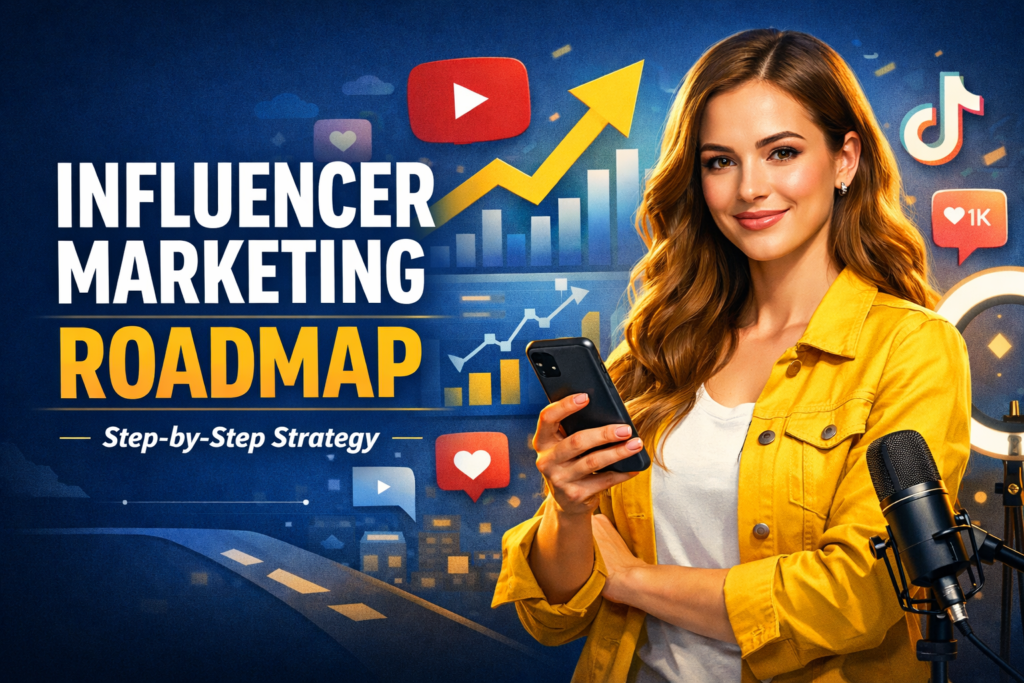 Influencer Marketing Roadmap: Learn, Launch & Scale Campaigns
1. Understanding Influencer Marketing
- Meaning and evolution of influencer marketing
- Why people trust creators more than ads
- How influencer marketing fits into modern digital marketing
- Difference between influencer marketing, affiliate marketing, and brand endorsements
2. Influencer Ecosystem
- Role of brands, influencers, agencies, and platforms
- Content creators vs influencers
- Types of influencers (Nano to Celebrity) and when to use each
- Platform-wise influencer behavior and audience psychology
Phase 2: Market & Audience Intelligence
3. Audience Research & Psychology
- Understanding consumer behavior on social platforms
- Identifying pain points, desires, and triggers
- Building detailed buyer personas
- Matching audience intent with influencer content style
4. Niche & Platform Selection
- Choosing profitable and scalable niches
- Platform-specific content strategies
- B2B vs B2C influencer marketing
- Local, regional, and global influencer targeting
Phase 3: Influencer Discovery & Evaluation
5. Finding the Right Influencers
- Manual search techniques on social platforms
- Using influencer discovery tools effectively
- Hashtag and keyword-based research
- Competitor influencer analysis
6. Influencer Vetting & Quality Check
- Engagement rate vs follower count
- Detecting fake followers and bots
- Audience authenticity and demographics
- Content quality, tone, and brand alignment
- Past brand collaboration analysis
Phase 4: Outreach & Relationship Strategy
7. Influencer Outreach System
- Creating personalized outreach messages
- DM vs email outreach strategy
- Influencer pitching psychology
- Follow-up systems without spamming
8. Collaboration Models & Negotiation
- Paid collaborations explained in detail
- Barter deals and gifting campaigns
- Affiliate and performance-based collaborations
- Long-term ambassador programs
- Budget planning and cost negotiation techniques
Phase 5: Campaign Strategy & Planning
9. Campaign Goal Architecture
- Awareness, engagement, traffic, leads, and sales goals
- Funnel-based influencer campaigns
- Product launch vs evergreen campaigns
- Aligning influencer content with brand objectives
10. Content & Creative Strategy
- Storytelling frameworks for influencer content
- Platform-specific content formats
- Creative freedom vs brand control balance
- Writing influencer briefs that convert
- Content calendars and posting schedules
Phase 6: Execution & Management
11. Content Creation & Approval
- Influencer content production workflow
- Reviewing content without killing creativity
- Compliance with brand voice and guidelines
- Managing revisions professionally
12. Campaign Execution
- Launch planning and coordination
- Tracking links, codes, and UTM setup
- Community engagement during campaigns
- Crisis management and damage control
Phase 7: Tracking, Analytics & ROI
13. Performance Measurement
- Defining KPIs for each campaign goal
- Engagement, reach, impressions, and saves
- Traffic tracking via analytics tools
- Conversion tracking and attribution models
14. ROI & Reporting
- Calculating influencer marketing ROI
- Cost per engagement and cost per acquisition
- Creating actionable performance reports
- Data-driven decision making
Phase 8: Optimization & Scaling
15. Campaign Optimization
- Learning from past campaigns
- Improving influencer selection accuracy
- A/B testing content formats and creators
- Retargeting influencer-driven audiences
16. Scaling Influencer Programs
- Building long-term influencer relationships
- Creating influencer communities
- Scaling across platforms and regions
- Automating outreach and campaign management
Phase 9: Legal, Ethics & Risk Management
Influencer Marketing Roadmap: Learn, Launch & Scale Campaigns
17. Legal & Compliance Essentials
- Influencer contracts and agreements
- Disclosure guidelines and advertising laws
- Platform policies and brand safety
- Content ownership and usage rights
18. Ethics & Trust Building
- Transparency in collaborations
- Avoiding misleading promotions
- Maintaining audience trust
- Managing influencer controversies
Phase 10: Career, Agency & Future Growth
19. Career Paths in Influencer Marketing
- Influencer marketing manager roles
- Freelancing opportunities
- Becoming a consultant
- Skill stack required for professionals
20. Agency & Business Growth
- Starting an influencer marketing agency
- Client acquisition strategies
- Pricing models and retainers
- Building case studies and authority
21. Advanced Strategies & Trends
- Creator-led brands
- AI and influencer analytics
- Micro and nano influencer dominance
- Performance-driven influencer marketing
- Future of the creator economy
Final Outcome
By following this roadmap, learners will:
- Understand influencer marketing strategically, not just tactically
- Execute profitable, scalable influencer campaigns
- Build long-term brand and creator relationships
- Turn influencer marketing into a career or business