Physical Address
Mumbai, Maharashtra - 400037
Physical Address
Mumbai, Maharashtra - 400037


Artificial Intelligence has already transformed how we work, communicate, create, and make decisions. From recommendation engines and language models to medical diagnostics and autonomous systems, AI has steadily progressed by leveraging larger datasets and more powerful classical computers.
However, AI is approaching a computational ceiling. Many of the most important problems—true general intelligence, molecular simulation, real-time global optimization, and advanced scientific discovery—are simply too complex for classical machines to solve efficiently.
This is where Quantum AI enters the conversation.
Quantum AI represents the convergence of quantum computing and artificial intelligence, promising a paradigm shift not just in performance, but in how intelligence itself is computed. It is not an incremental improvement. It is a fundamental rethinking of computation, learning, and problem-solving.
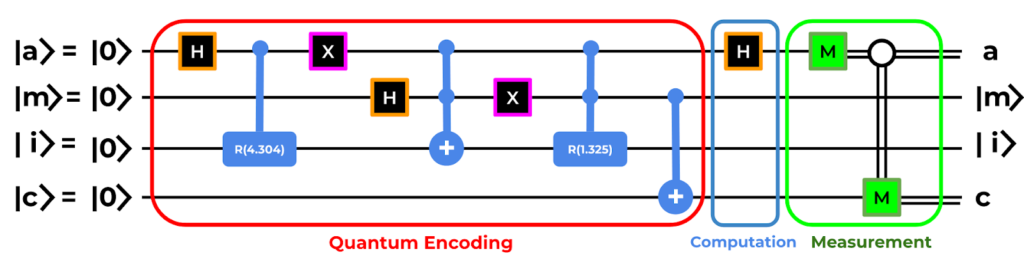
Classical computers process information using bits that exist as either 0 or 1. Quantum computers use qubits, which can exist in multiple states simultaneously due to quantum mechanical principles.
Key concepts:
The result is not just “faster computing,” but a qualitatively different form of computation.
Quantum AI applies quantum computing principles to:
In simple terms:
Quantum AI explores how learning systems behave when powered by quantum computation instead of classical logic.
Despite recent breakthroughs, today’s AI systems face several structural bottlenecks:
Many real-world problems grow exponentially with size:
Classical systems approximate these problems; they cannot solve them exactly at scale.
Training large AI models consumes enormous electricity, hardware, and capital. Scaling further becomes economically and environmentally unsustainable.
Neural networks rely on gradient-based optimization, which can get stuck in local minima for complex landscapes.
Quantum AI directly targets these constraints.
Quantum algorithms can accelerate core ML tasks:
This enables:
Quantum Neural Networks use quantum circuits as learning units instead of classical neurons.
Potential advantages:
Rather than simulating intelligence, QNNs may embody intelligence at a physical level.
Many AI challenges reduce to optimization problems.
Quantum approaches such as:
can explore solution spaces that are practically unreachable by classical systems.
This impacts:
Quantum systems excel at extracting structure from complex probability distributions.
This could dramatically reduce:
A critical advantage in sensitive domains like healthcare and security.
Quantum AI may provide the computational substrate necessary for systems that reason, adapt, and learn across domains—not just pattern-match.
Quantum AI is not mainstream yet, for good reasons:
Today’s work focuses on:
This phase is similar to AI in the 1950s–1980s: slow progress, deep theory, massive long-term payoff.
Quantum AI could:
Quantum AI expertise is rare, potentially concentrating power among a small elite.
Quantum AI does not replace classical AI—it extends it.
Think of it as:
Together, they form a multi-layered intelligence stack.
Long-term implications include:
Quantum AI is not a hype cycle—it is a foundational shift unfolding quietly in research labs and theoretical papers.
Just as classical computing enabled modern AI, quantum computing may enable the next epoch of intelligence—systems that can explore reality’s complexity rather than approximate it.
The real question is not if Quantum AI will matter, but when society will be ready for what it unlocks.
Those who understand it early will shape the next technological era.