
















































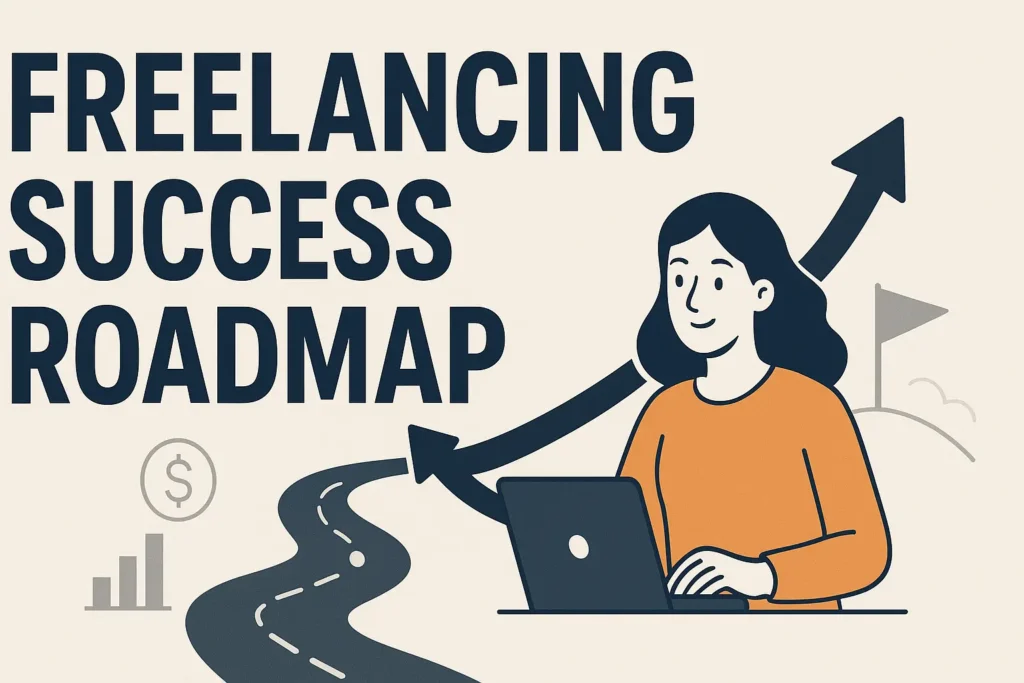
A complete roadmap that guides you from choosing a skill to building a full freelancing business.
1. Understand Freelancing
Before entering the freelancing world, it’s important to understand what it truly means and how it works.
What is Freelancing?
Freelancing is a work style where you provide services to clients as an independent professional—without being tied to any single company. You control your work, your timings, and your income.
As a freelancer, you decide:
- Which skills you offer
- How many hours you work
- Which clients you work with
- What prices you charge
It gives freedom, flexibility, and unlimited earning potential.
How Freelancing Works Step-by-Step
- Learn a specific, in-demand skill
- Practice and build a portfolio of work
- Create accounts on freelancing platforms
- Bid/apply for projects
- Get a client → Do the work → Get paid
- Satisfy the client so they hire you again
This process repeats and builds your career.
2. Choose the Right Skill
Your freelancing journey completely depends on the skill you choose. A wrong skill can delay your growth, while the right skill can change your entire future.
High-Demand Skills in Freelancing
Tech & Development
- Web development
- WordPress development
- Shopify / WooCommerce store setup
- App development
- Bug fixing, website optimization
Design
- Graphic design
- Logo and brand identity design
- UI/UX design
- Professional thumbnail design
Marketing
- Social media management
- SEO
- Google Ads / Facebook Ads
- Email marketing
- Content marketing
Content & Writing
- Blog writing
- Copywriting for websites & ads
- Product description writing
- Video scriptwriting
Editing & Media
- Video editing
- Photo editing
- Podcast editing
How to Choose the Perfect Skill
Choose a skill based on:
- Your interest (you should enjoy doing it)
- Market demand (clients are actively hiring for it)
- Learning time (start with a skill you can learn faster)
- Future opportunities (long-term growth)
Pro Tip:
Start with ONE skill → Master it → Add more skills later.
3. Learn the Skill (1–3 Months)
You don’t need a fancy degree. You just need the right learning approach.
Learning Steps You Should Follow
- Start learning basics from free tutorials
- Watch structured lessons from online courses
- Practice every single day
- Complete small practical projects
- Try real-world examples to build confidence
Practice Ideas for Beginners
- Web design → Create 2–3 demo websites
- Video editing → Edit 10 short videos
- Content writing → Write 15–20 articles
- Graphic design → Design 20 sample graphics
Practicing improves both quality and speed.
4. Build a Strong Portfolio
Your portfolio is the first thing clients judge. Even if you are a beginner, your portfolio must look professional.
What a Good Portfolio Includes
- A short introduction about you
- List of skills and services you offer
- Your best work samples
- Before/after examples (if applicable)
- Testimonials (friends or sample clients can help)
- Contact details
Where to Build Your Portfolio
- Behance (for designers)
- GitHub (for developers)
- WordPress website portfolio
- Google Drive folder
- Canva portfolio webpage
Pro Tip:
A polished portfolio makes you look experienced—even if you’re not.
5. Create a Professional Profile (Platform Setup)
Your profile is your online identity. Make it clean, professional, and client-focused.
Best Freelancing Platforms
- Upwork – great for long-term, high-paying clients
- Fiverr – gig-based, good for beginners
- Freelancer – competitive but helpful
- Toptal – advanced platform for experts
- LinkedIn – best for getting direct clients
Profile Essentials
- Professional profile picture
- Compelling bio focused on client needs
- Relevant skills and keywords
- Portfolio samples
- Certificates or course completions
Example Bio:
“I help businesses build modern, responsive WordPress websites that improve user experience and boost sales.”
6. Start Applying for Clients
This is where beginners struggle, but consistency wins.
How to Get Your First Client Faster
- Apply to 5–10 jobs every day
- Personalize every proposal
- Keep prices slightly lower at the start
- Offer high-quality work
- Request honest reviews
How to Write a Winning Proposal
- Open with the client’s problem
- Show you understand the project
- Explain your solution
- Mention your timeline & plan
- Add a portfolio link
Pro Tip:
Avoid templates. Personalized proposals perform 10× better.
7. Deliver High-Quality Work
Good delivery = repeat clients + more earnings.
How to Work Like a Professional
- Clarify all details before starting
- Ask questions if anything is unclear
- Deliver before the deadline
- Provide revisions politely
- Communicate updates clearly
Golden Rule of Freelancing
Under-promise and over-deliver.
Even a small bonus or faster delivery creates a strong impression.
8. Build Long-Term Clients
Long-term clients give stable monthly income.
How to Build Strong Client Relationships
- Be reliable and consistent
- Deliver every project on time
- Communicate professionally
- Offer monthly or weekly service plans
- Follow up with updates or suggestions
Example:
If you’re a social media manager, offer a monthly content package.
9. Raise Your Rates (After 3–6 Months)
When you have:
- 5–10 successful projects
- Great client reviews
- A solid portfolio
…it’s time to increase your rates.
How to Scale Your Earnings
- Increase your service price
- Offer premium packages
- Add extra (paid) services
- Upsell to existing clients
- Create monthly subscription plans
Clients pay more for trust and proven quality.
10. Create Your Personal Brand
A strong personal brand brings high-value clients automatically.
Where to Build Your Brand
- YouTube
- Personal website
Weekly Activities for Branding
- Post tips and educational content
- Share your projects
- Share client results
- Show behind-the-scenes of your work
- Write case studies
This builds authority and gets clients easily.
11. Diversify Your Income
Once you’re stable in freelancing, add more income streams.
Extra Income Ideas
- Sell templates
- Make e-books
- Create digital products
- Offer coaching or training
- Launch your own online course
Multiple income streams = more financial stability.
12. Grow into a Business
Your final stage is scaling beyond freelancing.
How to Turn Freelancing into a Business
- Create an agency
- Hire remote team members
- Build systems and workflows
- Offer multiple services under one brand
- Increase revenue through scaling
This is the peak of freelancing success—freedom, income, and impact.
Freelancing Roadmap Summary (Short)
- Understand freelancing
- Choose one skill
- Learn the skill deeply
- Build a portfolio
- Set up freelancing profiles
- Start applying for clients
- Deliver excellent work
- Build long-term relationships
- Increase your rates
- Create a personal brand
- Add multiple income sources
- Grow into a full business


