Onam – The Festival of Harvest and Unity

Introduction

Onam is one of the most vibrant and joyous festivals of India, celebrated predominantly in the southern state of Kerala. Observed in August or September, this ten-day harvest festival marks the return of the legendary King Mahabali, whose reign is remembered as a golden era of prosperity, equality, and happiness.

More than just a harvest celebration, Onam is a festival that brings families and communities together, showcasing Kerala’s cultural richness, artistic traditions, and culinary heritage. Streets, homes, and temples come alive with colors, flowers, music, and dance, reflecting the spirit of unity and joy.

Historical and Mythological Background

The heart of Onam lies in the story of King Mahabali, a benevolent and beloved ruler of Kerala. It is said that Mahabali’s reign was marked by peace, prosperity, and fairness. His generosity and devotion won the love of his people but worried the gods, who felt his popularity challenged their authority.

To maintain cosmic balance, Lord Vishnu took his Vamana avatar (dwarf incarnation) and humbly approached Mahabali. Through a clever and divine act, Vishnu granted Mahabali a boon: he could visit his kingdom once every year. Onam is celebrated to honor this annual visit, symbolizing unity, prosperity, and the triumph of goodness.

The festival also emphasizes values like humility, gratitude, and harmony, connecting people to Kerala’s rich agricultural and cultural traditions.

Preparations Before Onam

Preparations for Onam begin days in advance, filling homes and streets with vibrant energy and festive spirit.

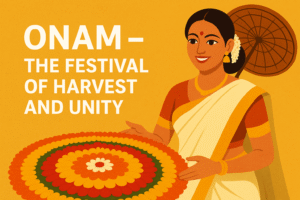
  • Cleaning and decorating homes: Families clean their houses meticulously and adorn them with Pookalam, intricate floral rangoli designs made with colorful flowers, symbolizing prosperity and welcome.
  • Shopping for new clothes and ornaments: Wearing new traditional attire adds to the celebratory mood. Women often wear elegant Kasavu sarees with golden borders, while men wear dhotis with matching tops.
  • Preparing festive ingredients: Kitchens are stocked with fresh vegetables, coconut, and spices, all ready for the grand Onam Sadya.
  • Community preparations: Villages and cities organize cultural performances, dance practices, and boat race (Vallam Kali) rehearsals to showcase Kerala’s traditions.

The atmosphere is one of joy, anticipation, and togetherness, making the days leading to Onam almost as festive as the main celebrations.

Onam Day Celebrations

On the day of Onam, Kerala is alive with color, music, and tradition.

  • Traditional attire: Families don their finest clothes—women in Kasavu sarees, men in dhotis or mundus.
  • Prayers and rituals: Devotees offer prayers and pay homage to King Mahabali, seeking blessings for prosperity and happiness.
  • Cultural performances: Kerala’s rich arts shine through Kathakali (classical dance-drama), Thiruvathira (women’s dance), and Pulikali (tiger dances), performed in streets and cultural centers.
  • Games and festivities: Traditional games and community gatherings promote social bonding, ensuring everyone feels included in the celebration.

The combination of devotion, culture, and play creates a festive harmony that is unique to Onam.

Onam Sadya (Feast)

The highlight of Onam is undoubtedly the Onam Sadya, an elaborate vegetarian feast served on banana leaves.

  • Variety of dishes: A Sadya can include over 20 different dishes, such as sambar, avial, olan, puli curry, thoran, and desserts like payasam. Each dish is prepared with care and has symbolic significance.
  • Ritual of serving: The feast follows a traditional sequence, ensuring every flavor—from sweet to tangy—is experienced.
  • Community and family bonding: Sharing a Sadya strengthens familial ties, fosters hospitality, and celebrates Kerala’s agricultural bounty.

The feast is not just food; it is a celebration of abundance, gratitude, and culinary artistry.

Onam Across Kerala and Beyond

Onam is celebrated across Kerala, with some of the grandest festivities in Thrissur, Kochi, and Alappuzha.

  • Thrissur: Famous for its cultural programs and vibrant Pookalam competitions.
  • Kochi: Celebrates with grand public events, boat races, and music festivals.
  • Alappuzha: Known for Vallam Kali, the snake boat races that draw thousands of spectators.

Outside Kerala, Malayali communities across India and the world celebrate Onam with traditional rituals, cultural programs, and feasts, keeping their heritage alive.

Cultural and Social Importance

Onam is more than a festival—it is a symbol of unity, equality, and harmony.

  • It strengthens community bonds through shared rituals, feasts, and cultural events.
  • Encourages artistic expression, as seen in floral decorations, dance, and music.
  • Promotes generosity and charity, reminding people to share their abundance.
  • Connects communities to agriculture and nature, fostering gratitude for the harvest and sustenance.

The festival teaches lessons in humility, gratitude, and respect, making it socially and culturally enriching.

Conclusion

Onam is a festival of joy, prosperity, and cultural heritage, celebrating the legendary King Mahabali, Kerala’s agricultural abundance, and the unity of communities. Through Pookalams, dances, feasts, and boat races, Onam reminds us of the importance of togetherness, generosity, and gratitude.

By embracing these traditions, both in Kerala and around the world, Onam continues to inspire celebration, creativity, and harmony, making it one of India’s most beloved festivals.


Optional Additions for a Richer Blog

  • 📸 Image ideas: Pookalam designs, Onam Sadya spreads, snake boat races, traditional dances.
  • 🍲 Recipe corner: Traditional Onam Sadya dishes like Avial, Olan, and Payasam.
  • 💝 Community spotlight: Charity events or eco-friendly Onam celebrations.
  • ✍️ Personal reflection: A memorable Onam celebration or family ritual for a personal touch.

🔊 Listen to this Article

Leave a Reply

Your email address will not be published. Required fields are marked *