Physical Address
Mumbai, Maharashtra - 400037

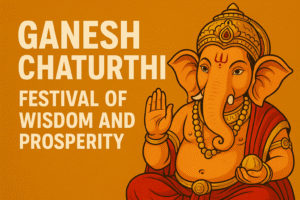
Ganesh Chaturthi, celebrated with immense devotion and joy, is one of the most cherished festivals in India. Observed in August or September, this ten-day festival marks the birth of Lord Ganesha, the elephant-headed deity who is revered as the remover of obstacles and the god of wisdom, knowledge, and prosperity.
While Ganesh Chaturthi has deep religious significance for Hindus, it is also a celebration that brings together families, friends, and communities in a spirit of joy, creativity, and shared devotion. The festival is especially vibrant in Maharashtra, where both private homes and public spaces light up with colors, decorations, and music.
According to Hindu mythology, Lord Ganesha is the son of Lord Shiva and Goddess Parvati. There are many stories about his birth, one of the most popular being that Goddess Parvati created him from the turmeric paste of her body and breathed life into him. Ganesha’s elephant head, large ears, and small mouse vehicle (vahana) carry deep symbolic meaning—his large head signifies wisdom, his ears indicate the importance of listening, and the mouse represents humility and the ability to overcome obstacles.
Lord Ganesha is worshipped as Vighnaharta, the remover of obstacles, and as the deity of new beginnings. Over centuries, Ganesh Chaturthi has grown from a simple ritual to a grand community festival celebrated across India and even internationally, reflecting devotion, culture, and artistry.
The excitement begins weeks before the festival. Homes and streets are cleaned, decorated, and adorned with flowers and lights. Artisans create clay idols of Lord Ganesha in various sizes—from small home idols to massive public installations. Pandals, or community tents, are constructed with intricate themes, often showcasing local culture, mythology, or environmental messages.
People also shop for flowers, sweets, and offerings, and kitchens come alive with preparations for modaks, sweet dumplings considered Ganesha’s favorite. Every aspect of preparation, from decoration to culinary delights, reflects devotion, creativity, and anticipation.
On the first day, the idol is installed with elaborate rituals called pranapratishtha, which invites Lord Ganesha’s presence into the home or community pandal. Over the next ten days, devotees offer daily prayers, aartis, and perform rituals while singing devotional songs and chanting mantras.
Public pandals host cultural programs, including dance, music, drama, and art exhibitions, turning the festival into a celebration of community spirit and creativity. Families and neighbors come together, sharing sweets, participating in activities, and deepening social bonds.
The festival concludes with Ganesh Visarjan, when idols are taken to rivers, lakes, or the sea for immersion. Devotees carry the idols in vibrant processions, chanting “Ganpati Bappa Morya” and singing devotional songs. The immersion symbolizes Lord Ganesha returning to his celestial abode, taking away obstacles, and blessing devotees with wisdom and prosperity.
These processions are filled with music, dance, and community celebration, making Visarjan a grand spectacle of devotion and unity.
Maharashtra is the heart of Ganesh Chaturthi celebrations, with cities like Mumbai, Pune, and Kolhapur hosting some of the grandest festivities. In Mumbai, huge pandals attract thousands, with artistic displays and cultural programs. Pune celebrates with family-centered traditions and community involvement.
Across India, regions celebrate differently—some focus on home rituals, while others organize elaborate public events. Modern celebrations increasingly use eco-friendly clay idols to reduce environmental impact, highlighting a balance between tradition and sustainability.
Ganesh Chaturthi is not just a religious festival—it is a cultural phenomenon. It fosters community bonding, encourages artistic expression through idol-making and decoration, and promotes charity and kindness. Schools, cultural groups, and social organizations often use the festival to support environmental causes, educate the community, and bring people together.
The festival teaches values of generosity, humility, and devotion, while celebrating life, creativity, and social unity.
Ganesh Chaturthi is a festival of wisdom, prosperity, and devotion. Beyond the rituals and celebrations, it carries a message of removing obstacles, spreading joy, and strengthening bonds within families and communities. Whether through devotional practices, cultural programs, or acts of charity, the festival inspires people to live with faith, gratitude, and unity, making it a vibrant celebration of life and spirituality.