Physical Address
Mumbai, Maharashtra - 400037

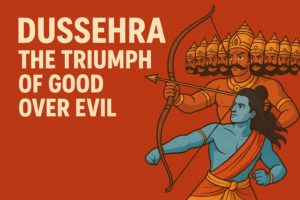
Dussehra, also known as Vijayadashami, is one of India’s most celebrated festivals that symbolizes the victory of good over evil. Celebrated in the months of September or October, Dussehra marks the end of the nine-day festival of Navratri and the triumph of Lord Rama over the demon king Ravana in the ancient Indian epic, the Ramayana.
The word Dussehra comes from two Sanskrit words — Dasha (ten) and Hara (defeat) — meaning “the defeat of the ten-headed one,” referring to Ravana. It is a festival that teaches timeless values — courage, truth, and righteousness — reminding us that goodness and virtue will always prevail in the end.
Dussehra’s roots lie deep in India’s spiritual and cultural history. While the festival’s meaning varies across regions, its central theme remains constant — the triumph of good over evil.
In North India, Dussehra commemorates the victory of Lord Rama, the seventh incarnation of Lord Vishnu, over Ravana, the ten-headed demon king of Lanka. According to the Ramayana, Ravana kidnapped Sita, Lord Rama’s wife. With the help of his loyal brother Lakshmana, the devoted Hanuman, and his army of monkeys, Rama fought a fierce battle in Lanka.
On the tenth day, known as Vijayadashami, Rama defeated Ravana, symbolizing the destruction of arrogance, evil, and injustice. This day represents the victory of dharma (righteousness) over adharma (unrighteousness).
In South India, Dussehra is celebrated as the day Goddess Durga triumphed over the buffalo demon Mahishasura, symbolizing the power of divine feminine energy (Shakti). The festival honors the goddess for restoring peace and balance to the world after a fierce nine-day battle.
In West Bengal, Dussehra coincides with the conclusion of Durga Puja, one of the region’s grandest celebrations. On this day, beautifully crafted idols of Goddess Durga are immersed in water bodies (Visarjan), marking her return to Mount Kailash after defeating Mahishasura. The immersion symbolizes letting go of negativity and embracing new beginnings.
Despite regional variations, the core message of Dussehra is universal — righteousness, truth, and justice always triumph in the end.
As the festival approaches, the excitement begins to fill the air. People clean and decorate their homes and temples, symbolizing the removal of negativity and the welcoming of positivity.
Across towns and villages, grand stages are set up for Ramlila — dramatic performances depicting scenes from the Ramayana. These plays, often performed by local artists, retell the story of Lord Rama’s journey, his exile, and his victory over Ravana.
Markets buzz with life as vendors sell sweets, festive clothes, decorative items, and toys shaped like bows, arrows, and crowns. In many places, artisans begin crafting giant effigies of Ravana, along with those of his brother Kumbhkaran and son Meghnath, which will be burnt on the final day to symbolize the destruction of evil.
The Ten Days of Celebration
Dussehra is the grand finale of the ten-day Navratri festival, each day filled with devotion, fasting, and celebration.
The first nine days, known as Navratri, are dedicated to the worship of Goddess Durga in her nine forms, each representing a unique aspect of strength and virtue. People observe fasts, chant prayers, and engage in spiritual reflection during this period.
Temples are beautifully decorated, and devotees perform garba and dandiya dances, especially in western states like Gujarat.
The tenth day, Vijayadashami, is the most significant. On this day:
In some regions, the day also marks the beginning of new ventures or the start of learning something new, as Vijayadashami is considered an auspicious day for fresh beginnings.
Dussehra is celebrated differently across India, yet its vibrancy and moral essence remain the same. Common traditions include:
Dussehra is more than a religious celebration — it’s a moral and cultural festival that reminds us of the values that sustain humanity.
It encourages people to reflect on their actions, conquer their inner evils, and walk the path of truth and kindness. The festival also reinforces unity and togetherness, as communities come together to celebrate shared traditions and stories from the Ramayana and Devi Mahatmya.
By retelling these ancient tales year after year, Dussehra helps preserve India’s rich cultural heritage and passes timeless values to younger generations.
Dussehra is not just a commemoration of a mythological victory — it is a living symbol of hope and righteousness. It teaches us that no matter how strong evil may appear, truth, courage, and virtue will always win in the end.
As the effigies of Ravana burn and the skies light up with fireworks, Dussehra inspires us to burn away our own negativity — anger, ego, and hatred — and embrace compassion, humility, and goodness.
May the spirit of Dussehra fill our hearts with positivity and guide us to live with integrity and light.