Physical Address
Mumbai, Maharashtra - 400037

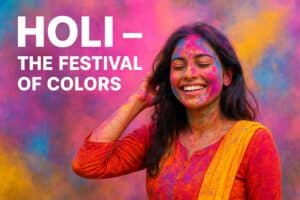
Holi, often called the Festival of Colors, is one of India’s most joyful and energetic celebrations. It marks the arrival of spring, the end of winter, and the triumph of good over evil. Celebrated mostly in March, Holi brings people together in a burst of color, music, and laughter.
The festival is known for its playful spirit — people of all ages come out to play with colored powders and water, dance to traditional beats, and share delicious sweets. Beyond the fun and festivity, Holi also carries a deeper message: it is a time to forgive, forget, and start anew, strengthening bonds of love and friendship.
Holi’s roots trace back to ancient Indian mythology, where it finds meaning in two significant legends — each adding depth to the celebration.
According to Hindu mythology, there once lived a powerful demon king named Hiranyakashipu, who wanted everyone to worship him instead of God. However, his own son Prahlada remained a devoted follower of Lord Vishnu. Enraged by his son’s defiance, Hiranyakashipu ordered his sister Holika, who was immune to fire, to sit with Prahlada in a blazing bonfire.
But as fate would have it, Holika’s evil plan failed — she was burned to ashes while Prahlada emerged unharmed, protected by his unwavering devotion. This story symbolizes the victory of good over evil and is commemorated through the ritual of Holika Dahan, the bonfire that marks the beginning of Holi.
Another beloved legend associated with Holi is that of Lord Krishna and Radha. Young Krishna, who had a dark complexion, once playfully complained to his mother about Radha’s fair skin. His mother advised him to color Radha’s face in any color he liked. Krishna followed her advice, and this light-hearted act became a symbol of love and equality, where color erased all differences.
This legend is why Holi is celebrated with such joyful abandon — where everyone, regardless of age, gender, or status, is equal under a cloud of colors.
As Holi approaches, the excitement in homes and neighborhoods begins to build. People start cleaning and decorating their homes to welcome positivity and joy.
In the days leading up to the festival, firewood and materials for the Holika Dahan bonfire are collected in open spaces. Markets overflow with brightly colored powders (gulal), water guns (pichkaris), balloons, and festive sweets.
Communities organize local events, music nights, and group preparations. The cheerful buzz of Holi can be felt in every corner — in schools, offices, and homes alike.
Holi is typically celebrated over two days, each with its own charm and significance.
On the eve of Holi, people gather around large bonfires to perform Holika Dahan, a ritual symbolizing the burning away of evil forces. Families and neighbors offer prayers, sing traditional songs, and dance around the fire, rejoicing in the message of goodness and faith triumphing over hatred and deceit.
The warm glow of the bonfire reminds everyone to let go of negative thoughts and start afresh with positive energy.
The next day is when the real fun begins! People take to the streets with colors, water balloons, and pichkaris, shouting “Bura na mano, Holi hai!” (Don’t mind, it’s Holi!).
Friends and strangers alike smear colors on each other’s faces, dance to lively music, and enjoy traditional sweets. The air fills with laughter, love, and clouds of pink, yellow, green, and blue — a scene that perfectly embodies the joy of Holi.
Holi is a celebration that appeals to all the senses — sight, sound, taste, and touch. Some beloved traditions include:
The true spirit of Holi lies in the laughter, hugs, and togetherness that make the festival unforgettable.
Holi is more than a festival — it’s a celebration of life itself. It promotes unity, equality, and friendship, as people from all walks of life come together to celebrate without barriers.
The festival also marks the arrival of spring, symbolizing renewal, fertility, and the blossoming of nature. It’s a reminder to shed grudges, forgive old wrongs, and embrace others with love.
Today, Holi’s popularity has spread across the globe — from New York to London, from Sydney to Singapore. International communities celebrate it as a symbol of joy, harmony, and cultural diversity, proving that Holi’s message transcends borders.
Holi, the Festival of Colors, is a beautiful reminder that life is meant to be lived in joy, color, and love. It teaches us to overcome negativity, embrace positivity, and celebrate every moment with enthusiasm.
As the colors blend and laughter fills the air, Holi reminds us of one simple truth — when love and light come together, every shade of life becomes beautiful.Celebrate Holi responsibly, use eco-friendly colors, and spread happiness wherever you go.