1. Introduction to Lord Shiva
Lord Shiva is not merely worshipped — he is experienced as consciousness itself.
Known as Mahadev – God of Gods, he is beyond time, form, and duality.
Represents the absolute, the infinite, and the nothingness that pervades all.
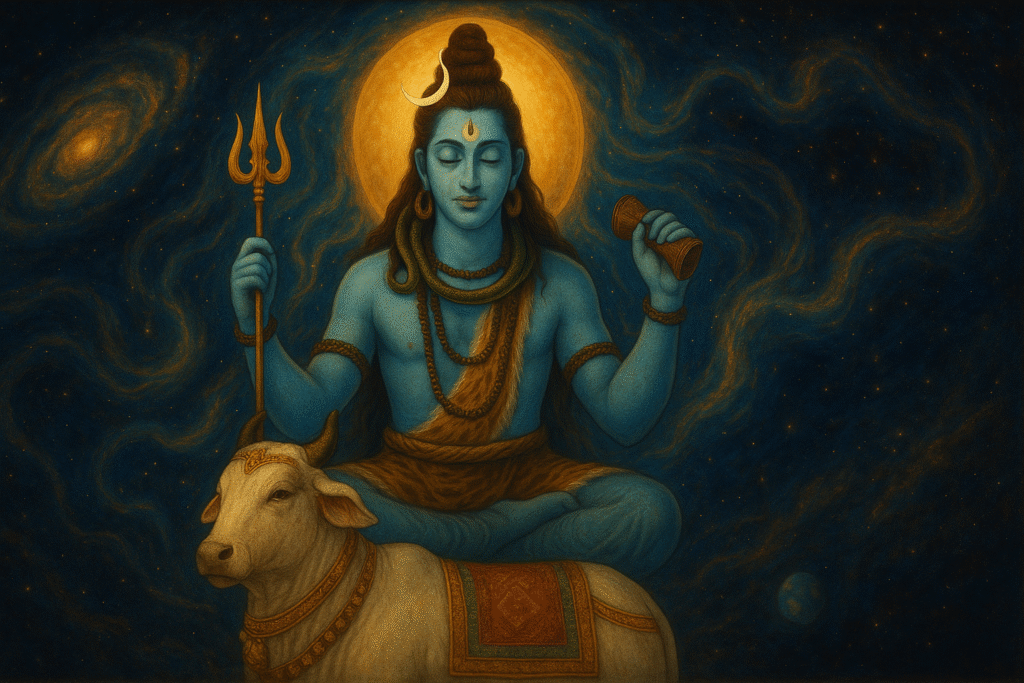
Adviceshare Organization image 2. Holy Names of Shiva Each name reflects a unique aspect of Shiva:
Shiva – The Benevolent
Mahadev – The Greatest of all Gods
Rudra – The Fierce Destroyer
Neelkanth – The Savior who drank poison
Shambhu – The Source of Bliss
Bholenath – The Innocent and Kind
Mahesh – The Supreme Controller
Pashupati – Lord of All Beings
Nataraja – Lord of the Cosmic Dance
Trilochana – The Three-Eyed One
🔸 Mahadev – The Lord of Gods
Shiva is beyond divinity — he is the source of divinity itself.
Worship of Shiva is not a ritual, but a journey of the soul.
3. Role of Shiva in the Hindu Trinity (Trimurti)
Brahma – The CreatorVishnu – The PreserverShiva – The Destroyer and Liberator
Shiva’s destruction is not annihilation , but transformation — the end of ignorance and the beginning of liberation.
4. Nineteen Divine Incarnations of Lord Shiva Whenever adharma rises, Shiva manifests to restore balance.
Major Avatars:
Veerbhadra – Justice and ProtectionRudra – Primordial Fierce EnergyHanuman – Devotion and StrengthNandi – Service and LoyaltyBhikshatana – Renunciation and DetachmentSharabha – Control over Divine FuryGrihapati – Dignity in Household LifeYatinath – Celibacy and PenanceKirat – Testing and Empowering SeekersSundareshwar – Love and HarmonyBrahmin – Knowledge and WisdomMrityunjaya – Conqueror of DeathKaal Bhairav – Lord of Time and JusticeVairaagya Bhikshu – Detachment and SalvationAshwatthama – Balance of PowerRishi Avdhoot – Transcendence Beyond BondsSadhu – Compassion and SacrificeDakshinamurthy – Silent Teacher of Brahma GyanSatya – Truth and Enlightenment
5. Origin and Mentions in Scriptures 🕉 In the Vedas:
Described as Rudra – the lord of both fear and welfare.
Represents both destruction and reconstruction .
🧘 In the Upanishads:
Symbol of Supreme Consciousness (Shivoham) .
Embodies Advaita – Oneness of soul and Brahman.
📚 In the Puranas:
Shiva Purana – Avatars, Leelas, Marriage with ParvatiLinga Purana – Creation through the Linga formSkanda Purana – Stories of Shiva and Kartikeya
📖 In the Epics:
Ramayana – Rama worships Shiva at RameswaramMahabharata – Arjuna receives Pashupatastra from Shiva
🕯 In Tantric Texts:
Shiva is the foundation of Tantra , Kundalini , and Mantra Vidya .
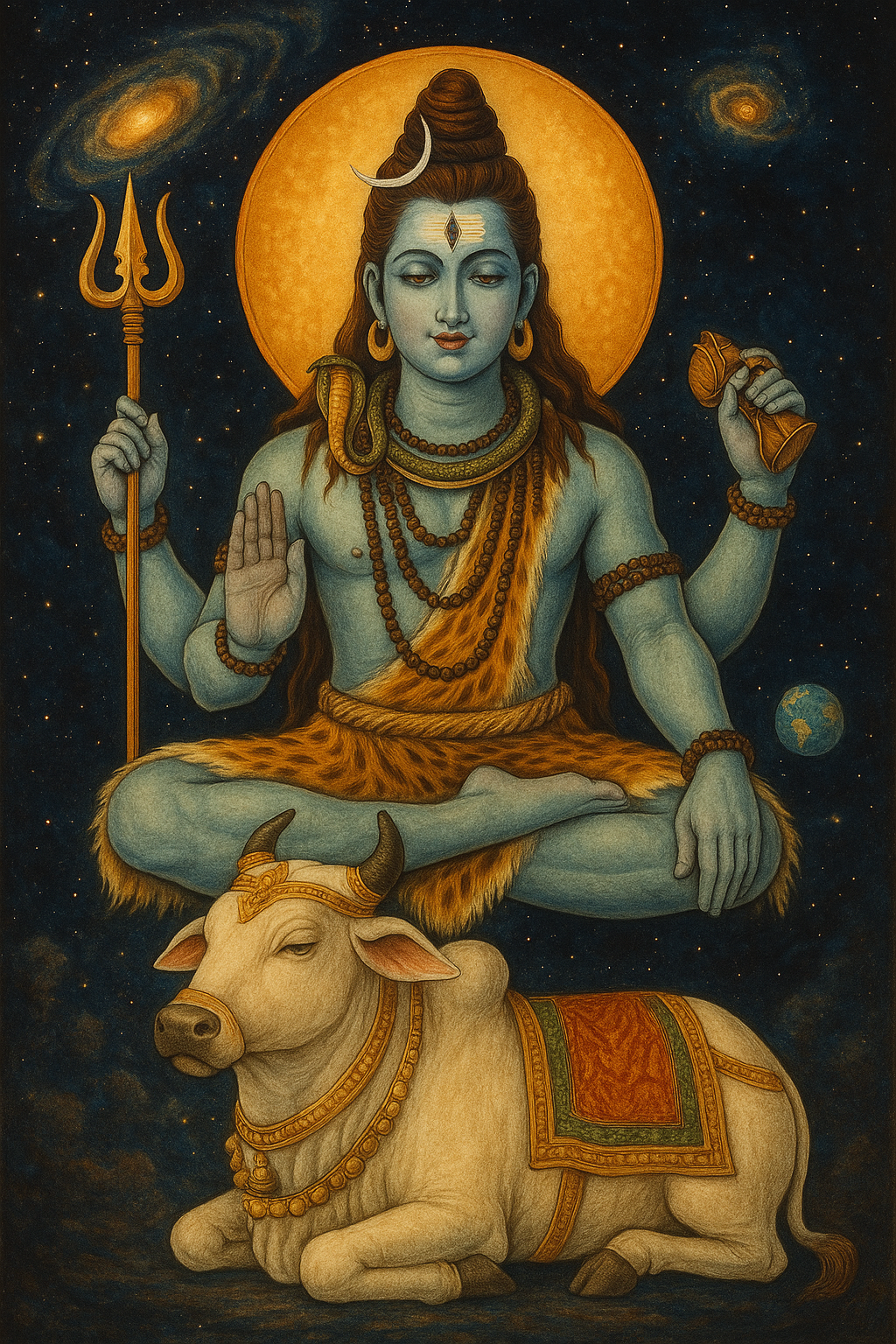
6. Symbols and Their Meanings Symbol Meaning 👁️ Trinetra (Third Eye) Higher consciousness; destruction of illusion 🌙 Crescent Moon Control over mind and time 🌊 Ganga Divine knowledge and purification 🧪 Neelkanth Sacrifice and compassion 🔱 Trishul Will, Action, and Knowledge 🥁 Damaru Sound of cosmic creation (Om) 🔥 Bhasma Detachment and impermanence 🐅 Tiger Skin Victory over passions 🐍 Serpent Control over fear and ego
7. Major Forms of Shiva
Panchavaktra – Five-faced Shiva representing five elementsArdhanarishvara – Union of Shiva and ShaktiBhairav – Fierce protector formNataraja – Cosmic dancer of creation and destructionLingavatar – Formless and eternal aspect of Shiva
8. Shakti and Shiva – The Divine Union
Parvati (Adishakti) – The power behind creation.Shiva = Consciousness ; Shakti = Energy Ardhanarishvara form represents perfect balance and harmony .
Together, they represent the wholeness of existence .
9. Major Shiva Temples 🌟 12 Jyotirlingas Somnath | Mallikarjuna | Mahakaleshwar | Omkareshwar | Kedarnath | Bhimashankar | Kashi Vishwanath | Trimbakeshwar | Vaidyanath | Nageshwar | Rameswaram | Ghrishneshwar
🌿 Pancha Bhoota Sthalas
Ekambeshwar – Earth
Arunachaleshwar – Fire
Jambukeshwar – Water
Kalahasteeshwar – Air
Chidambaram Nataraja – Sky
🌏 Temples Around the World
Pashupatinath – NepalBatu Caves – MalaysiaShiva Temples in New York, London, Mauritius
🔱 10. Shiva in Spiritual Practices
Meditation – Adiyogi, the first YogiMantra Sadhna –
Om Namah Shivaya – Surrender and purification
Mahamrityunjaya Mantra – Conquering fear and death
Tantra & Yoga – Awakening consciousnessRudraksha – Symbol of divine protection and peace
11. Scientific and Cosmic Interpretations
Destruction as Transformation – Like black holes and energy cyclesShiva Linga – Symbol of cosmic energy and vibrationNataraja’s Dance – Represents quantum motion of particlesMahakaal (Beyond Time) – Symbol of timeless consciousness
“Shiva = Energy + Emptiness + Time + Consciousness”
12. Cultural Influence of Shiva 🪔 Festivals
Mahashivratri – Night of union of Shiva and ShaktiShravan Month – Month of fasting and devotion
🎨 Arts & Music
Nataraja posture in classical dance
Ragas like Bhairavi and Shivranjani
📚 Literature & Media
Shiva Purana , Shiva Trilogy , TV shows like Devon Ke Dev Mahadev Shiva’s influence in cinema, songs, and digital media
13. Stories and Leelas of Lord Shiva
Samudra Manthan – Neelkanth Avatar
Parvati Vivah
Andhakasur Vadh
Kama Dahan
Bhasmasur Katha
14. Lord Shiva’s Messages to Humanity
Let go of ego – Everything turns to ash.Awaken inner vision – The third eye sees truth.Accept change – Life is motion.Balance desires – Control, not suppression.Honor duality – Ardhanarishvara symbolizes balance.Live simply and naturally – True peace lies in simplicity.
“Where there is simplicity, there is Shiva.”
15. Relevance of Shiva in Modern Times
Minimalism – Happiness through simplicity.Yoga & Mental Health – Meditation as healing.Gender Balance – Equality through Ardhanarishvara.Breaking Social Taboos – Acceptance of all beings.Spiritual Awakening – Silence amidst chaos.
“When you find everything outside and still feel empty — Shiva calls you within.”
Conclusion
Lord Shiva is not a figure of mythology — he is a state of consciousness , a scientific, spiritual, and cosmic truth .balance, compassion, detachment, and awareness continues to guide humanity in every age.
“Shiva is not culture — Shiva is consciousness itself.”
Adviceshare Shiv ji Image
Reader: 7,335




Hello, I desire to subscribe for this weblog to obtain hottest updates, soo where can i
doo it please assist.