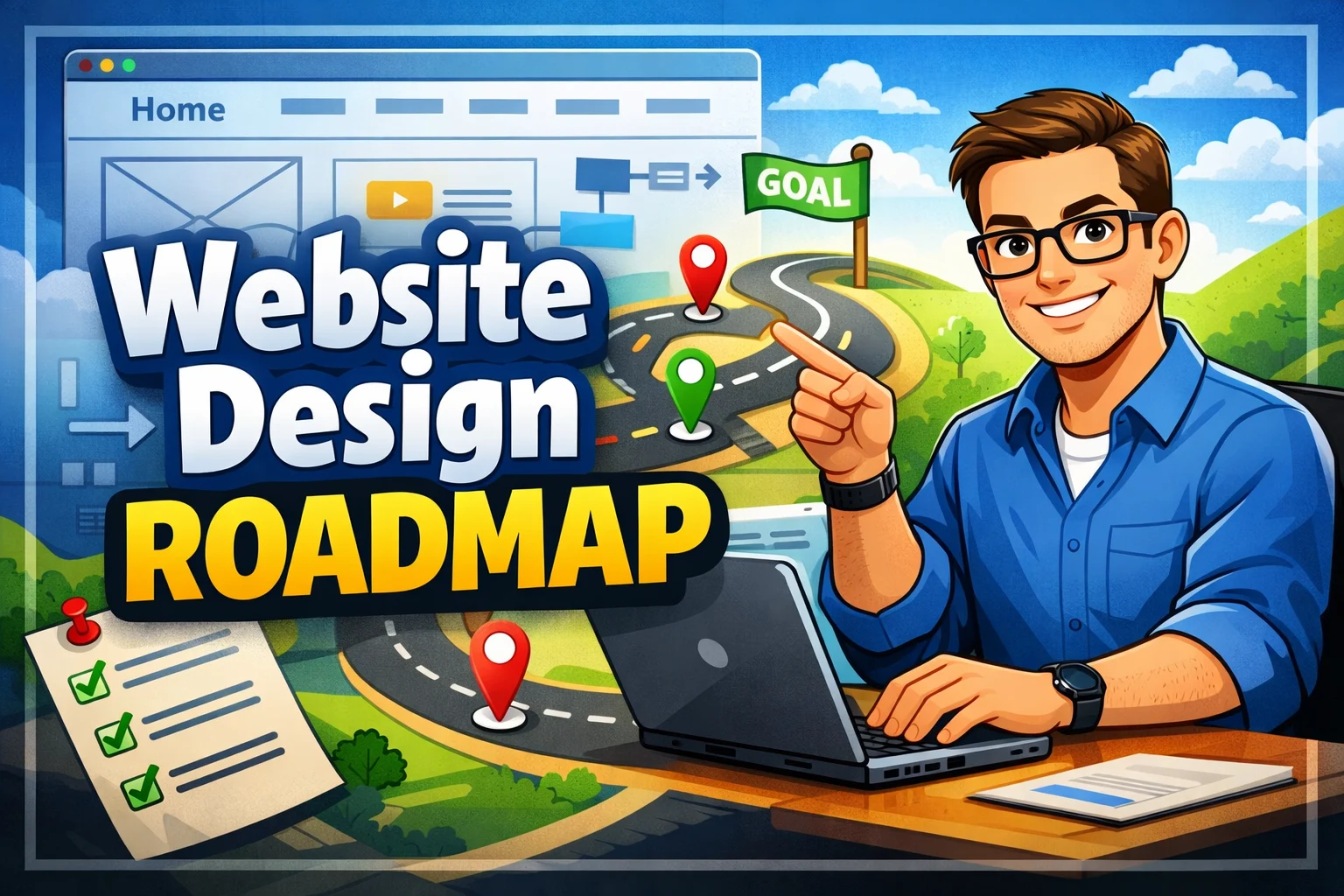
Stage 1: Research & Strategic Planning
Objective: Build a foundation rooted in audience understanding, business goals, and long-term scalability.
Key Activities:
- Define Goals with Precision
- Identify primary objectives: brand awareness, conversions, lead generation, sales.
- Set SMART metrics (Specific, Measurable, Achievable, Relevant, Time-bound).
- Consider KPIs: bounce rate, time-on-page, conversion funnels.
- Audience & Persona Deep Analysis
- Build detailed personas: demographics, pain points, motivations, tech habits.
- Understand behavioral triggers, emotional needs, and decision-making patterns.
- Competitive & Market Research
- Audit top competitors’ websites: structure, UX patterns, content, SEO strategy.
- Identify gaps, opportunities, and areas for differentiation.
- Content & Feature Planning
- Decide core pages and content hierarchy.
- Map essential features: blog, e-commerce, membership, forms, chatbots.
- Technical Feasibility & Constraints
- Assess hosting, CMS options, integrations, security, scalability.
Outcome: A blueprint that guides design, content, and tech decisions while aligning with business strategy.
Stage 2: Information Architecture & Wireframing
Objective: Optimize usability and navigation before adding visuals.
Key Activities:
- Sitemap & Navigation Design
- Logical hierarchy with user-first focus.
- Ensure findability and minimize clicks to key actions.
- User Flow Mapping
- Map common paths: homepage → product → checkout.
- Identify friction points and simplify complex flows.
- Wireframes (Low-to-High Fidelity)
- Start with simple sketches, then move to detailed digital wireframes.
- Focus on placement, hierarchy, and interaction patterns.
- Prototype & Feedback Loop
- Interactive prototypes for usability testing.
- Test with real users to validate flows before visual design.
Outcome: Function-first framework that ensures smooth navigation, intuitive UX, and conversion-friendly structure.
Stage 3: Visual & UI Design
Objective: Craft an emotionally engaging and brand-aligned visual experience.
Key Activities:
- Design System & Brand Cohesion
- Typography hierarchy for readability and personality.
- Color psychology aligned with brand voice.
- Consistent UI components for buttons, forms, and menus.
- High-Fidelity Mockups
- Design for multiple breakpoints (mobile-first philosophy).
- Focus on visual hierarchy, micro-interactions, and CTA prominence.
- User Psychology Integration
- Use visual cues to guide attention (contrast, whitespace, direction).
- Consider trust signals: testimonials, security badges, social proof.
- Accessibility & Inclusivity
- Ensure color contrast, readable fonts, alt-text for images, ARIA labels.
- Test for diverse user abilities and devices.
Outcome: A polished, brand-consistent design that maximizes engagement, trust, and usability.
Stage 4: Development & Technical Implementation
Objective: Translate design into a fast, secure, and scalable website.
Key Activities:
- Technology Stack Selection
- Decide CMS, frameworks, libraries, and hosting based on scale and maintainability.
- Frontend Development
- Implement responsive layouts, smooth animations, interactive UI elements.
- Optimize HTML, CSS, JS for performance.
- Backend Development
- Database design, content management integration, server-side functionality.
- Implement APIs, forms, e-commerce functionality as needed.
- Performance Optimization
- Minify assets, lazy load images, implement caching.
- Ensure SEO-friendly structure (semantic HTML, meta tags, schema).
- Security & Compliance
- SSL certificates, secure forms, GDPR/CCPA compliance.
Outcome: A robust, fast, and secure website ready for thorough testing.
Stage 5: Testing & Quality Assurance (QA)
Objective: Eliminate friction, ensure reliability, and maximize conversions.
Key Activities:
- Functional Testing
- Check links, forms, buttons, interactive elements.
- Cross-Device & Browser Testing
- Desktop, tablet, mobile; Chrome, Safari, Firefox, Edge.
- UX & Accessibility Testing
- Screen reader checks, keyboard navigation, contrast ratio.
- Performance & SEO Testing
- Page speed, Core Web Vitals, structured data, mobile SEO.
- Feedback Iteration
- Gather user testing feedback, adjust flows and UI elements.
Outcome: Polished, user-tested website with minimal errors, ready for launch.
Stage 6: Launch & Deployment
Objective: Release the website strategically and monitor initial performance.
Key Activities:
- Final Pre-Launch Checklist
- Backups, redirects, SEO audit, analytics setup, sitemap submission.
- Go-Live & Monitoring
- Monitor traffic, user behavior, error logs.
- Immediate fixes for unexpected issues.
- Initial Marketing Push
- Social media, email campaigns, and promotional strategies.
Outcome: Website goes live successfully and strategically, with data-driven monitoring in place.
Stage 7: Growth, Optimization & Continuous Improvement
Objective: Turn your website into a living, evolving asset.
Key Activities:
- Analytics-Driven Updates
- Monitor traffic patterns, user engagement, and conversion funnels.
- Optimize based on behavior insights.
- Content & SEO Growth
- Add high-value content to improve SEO and authority.
- Regularly update blog, FAQs, and resource pages.
- Feature Expansion & UX Enhancements
- Introduce new functionalities based on user feedback.
- A/B testing for CTAs, landing pages, and layouts.
- Performance & Security Maintenance
- Regular updates, backups, and security audits.
Outcome: Sustainable, evolving website that grows traffic, conversions, and brand authority over time.
✅ This roadmap is deep-thinking because it doesn’t just list tasks—it integrates:
- UX psychology
- Strategic business goals
- Technical scalability
- Continuous improvement mindset