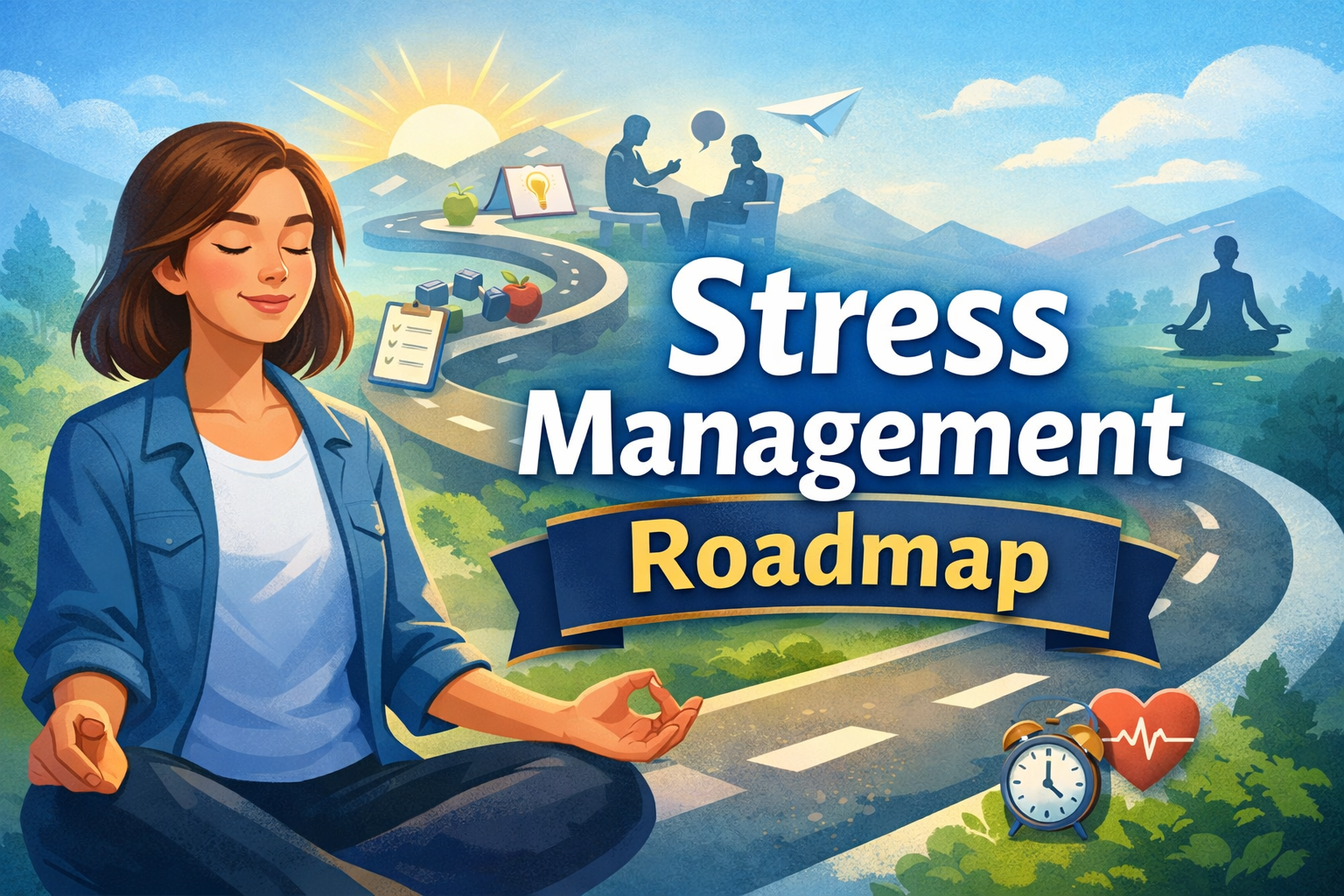
Phase 1: Stress Awareness & Self-Understanding
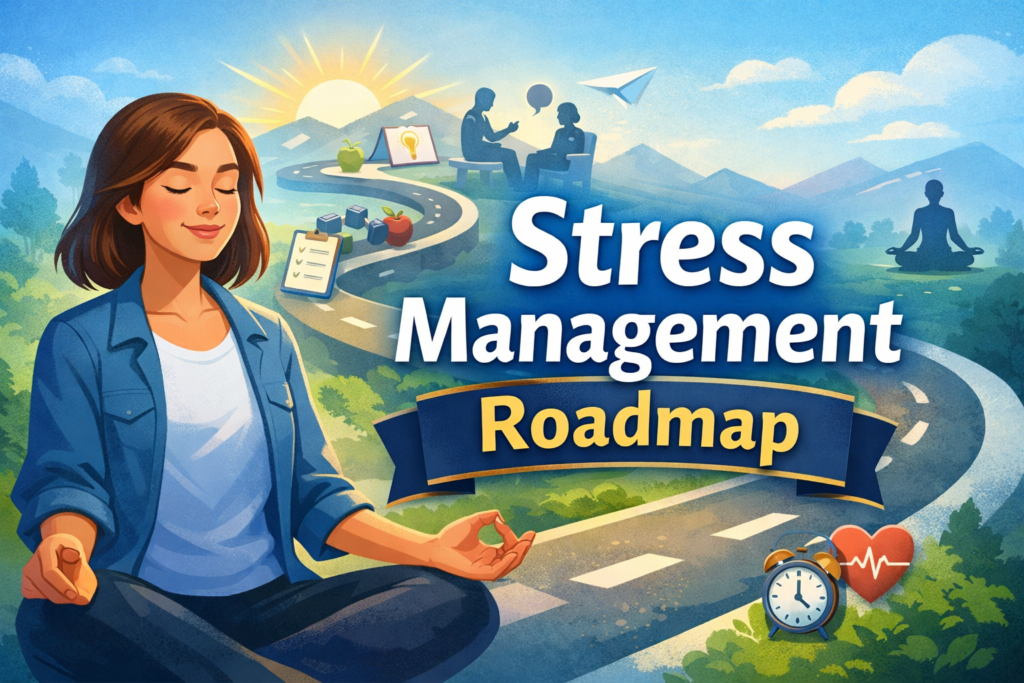
Stress cannot be managed until it is understood. This phase focuses on awareness, observation, and self-reflection.
- Understanding what stress really is and why it exists
- Difference between acute stress, chronic stress, and positive stress
- How stress affects the brain, hormones, body, and behavior
- Identifying personal stress triggers (people, tasks, environments, thoughts)
- Recognizing early warning signs before stress becomes burnout
- Tracking stress patterns using journaling or simple self-assessments
Goal: Move from unconscious stress to conscious awareness.
Phase 2: Mindset Shift & Emotional Regulation
Stress is not only external; it is largely created by how the mind interprets situations.
- Understanding the connection between thoughts, emotions, and stress reactions
- Identifying negative thinking patterns like overthinking, catastrophizing, and self-pressure
- Learning emotional regulation skills
- Practicing acceptance instead of resistance
- Developing emotional intelligence and self-control
- Reframing stressful situations with a balanced mindset
Goal: Reduce mental pressure by changing internal responses.
Phase 3: Lifestyle Foundations for Stress Control
A stressed body cannot support a calm mind. This phase builds the physical base for stress resilience.
- Importance of quality sleep for emotional stability
- Nutrition habits that support the nervous system
- Role of regular movement and exercise in stress reduction
- Managing digital overload and constant notifications
- Creating daily routines that reduce chaos and decision fatigue
Goal: Strengthen the body so the mind can stay calm.
Phase 4: Relaxation & Nervous System Reset
Stress activates the nervous system; relaxation teaches it to return to balance.
- Deep breathing techniques to calm the mind instantly
- Mindfulness and meditation practices for long-term calm
- Progressive muscle relaxation for physical tension
- Grounding techniques to stay present during stress
- Creative outlets like music, art, or nature exposure
Goal: Train the nervous system to relax on command.
Phase 5: Time, Energy & Boundary Management
Many people are stressed not because of lack of time—but lack of boundaries.
- Identifying energy drains and stress-creating habits
- Prioritization based on importance, not urgency
- Managing workload and expectations
- Setting healthy boundaries in work and relationships
- Avoiding burnout through intentional rest and focus
Goal: Protect time and energy to prevent chronic stress.
Phase 6: Healthy Coping & Problem-Solving Skills
Avoidance increases stress; effective coping reduces it.
- Understanding healthy vs unhealthy coping mechanisms
- Managing pressure, uncertainty, and failure
- Breaking large problems into manageable steps
- Conflict management without emotional overload
- Learning assertive communication instead of people-pleasing
Goal: Respond to stress proactively, not reactively.
Phase 7: Social Support & Emotional Connection
Human connection is one of the strongest stress buffers.
- Understanding the role of relationships in emotional health
- Communicating stress without guilt or fear
- Seeking support instead of suppressing emotions
- Building meaningful connections and support systems
- Reducing isolation in a busy, digital world
Goal: Use connection as strength, not dependency.
Phase 8: Long-Term Resilience & Mental Strength
This phase transforms stress from an enemy into a teacher.
- Building psychological resilience
- Developing adaptability to change
- Strengthening self-confidence under pressure
- Cultivating gratitude and optimism
- Learning from stress instead of fearing it
Goal: Become mentally strong, flexible, and stress-resistant.
Phase 9: Professional Support & Personal Stress Plan
Sometimes stress requires expert guidance—and that’s strength, not weakness.
- Knowing when stress needs professional help
- Therapy, counseling, and coaching options
- Using tools, apps, and structured programs
- Creating a personalized stress management system
- Regular review and improvement of stress habits
Goal: Maintain long-term mental well-being.
Final Outcome of the Roadmap
- Emotional balance and clarity
- Improved focus and decision-making
- Strong coping and resilience skills
- Better health and relationships
- A calm, sustainable, and meaningful life