Physical Address
Mumbai, Maharashtra - 400037
Physical Address
Mumbai, Maharashtra - 400037


मानव इतिहास की सबसे महत्वपूर्ण यात्राओं में से एक यात्रा पत्थर के साधारण टुकड़ों से शुरू हुई थी। आज हम Artificial Intelligence (AI), Computers, Robots और Space Technology के युग में जी रहे हैं, लेकिन इंसानी तकनीक की शुरुआती कहानी लाखों वर्ष पहले शुरू हुई, जब हमारे प्राचीन पूर्वजों ने पत्थरों को काटकर और तराशकर उपयोगी औजार बनाना सीखा। इसी प्राचीन काल को Stone Age यानी पाषाण काल कहा जाता है। यह वह समय था जब मनुष्य ने अपने आसपास मौजूद प्राकृतिक संसाधनों का उपयोग करके भोजन प्राप्त करने, शिकार करने, अपनी रक्षा करने और जीवन को बेहतर बनाने के तरीके विकसित किए। The Stone Age represents one of the earliest major chapters in human technological history. Long before electricity, machines, or computers existed, early humans used stones, wood, bones, and other natural materials to solve everyday problems. Their ability to shape tools, control fire, adapt to different environments, and eventually develop agriculture laid the foundation for many aspects of modern human civilization.

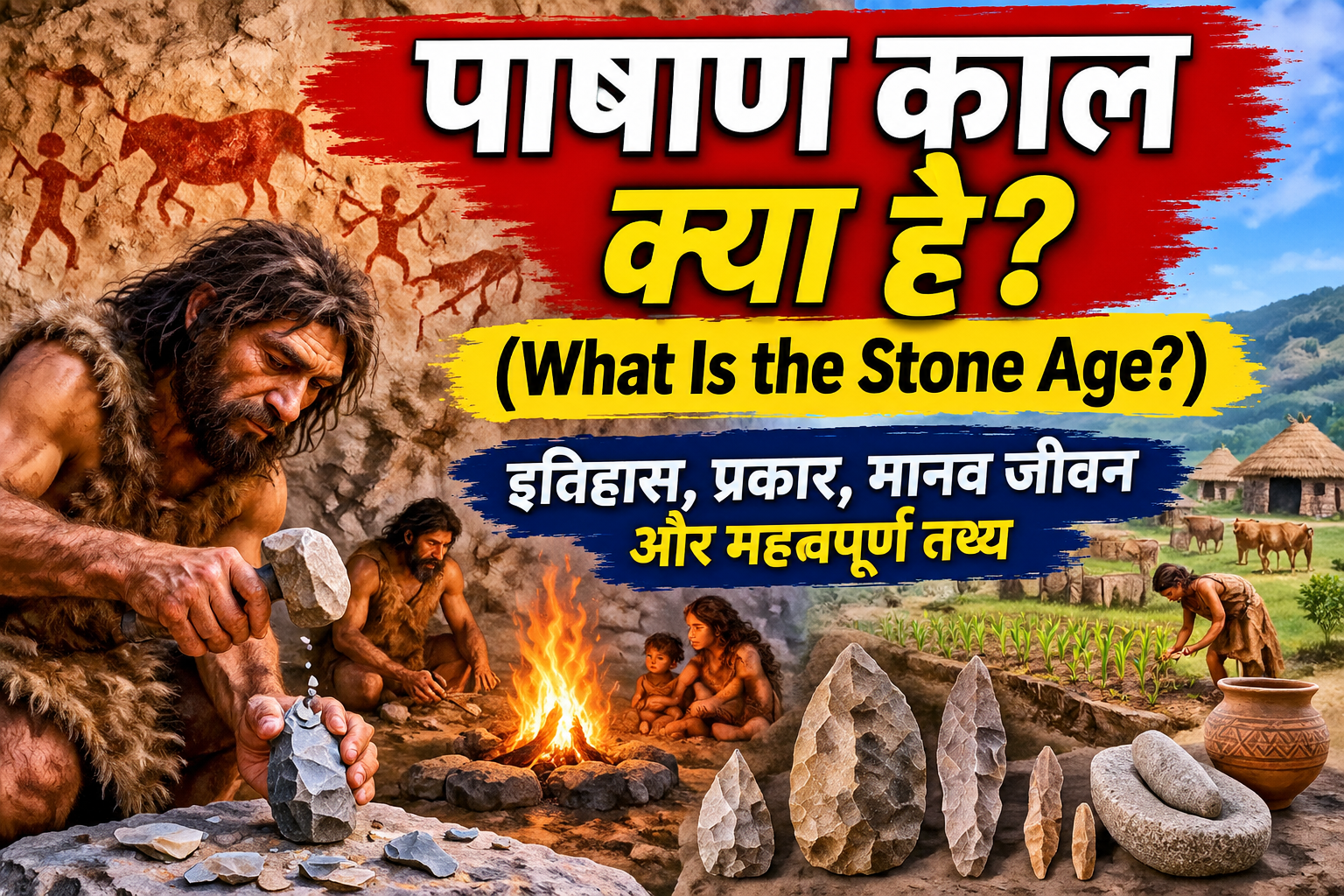
पाषाण काल मानव इतिहास का वह व्यापक कालखंड है जिसमें पत्थर से बने औजारों का उपयोग तकनीक और दैनिक जीवन में महत्वपूर्ण भूमिका निभाता था। इसे अंग्रेजी में Stone Age कहा जाता है। इस समय मनुष्य धातुओं से बने आधुनिक औजारों का उपयोग नहीं करता था, बल्कि पत्थर, लकड़ी, हड्डियों और अन्य प्राकृतिक पदार्थों से अपनी आवश्यकताओं के अनुसार उपकरण बनाता था। Stone Age की शुरुआत और समाप्ति पूरी दुनिया में एक ही समय पर नहीं हुई। अलग-अलग क्षेत्रों में मानव समुदायों ने अलग-अलग समय पर नई तकनीकों को अपनाया। Archaeologists study this period through stone tools, fossils, ancient settlements, animal remains, cave art, and other archaeological evidence. These discoveries help researchers understand how early humans lived, what they ate, how they interacted with their surroundings, and how their technological abilities changed over time.
पाषाण काल की कोई एक सार्वभौमिक प्रारंभिक तिथि निर्धारित करना कठिन है, क्योंकि शुरुआती पत्थर के औजारों के प्रमाण बहुत प्राचीन हैं और अलग-अलग पुरातात्त्विक स्थलों से प्राप्त हुए हैं। इथियोपिया के लोमेक्वी 3 पुरातात्त्विक स्थल से लगभग 33 लाख वर्ष पुराने पत्थर के औजार मिले हैं। ये औजार इस बात के महत्वपूर्ण प्रमाण हैं कि पत्थर से उपकरण बनाने की तकनीक हमारे अपने वंश के शुरुआती सदस्यों से भी पहले मौजूद हो सकती थी। इसके बाद लगभग 26 लाख वर्ष पहले अफ्रीका में व्यवस्थित रूप से बनाए गए पत्थर के औजारों के व्यापक प्रमाण मिलते हैं। यह समझना जरूरी है कि सबसे पुराने ज्ञात औजार और आधुनिक मानव की उत्पत्ति एक ही घटना नहीं हैं। The earliest known stone tools date back approximately 3.3 million years, based on discoveries at the Lomekwi 3 site in Kenya. More widely recognized early stone-tool traditions appeared in Africa around 2.6 million years ago. These dates refer to archaeological evidence rather than a single moment when humans suddenly began using technology. Human evolution was a gradual process involving different hominin species over millions of years.
पुरातत्त्व में पाषाण काल को समझने के लिए इसे सामान्यतः तीन प्रमुख चरणों में विभाजित किया जाता है: पुरापाषाण काल (Palaeolithic), मध्यपाषाण काल (Mesolithic) और नवपाषाण काल (Neolithic)। यह वर्गीकरण विशेष रूप से औजारों की तकनीक, भोजन प्राप्त करने के तरीकों और जीवनशैली में आए बदलावों को समझने में सहायता करता है। हालांकि, इन कालखंडों की समय-सीमाएँ अलग-अलग क्षेत्रों में भिन्न हो सकती हैं। Archaeologists commonly divide the Stone Age into the Palaeolithic, Mesolithic, and Neolithic periods. These divisions help explain major changes in technology, subsistence, and settlement patterns. However, the transition between these periods was not identical everywhere, and some societies continued older practices even after new technologies appeared elsewhere.
पुरापाषाण काल को Old Stone Age भी कहा जाता है। यह पाषाण काल का सबसे लंबा चरण था। इस दौरान शुरुआती मानव प्रजातियों और बाद में आधुनिक मानव ने पत्थरों से औजार बनाना, उनका उपयोग करना और समय के साथ उन्हें अधिक प्रभावी बनाना सीखा। शुरुआती समुदाय भोजन के लिए शिकार, मछली पकड़ने और जंगली पौधों, फलों तथा कंद-मूलों को इकट्ठा करने पर निर्भर थे। कई समुदाय मौसम और उपलब्ध संसाधनों के अनुसार एक स्थान से दूसरे स्थान पर जाते थे। The Palaeolithic was the longest phase of the Stone Age. During this period, early humans developed different stone-tool technologies, learned to exploit a wide range of food sources, and adapted to changing environments. Many groups relied on hunting and gathering rather than farming. Their lives were shaped by climate, local resources, social cooperation, and the technological knowledge available to them.
मध्यपाषाण काल को Middle Stone Age कहा जाता है, हालांकि इसकी परिभाषा और समय-सीमा क्षेत्र के अनुसार बदलती है। कई क्षेत्रों में यह हिमयुग के अंतिम चरण और उसके बाद के पर्यावरणीय बदलावों से जुड़ा था। इस समय कुछ समुदायों ने छोटे और अधिक सटीक पत्थर के औजारों का इस्तेमाल किया, जिन्हें Microliths कहा जाता है। इन छोटे पत्थर के टुकड़ों को लकड़ी या हड्डी के उपकरणों में जोड़कर उपयोग किया जा सकता था। लोगों ने स्थानीय परिस्थितियों के अनुसार शिकार, मछली पकड़ने और जंगली खाद्य पदार्थों को इकट्ठा करने की तकनीकों में बदलाव किए। The Mesolithic is often associated with the development of smaller, specialized stone tools called microliths in many regions. These could be fitted into composite tools, such as cutting implements or hunting equipment. Communities continued to depend largely on wild resources, but their strategies increasingly reflected changing environments and regional opportunities. The Mesolithic did not occur in exactly the same way or at the same time across the world.
नवपाषाण काल को New Stone Age कहा जाता है। इस चरण में दुनिया के कई क्षेत्रों में कृषि, पशुपालन, स्थायी बस्तियों और अधिक व्यवस्थित खाद्य उत्पादन का विकास हुआ। लोगों ने कुछ पौधों की खेती करना और कुछ जानवरों को पालना शुरू किया। पत्थर के औजारों को घिसकर चिकना बनाने की तकनीक भी कई नवपाषाण समुदायों में महत्वपूर्ण हुई। खेती और पशुपालन ने अनेक समाजों में जनसंख्या वृद्धि, खाद्य भंडारण, शिल्प और सामाजिक संगठन में बदलाव लाने में योगदान दिया। The Neolithic period saw the emergence of farming and animal domestication in several parts of the world. Many communities began living in more permanent settlements and developed new methods of food production and storage. Polished stone axes and other specialized tools became important in various regions. These developments helped transform human societies, although the transition to agriculture was gradual, geographically diverse, and not universal.
पत्थर के औजार बनाना मानव तकनीकी इतिहास की सबसे महत्वपूर्ण उपलब्धियों में से एक था। शुरुआती औजार साधारण दिखाई दे सकते हैं, लेकिन उन्हें उपयोगी आकार देने के लिए सामग्री का चयन, पत्थर पर सही दिशा में प्रहार और उसके टूटने के तरीके को समझना आवश्यक था। इन औजारों का इस्तेमाल मांस काटने, पौधों को संसाधित करने, हड्डियाँ तोड़ने और विभिन्न प्राकृतिक सामग्रियों पर काम करने के लिए किया जाता था। Stone tools were more than simple objects. Their manufacture required practical knowledge of raw materials, fracture patterns, and tool function. By selecting suitable stones and striking them in controlled ways, early humans could create sharp edges for cutting, scraping, and processing materials. Over time, toolmaking traditions became more diverse, reflecting technological learning and adaptation across different environments.
1. चॉपर (Chopper): चॉपर एक अपेक्षाकृत साधारण पत्थर का औजार था, जिसमें एक किनारे को काटने या तोड़ने योग्य बनाया जाता था। इसका उपयोग विभिन्न प्रकार की सामग्री को काटने और संसाधित करने में किया जा सकता था। A chopper is a stone tool with a worked edge that could be used for cutting, chopping, and other basic processing tasks.
2. हैंडऐक्स (Handaxe): हैंडऐक्स एक ऐसा औजार था जिसे दोनों ओर से तराशकर अक्सर अंडाकार या नुकीले आकार में बनाया जाता था। यह विशेष रूप से Acheulean औजार परंपरा से जुड़ा है। Handaxes were carefully shaped stone tools, often with worked edges on both sides. They are characteristic of the Acheulean technological tradition and were used for a range of cutting and processing activities.
3. स्क्रेपर (Scraper): स्क्रेपर का उपयोग जानवरों की खाल साफ करने, लकड़ी या अन्य सामग्री को खुरचने और विभिन्न सतहों को तैयार करने के लिए किया जाता था। Scrapers were designed with edges suitable for removing material from surfaces, including hides and wood.
4. ब्लेड (Blade): ब्लेड ऐसे पत्थर के टुकड़े होते हैं जिनकी लंबाई सामान्यतः उनकी चौड़ाई से अधिक होती है। इनसे तेज धार वाले उपकरण बनाए जा सकते थे। Stone blades are elongated flakes that could provide sharp cutting edges and serve as components of more specialized tools.
5. माइक्रोलिथ (Microlith): माइक्रोलिथ छोटे आकार के पत्थर के उपकरण या औजारों के हिस्से थे। कई समुदाय इन्हें लकड़ी या हड्डी के आधार में जोड़कर संयुक्त औजार बनाते थे। Microliths are small stone pieces that were often incorporated into composite tools, making it possible to create specialized implements from several materials.
आग पर नियंत्रण मानव इतिहास के महत्वपूर्ण विकासों में से एक था। आग से गर्मी प्राप्त करना, ठंडे वातावरण में जीवित रहना, अंधेरे में रोशनी पाना और कुछ जंगली जानवरों से सुरक्षा प्राप्त करना आसान हो सकता था। भोजन पकाने से उसकी बनावट और पाचन क्षमता में भी बदलाव आता है। हालांकि, आग का सबसे पहला उपयोग कब शुरू हुआ, यह निश्चित रूप से बताना कठिन है। पुरातात्त्विक प्रमाण अलग-अलग स्थानों और समयों से मिलते हैं, और प्राकृतिक आग तथा मानव द्वारा नियंत्रित आग के बीच अंतर करना हमेशा आसान नहीं होता। The controlled use of fire was a major development in human prehistory. Fire provided warmth, light, and opportunities for cooking and protection. It may also have changed how humans occupied landscapes and interacted with their surroundings. However, the earliest evidence of fire use is debated, and archaeologists distinguish between naturally occurring fires, possible human use, and convincing evidence of controlled burning.
पाषाण काल के सभी मनुष्य गुफाओं में नहीं रहते थे। वे उपलब्ध संसाधनों और पर्यावरण के अनुसार गुफाओं, चट्टानों के आश्रयों, खुले स्थानों और अन्य प्रकार के अस्थायी ठिकानों का उपयोग करते थे। गुफाएँ कई बार मौसम और कुछ खतरों से बचने के लिए उपयोगी आश्रय प्रदान करती थीं। दुनिया के विभिन्न क्षेत्रों में प्राचीन मानव समूहों द्वारा बनाई गई गुफा चित्रकला और चट्टानी कला भी मिली है। इन चित्रों में जानवरों, मानव आकृतियों, संकेतों और अन्य विषयों को दर्शाया गया है। Not all prehistoric people lived in caves. Early human groups used a variety of shelters depending on their environment, mobility, and available materials. Cave paintings and other forms of prehistoric art provide evidence of symbolic expression and cultural traditions. Famous examples, such as the cave art at Lascaux in France and Altamira in Spain, demonstrate the artistic achievements of prehistoric communities, although such art belongs to particular periods and should not be treated as representative of every Stone Age society.
पाषाण काल के अधिकांश शुरुआती समुदाय भोजन प्राप्त करने के लिए शिकार और संग्रह पर निर्भर थे। वे अलग-अलग क्षेत्रों में उपलब्ध जानवरों, मछलियों, फलों, बीजों, जड़ों और अन्य खाद्य संसाधनों का उपयोग करते थे। उनका भोजन जलवायु, मौसम, स्थानीय जैव विविधता और तकनीकी क्षमताओं के अनुसार बदलता था। सभी समुदायों का जीवन एक जैसा नहीं था, और न ही सभी लोग हर समय एक ही स्थान पर घूमते रहते थे। Many Stone Age communities followed hunter-gatherer lifestyles, collecting plant foods and obtaining animal resources through hunting, fishing, and other methods. Their diets varied significantly across environments. Some groups moved frequently, while others occupied particular locations for longer periods when food and other resources were available. These differences show that prehistoric life was diverse rather than a single universal way of living.
कृषि का विकास मानव इतिहास का एक महत्वपूर्ण परिवर्तन था। दुनिया के अलग-अलग हिस्सों में लोगों ने स्वतंत्र रूप से पौधों की खेती और जानवरों को पालने की तकनीकें विकसित कीं। पश्चिम एशिया के कुछ क्षेत्रों में कृषि की शुरुआत लगभग 10,000 से 12,000 वर्ष पहले के आसपास हुई, जबकि अन्य क्षेत्रों में खाद्य उत्पादन का विकास अलग-अलग समय पर हुआ। खेती ने कुछ समुदायों को स्थायी बस्तियाँ बनाने और खाद्य पदार्थों का भंडारण करने में सहायता दी। इससे शिल्प, व्यापार और सामाजिक संरचना में भी बदलाव आए। Agriculture emerged independently in several regions of the world rather than spreading from a single place to every society. In parts of Southwest Asia, the transition toward farming began roughly 10,000–12,000 years ago, although the process took place over many generations. The cultivation of plants and domestication of animals supported new settlement patterns, food storage, and specialized activities in many communities. Farming did not immediately replace hunting and gathering everywhere; both ways of life continued in different regions.
मानव विकास एक लंबी और जटिल प्रक्रिया रही है। आधुनिक मानव, यानी Homo sapiens, का विकास अफ्रीका में हुआ और इसके सबसे पुराने व्यापक रूप से स्वीकार किए गए जीवाश्म प्रमाण लगभग 300,000 वर्ष पुराने हैं। लेकिन पत्थर के औजारों का इतिहास आधुनिक मानव से भी पुराना है, क्योंकि शुरुआती औजार बनाने वाले कुछ प्राचीन मानव संबंधी जीव आधुनिक मानव के सीधे समान नहीं थे। Homo sapiens के अतिरिक्त मानव विकास के इतिहास में Homo habilis, Homo erectus और अन्य प्राचीन मानव समूहों की महत्वपूर्ण भूमिका रही। Human evolution was not a straight line in which one species simply replaced another. Multiple hominin species existed at different times, and some overlapped. Homo sapiens evolved in Africa approximately 300,000 years ago, while stone-tool traditions had already existed for millions of years. The archaeological record helps researchers investigate changes in anatomy, behaviour, technology, and the relationships between different ancient human populations.
भारत में पाषाण काल के अनेक महत्वपूर्ण पुरातात्त्विक प्रमाण मिले हैं। इनसे पता चलता है कि प्राचीन मानव समुदायों ने अलग-अलग भौगोलिक क्षेत्रों में पत्थर के औजारों का उपयोग किया और समय के साथ अपनी तकनीकों को विकसित किया। भीमबेटका की शैलाश्रय गुफाएँ और शैलचित्र भारत की प्रागैतिहासिक विरासत के प्रसिद्ध उदाहरण हैं। मध्य प्रदेश में स्थित भीमबेटका क्षेत्र में विभिन्न कालों से संबंधित पुरातात्त्विक और सांस्कृतिक प्रमाण मिलते हैं। इसके अतिरिक्त भारतीय उपमहाद्वीप के अनेक स्थानों पर पत्थर के औजार, प्राचीन निवास स्थलों के प्रमाण और नवपाषाणकालीन बस्तियों के अवशेष मिले हैं। India has a rich prehistoric archaeological record. Stone tools and other remains have been discovered across different parts of the subcontinent, providing evidence of early human activity and technological change. The Bhimbetka rock shelters in Madhya Pradesh are particularly well known for their archaeological importance and prehistoric rock art. Other sites across India provide evidence of different stone-tool traditions and, in later periods, farming communities and settled life. These discoveries help researchers reconstruct the diverse histories of prehistoric populations in the region.
भीमबेटका मध्य प्रदेश में स्थित एक महत्वपूर्ण पुरातात्त्विक स्थल है, जो अपनी शैलाश्रय संरचनाओं और प्राचीन शैलचित्रों के लिए प्रसिद्ध है। यहाँ मिले चित्रों और पुरातात्त्विक प्रमाणों से मानव जीवन, प्रकृति और सांस्कृतिक गतिविधियों के बारे में महत्वपूर्ण जानकारी मिलती है। यहाँ की कला में जानवरों, मानव आकृतियों और विभिन्न गतिविधियों को दर्शाया गया है। भीमबेटका को UNESCO World Heritage Site का दर्जा प्राप्त है। Bhimbetka is one of India’s best-known prehistoric heritage sites. Its rock shelters preserve archaeological evidence and paintings associated with different periods of human occupation. The artwork offers insights into how people represented animals, human activities, and their surroundings. The site is recognized as a UNESCO World Heritage Site and plays an important role in the study of India’s prehistoric past.
आज के आधुनिक औजारों और डिजिटल तकनीकों की तुलना पाषाण काल के उपकरणों से सीधे करना उचित नहीं होगा, लेकिन दोनों के पीछे समस्या का समाधान खोजने की मूल मानवीय प्रवृत्ति दिखाई देती है। शुरुआती मनुष्यों ने उपलब्ध सामग्री का निरीक्षण किया, प्रयोग किए, उपयोगी आकार विकसित किए और अपने अनुभवों से सीखा। इसी तरह आधुनिक इंजीनियरिंग और विज्ञान में भी अवलोकन, परीक्षण, सुधार और ज्ञान का आदान-प्रदान महत्वपूर्ण हैं। The Stone Age reminds us that technology did not begin with machines or computers. It began with practical solutions to everyday challenges. Early toolmakers relied on observation, experimentation, material knowledge, and the transmission of skills. Modern engineering operates on a vastly different scientific and industrial scale, but the broader human capacity to learn, adapt, and develop tools remains a central part of technological progress.
पुरातत्त्व (Archaeology) वह विषय है जिसमें मानव अतीत का अध्ययन भौतिक अवशेषों के माध्यम से किया जाता है। पाषाण काल के अध्ययन में पत्थर के औजार, जीवाश्म, हड्डियाँ, राख, प्राचीन बस्तियाँ और शैलचित्र महत्वपूर्ण प्रमाण प्रदान करते हैं। वैज्ञानिक इन वस्तुओं की बनावट, स्थान, परतों और अन्य अवशेषों के साथ उनके संबंधों का अध्ययन करते हैं। Radiometric dating, stratigraphy, microscopic tool analysis और अन्य वैज्ञानिक विधियाँ पुरातात्त्विक खोजों की आयु और उनके उपयोग को समझने में सहायता करती हैं। Archaeology reconstructs prehistoric life through material evidence rather than relying on written records, which were absent for most of the Stone Age. Researchers examine how artefacts were made, where they were found, and how they relate to surrounding sediments and other remains. Scientific dating methods and microscopic analysis can help establish chronology and investigate how tools were used, although results depend on the quality and context of the evidence.
1. सबसे पुराने ज्ञात पत्थर के औजार लगभग 33 लाख वर्ष पुराने हैं। Some of the oldest known stone tools date back approximately 3.3 million years.
2. पत्थर के औजारों का उपयोग आधुनिक मानव के अस्तित्व से पहले शुरू हो चुका था। Stone-tool technology predates the emergence of Homo sapiens.
3. सभी प्राचीन मानव गुफाओं में नहीं रहते थे। Prehistoric people used different types of shelters, not only caves.
4. पत्थर के औजारों को अलग-अलग कामों के लिए अलग-अलग आकार दिया जाता था। Different tools were shaped for different tasks.
5. आग ने गर्मी, रोशनी और भोजन पकाने के अवसर प्रदान किए। Fire provided warmth, light, and opportunities for cooking.
6. पाषाण काल में शिकार और संग्रह कई समुदायों की प्रमुख जीवनशैली थी। Hunting and gathering supported many prehistoric communities.
7. कुछ समुदायों ने छोटे पत्थर के औजारों को लकड़ी या हड्डी के साथ जोड़कर इस्तेमाल किया। Some groups incorporated small stone pieces into composite tools.
8. कृषि का विकास दुनिया के अलग-अलग क्षेत्रों में अलग-अलग समय पर हुआ। Farming emerged at different times in different parts of the world.
9. भीमबेटका भारत के प्रसिद्ध प्रागैतिहासिक शैलाश्रय स्थलों में से एक है। Bhimbetka is one of India’s most important prehistoric rock-shelter sites.
10. पाषाण काल की तकनीक का अध्ययन हमें मानव की रचनात्मकता और अनुकूलन क्षमता को समझने में मदद करता है। Stone Age archaeology reveals important aspects of human creativity, adaptation, and technological learning.
पाषाण काल मानव इतिहास का वह महत्वपूर्ण अध्याय है जिसमें तकनीकी विकास की शुरुआती कहानियाँ छिपी हुई हैं। पत्थर के औजारों के निर्माण से लेकर आग पर नियंत्रण, शिकार और संग्रह की तकनीकों, प्राचीन कला तथा कृषि के विकास तक, मानव समाज ने धीरे-धीरे अपने पर्यावरण के साथ तालमेल बिठाने और जीवन को बदलने के नए तरीके खोजे। इस काल का अध्ययन हमें बताता है कि आधुनिक सभ्यता अचानक विकसित नहीं हुई, बल्कि लाखों वर्षों में हुए अनेक परिवर्तनों का परिणाम है। The Stone Age was not merely an era of primitive tools; it was a period of experimentation, adaptation, and gradual technological change. From early stone tools to the development of farming communities, prehistoric people established foundations that shaped later human societies. By studying this period, we gain a deeper understanding of human evolution, archaeology, and the long journey from simple tools to the complex technologies of the modern world.
Q1. पाषाण काल क्या है? / What is the Stone Age? पाषाण काल मानव इतिहास का वह व्यापक काल है जिसमें पत्थर के औजारों का महत्वपूर्ण उपयोग होता था। The Stone Age is a broad period of prehistory characterized by the important role of stone tools.
Q2. पाषाण काल की शुरुआत कब हुई? / When did the Stone Age begin? सबसे पुराने ज्ञात पत्थर के औजार लगभग 33 लाख वर्ष पुराने हैं, हालांकि विभिन्न क्षेत्रों में औजारों की परंपराएँ अलग-अलग समय पर विकसित हुईं। Some of the oldest known stone tools date to approximately 3.3 million years ago.
Q3. पाषाण काल के तीन प्रमुख चरण कौन-से हैं? / What are the three main phases of the Stone Age? पुरापाषाण काल, मध्यपाषाण काल और नवपाषाण काल इसके तीन सामान्य वर्गीकरण हैं। The three commonly used divisions are the Palaeolithic, Mesolithic, and Neolithic.
Q4. पाषाण काल के मनुष्य क्या खाते थे? / What did Stone Age people eat? कई समुदाय जंगली पौधों, फलों, बीजों, जड़ों, मछलियों और शिकार किए गए जानवरों पर निर्भर थे। Many communities ate wild plants, fruits, seeds, roots, fish, and hunted animals.
Q5. क्या सभी पाषाण कालीन मनुष्य गुफाओं में रहते थे? / Did all Stone Age people live in caves? नहीं। वे गुफाओं के अलावा खुले स्थानों, शैलाश्रयों और अन्य अस्थायी आश्रयों का भी उपयोग करते थे। No. People used a variety of shelters depending on local conditions.
Q6. भारत में पाषाण काल का प्रसिद्ध स्थल कौन-सा है? / Which is a famous Stone Age site in India? मध्य प्रदेश स्थित भीमबेटका अपने शैलाश्रयों और प्रागैतिहासिक चित्रों के लिए प्रसिद्ध है। Bhimbetka in Madhya Pradesh is famous for its rock shelters and prehistoric art.
Q7. क्या पाषाण काल में कृषि होती थी? / Was agriculture practised during the Stone Age? पाषाण काल के शुरुआती चरणों में अधिकांश समुदाय शिकार और संग्रह पर निर्भर थे। बाद के नवपाषाण काल में कई क्षेत्रों में कृषि और पशुपालन विकसित हुए। Agriculture developed in many regions during the Neolithic, following long periods in which hunting and gathering were important.
Q8. पाषाण काल का अध्ययन क्यों महत्वपूर्ण है? / Why is the Stone Age important? इसका अध्ययन मानव विकास, प्राचीन तकनीक, जीवनशैली और सभ्यता की शुरुआती प्रक्रियाओं को समझने में सहायता करता है। Studying the Stone Age helps us understand human evolution, early technologies, prehistoric lifestyles, and the foundations of later societies.
About Advice Share: Founded in 2022, Advice Share is a research-based knowledge platform dedicated to exploring humans, nature, the universe, science, history, and technology. Our goal is to make complex topics easier to understand through informative and educational content.




[…] काल (Stone Age) मानव इतिहास का वह प्राचीन काल है, जब […]