Physical Address
Mumbai, Maharashtra - 400037

Before the invention of writing or modern civilization, humans found a way to communicate their thoughts, emotions, and experiences — through art. This early form of expression is known as Prehistoric Art. It reflects how our ancestors viewed the world around them — their beliefs, daily life, and connection with nature.
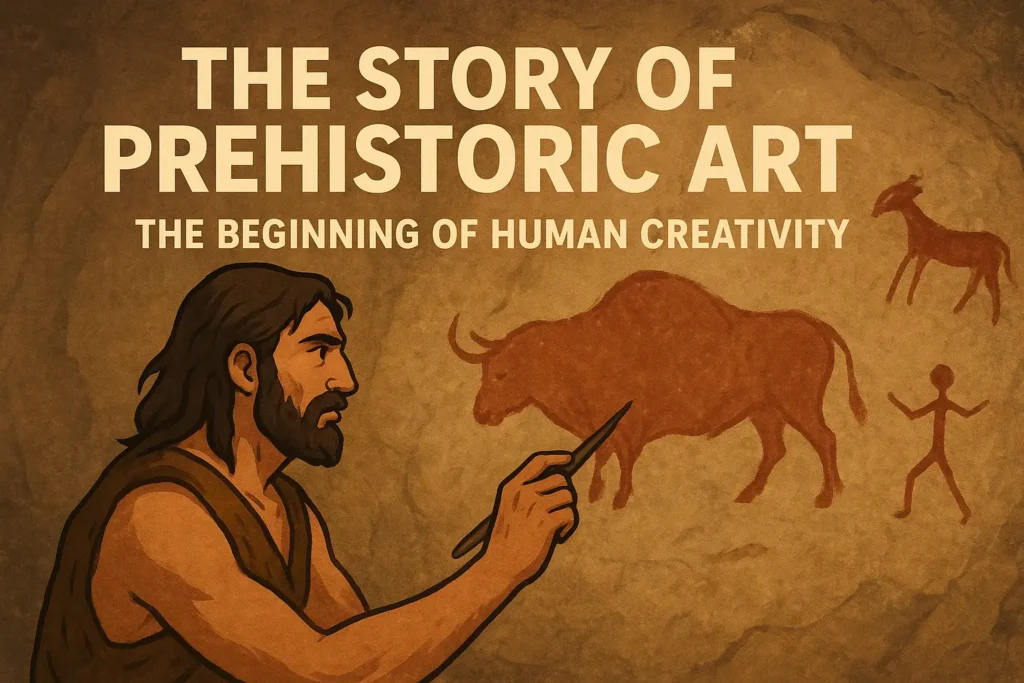
Prehistoric art refers to the visual art created by humans before written history, typically during the Stone Age. It includes cave paintings, rock engravings, carvings, and sculptures made thousands of years ago.
These artworks are found in caves, rocks, and ancient dwellings — serving as a window into the minds of early humans.
There are many theories about why prehistoric people made art:
Art was not just decoration — it was a form of survival, belief, and storytelling.
The most famous prehistoric artworks are found on the walls of caves.
These paintings often show animals, human figures, and hunting scenes.
Example: Lascaux Caves in France and Bhimbetka Rock Shelters in India.
Humans carved or scratched designs into stone surfaces. These engravings depicted symbols, tools, animals, and daily life.
Small sculptures made of stone, bone, or clay represent humans or animals.
Example: Venus of Willendorf – a small limestone statue believed to represent fertility.
Large stone structures or monuments (like Stonehenge) were created during the later prehistoric period, often linked to burial or ceremonial practices.
Prehistoric art can be divided into three main ages:
Famous Examples of Prehistoric Art
These sites show that art was a universal part of early human life — spread across continents and cultures.
Prehistoric art is more than just drawings on cave walls — it is the beginning of human imagination and communication.
It shows that even thousands of years ago, humans had the urge to create, express, and connect.
Today, these ancient artworks remind us of where our creativity began — deep within the hearts and hands of our ancestors.