1. Understanding WordPress and Its Ecosystem
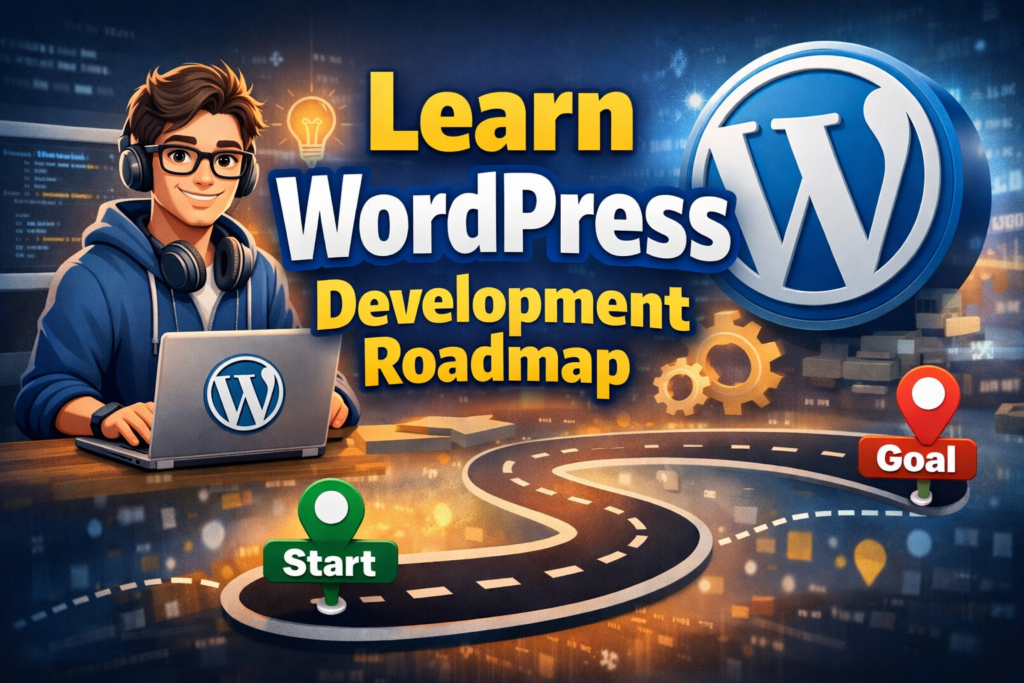 Learn WordPress Development Roadmap – Beginner to Expert
Before touching code, grasp why WordPress dominates over 40% of the web:
- CMS Fundamentals: WordPress isn’t just a blogging platform; it’s a flexible CMS powering blogs, business sites, e-commerce stores, and more.
- Why It Matters: Knowing the “why” helps you focus on scalable and maintainable development.
- WordPress.com vs WordPress.org: Learn the difference—.com for hosted solutions, .org for full development control.
- Key Takeaway: Start thinking like a developer, not just a site builder.
2. Prerequisites – The Building Blocks
A strong foundation ensures long-term growth:
- HTML & CSS: Structure and style your web pages. WordPress themes rely on solid markup and styling knowledge.
- JavaScript: For interactivity—menus, sliders, AJAX calls.
- PHP: Core of WordPress backend; essential for customizing themes and plugins.
- MySQL: Understand how WordPress stores and retrieves data.
- Git & GitHub: Version control is vital for collaboration and deployment.
Pro Tip: Think of these as your developer toolkit—without them, advanced WordPress concepts feel like magic.
3. Setting Up Your WordPress Environment
- Local Development: XAMPP, WAMP, MAMP, or Local by Flywheel. Avoid editing live sites.
- WordPress Folder Structure: wp-content, wp-admin, wp-includes—know what each does.
- Configuration Basics: wp-config.php, .htaccess—critical for customizing behavior.
- First Hands-On Project: Install WordPress, explore dashboard, create posts, pages, categories.
Deep Insight: Observing how WordPress structures data and content now will help when you build complex themes or plugins later.
4. Theme Development – From Basics to Mastery
- Start with Existing Themes: Modify colors, fonts, layouts. Understand template hierarchy.
- Child Themes: Safely customize without touching core files.
- Theme Anatomy: header.php, footer.php, index.php, functions.php. Each file has a purpose—know it.
- Template Hierarchy Deep Dive: Learn how WordPress chooses which template to display for any page.
- From Static to Dynamic: Convert HTML/CSS templates into fully functional WordPress themes.
Mindset: Don’t just copy templates—think about why structure, hooks, and functions exist.
5. Plugin Development – Adding Custom Functionality
- Plugin Fundamentals: What makes WordPress modular.
- Custom Plugins: Start small (e.g., display custom messages) to understand hooks, actions, filters.
- Essential Tools: ACF, WooCommerce, Yoast SEO—explore how they modify WordPress behavior.
- Advanced Concepts: Use shortcodes, widgets, and custom post types to extend site capabilities.
Deep Think: Plugins let you shape WordPress like LEGO blocks—mastering them makes you a true architect.
6. Advanced WordPress Development
- Custom Post Types & Taxonomies: Structure content beyond posts and pages.
- Gutenberg Block Development: Build reusable blocks for clients or products.
- REST API & Headless WordPress: Separate frontend (React, Next.js) and backend for modern app-like experiences.
- Security & Optimization: Sanitize inputs, prevent SQL injection, optimize queries, caching, lazy loading images.
Mindset Shift: You’re moving from “customizing” to “engineering”—performance, security, and scalability matter.
7. Deployment and Hosting
- Selecting Hosting: Shared vs VPS vs Managed WordPress—understand trade-offs.
- Domain and SSL: Professional setup is essential for credibility and SEO.
- Deploying Projects: Local → Staging → Production workflow.
- Backups & Maintenance: Automate backups, monitor uptime, update themes/plugins safely.
Pro Insight: A WordPress developer isn’t finished until they can take a project live reliably.
8. Real-World Projects & Portfolio Building
- Freelance Projects: Small business websites, blogs, portfolios.
- E-commerce with WooCommerce: Build shops, handle payments, product catalogs.
- Membership or Subscription Sites: Add advanced logic, login restrictions, and custom dashboards.
- Portfolio: Showcase your best themes, plugins, and full-site projects.
Deep Think: Every project reinforces theory and demonstrates your capability—this is your proof to clients or employers.
- Follow WordPress Codex, WPBeginner, Advanced blogs.
- Participate in WordCamps and local meetups.
- Contribute to WordPress Core or open-source plugins.
- Keep up with latest releases, PHP updates, Gutenberg improvements.
Philosophy: WordPress evolves fast—developers who grow with it become leaders, not just coders.
✅ Key Notes for Deep Roadmap Thinking:
- Sequential Mastery: Start with fundamentals → theme → plugin → advanced development.
- Project-Based Learning: Build real websites as you go.
- Mindset Over Mechanics: Understand “why” behind WordPress structures and choices.
- Portfolio & Community: Real skills are proven in live projects and contributions.
Reader: 115